Homelessness, Race, Spirit of Place

Embodying Equity in a War Zone

In the wide vast universe of being, someone Mothering is crying, grieving for a child missing from their imagined idea of home. By Mothering I mean anyone who has given birth, trying to conceive, adopted, miscarriage, is a teacher, a spiritual counselor, a father, an auntie, an environmentalist, anyone who tends to the soul of the world.

Yes, someone Mothering is missing a child from the imagined home, during this time of battle as we fight for autonomy of self and sovereignty of body against the backlash of the faltering colonial white dominant patriarchal hetero-normative ablest social paradigm crumbling into the depths of the rising waters of climate change.

Today, I hold those Mothering with loss in my heart, as I also learn to surrender to the primordial presence of Mother Earth, holding all those loss/lost in the roots of her soil, connecting us all to the soul of the world and the bloodstreams of our ancestors.

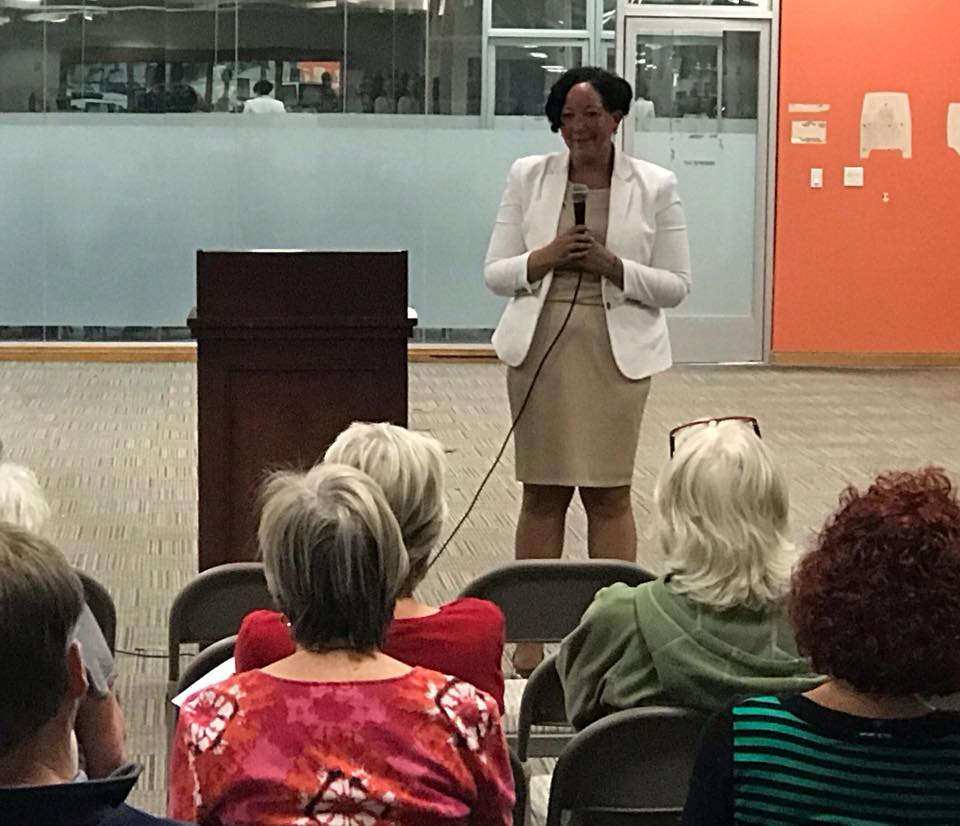
As we gather today to celebrate Women’s History Month and honor the essence of the Divine Feminine embodied in us all, I too hold the darkness of our times, for remembering makes us whole and inclusive, and belonging as we gather in our beingness together.

My name is Alisa. I identify as an aging Black mixed ancestry- a stamp of our history, wombmyn (womb of my own). I graduated from Pacifica in 2021 with a doctorate in depth-psychology with a concentration in Community, Liberation, Indigenous, and eco-psychologies. I am a feminine soul supported by the Divine masculine, who is committed to fostering cultures of belonging in the advancement of bell hooks ideal of beloved communities, where we don’t have to be perfect, we don’t have to be white, we don’t have to have a name for ourselves, we simply have to be.

I work in homelessness services and policy through a platform called Florence Aliese Advancement Network, LLC, named after my Grandmothers, where I work with members of the public sector to raise consciousness to alternative perspectives on homelessness, and am determined for all, especially Black and Indigenous people to safely live in earth as our home.

The recent visualization of the kidnapping and murder of Black youth just across the border in Mexico is heavy on my heart as the daily news of missing and murdered Black and Indigenous women and children continues to rise across urban and rural neighborhoods around this country and as we travel the world. What right does anyone have to take a sovereign being? A child of God? Who said humans were for sale? We have a long history, although in these times many are trying to suppress it, of forced family separation and receipt of horrific forms of violence that we must reconcile to end these tragedies.

So, while I am honored to be wherever Dianne Travis Teague asks me to go, and any opportunity to be in the same space as Dr. Lee, while also reconnecting to my Pacifica guiding angels –Dr. Nuria Ciofalo and Dr. Susan James, and fellow colleagues, while holding the presence of the unknown that connects us together – today I am also tuning into the connection to Pacifica’s campus, a portal to the world soul – to take an opportunity to ask what archetypal force is at play that continues the separation of Black and Indigenous families and turns our children into “missing”? Why are you here? Is it greed that continues to feed you? And what other archetypal forces must emerge to push you back into balance?

In the wide vast universe of being, someone Mothering is crying, grieving for a child missing from the imagined home. We give thanks for protection from Mother Earth who hears her cries, absorbs her tears, and connects to the loss/lost child, no matter where they are.

Thank you!

a.d.orduna

International Women’s Day, March 8, 2023

Pacifica Graduate Institute and Pacifica Graduate Institute Alumni Association, Carpinteria, CA

“Embodying Equity” Celebration.

Homelessness, Race

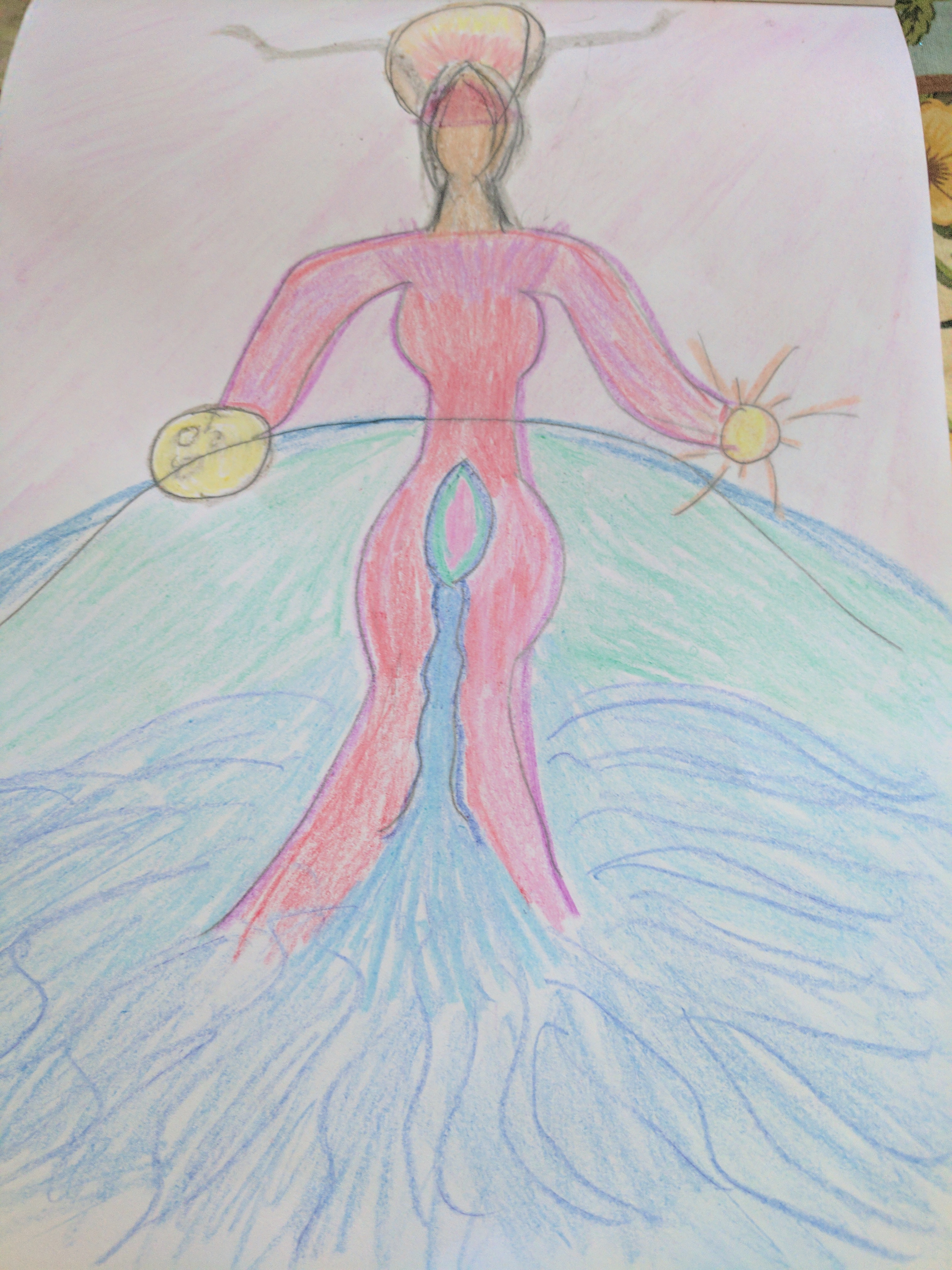
Òṣun’s Mirror: Seeing Sacred Histories of the Black Experience in Los Angeles through the reflection of homelessness

This journal post is an invitation to participate in an art-based research inquiry to uncovering unconscious anti-Black racial biases – hidden in our bodies in efforts to bring their presence to consciousness for personal, group, and collective healing. This may sound painful, but this research event is being approached as a sacred ceremony to open up a safe, nonjudgmental space to engage racial biases – particularly anti-Black racial biases- by calling them forth through Black expressive art genres.

IMG_20180521_074838

Clinician Resmaa Menakem (MSW, LICSW, SEP) states in My Grandmother’s Hands: Racialized Trauma and the Pathway to Mending Our Hearts and Bodies, that understanding white supremacy is so difficult because it has become the effect of compounded intergenerational passing of wounds – leading to a visceral, physiological effect literally embedded in our mixed bloodstreams.  In fact, he prefers “White-body supremacy” to describe this phenomenon that impacts persons of all skin colors. Manakem warns,”If we are to survive as a country, it is inside of our bodies where this conflict will need to be resolved.”

13908951_1383723351642176_2655019672376857232_o

Menakem’s knowledge of the embodiment of racialized trauma is what persons of African descent who are survivors of the legacy of slavery have known for generations. To survive consistent violent acts motivated by conscious and unconscious anti-Black biases – persons of African descent have resisted and maintained resilience through expressive arts performed in community where we have been safe to express our identity and receive positive validation of being divine.

Theo's reading

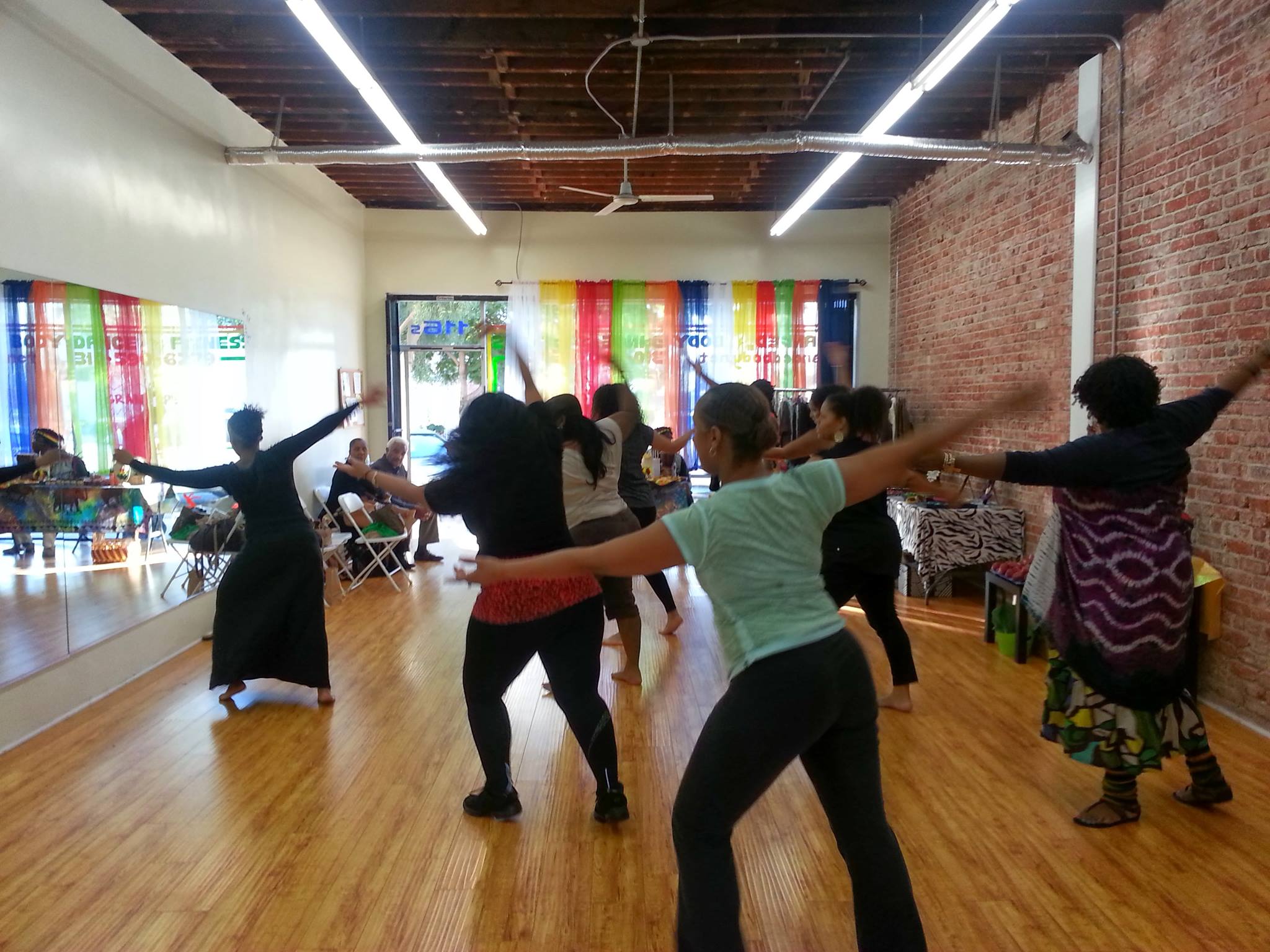
In this research ceremony, up to 12 participants will hear four presentations on elements of Black cultural resilience delivered by local Black scholars. Participants will then “dialogue” with the material through the art forms of dance, song, poetry, mask-making, and free-movement performance to express feelings of resonation, discomfort, or others that may arise.  This research ceremony will occur over the course of one eight-hour day retreat.

903272_746645445346398_181555034_o

This research ceremony is focuses on those involved in the delivery of homelessness services. African Americans make up only 8 to 10% of the Los Angeles region’s population, but over 40% of the homeless population. This research assumes that unconscious anti-Black biases held by participants of the homelessness services delivery system contributes to this dynamic.  It is not with guilt or shame or blame that we seek to engage this cohort – it is with a vision of understanding our collective socialization into a system of white supremacy and its bedmate of systemic racism so that we may stop these harms, seek healing, and change outcomes.

IMG_20140817_162626

Participants for this research study must have at least two years experience in the homelessness services field including volunteers, staff, managers, directors, law enforcement, judges, property owners, clinicians, medical staff, etc. It is designed for participants of ALL racial, ethnic, cultural backgrounds – please do not just pass on to Black staff or staff of Color. We need the heal together.

This is a voluntary, non-compensated study. Participants must also be stably housed for two years and not work for a grantee or be an employee with the City of Santa Monica.

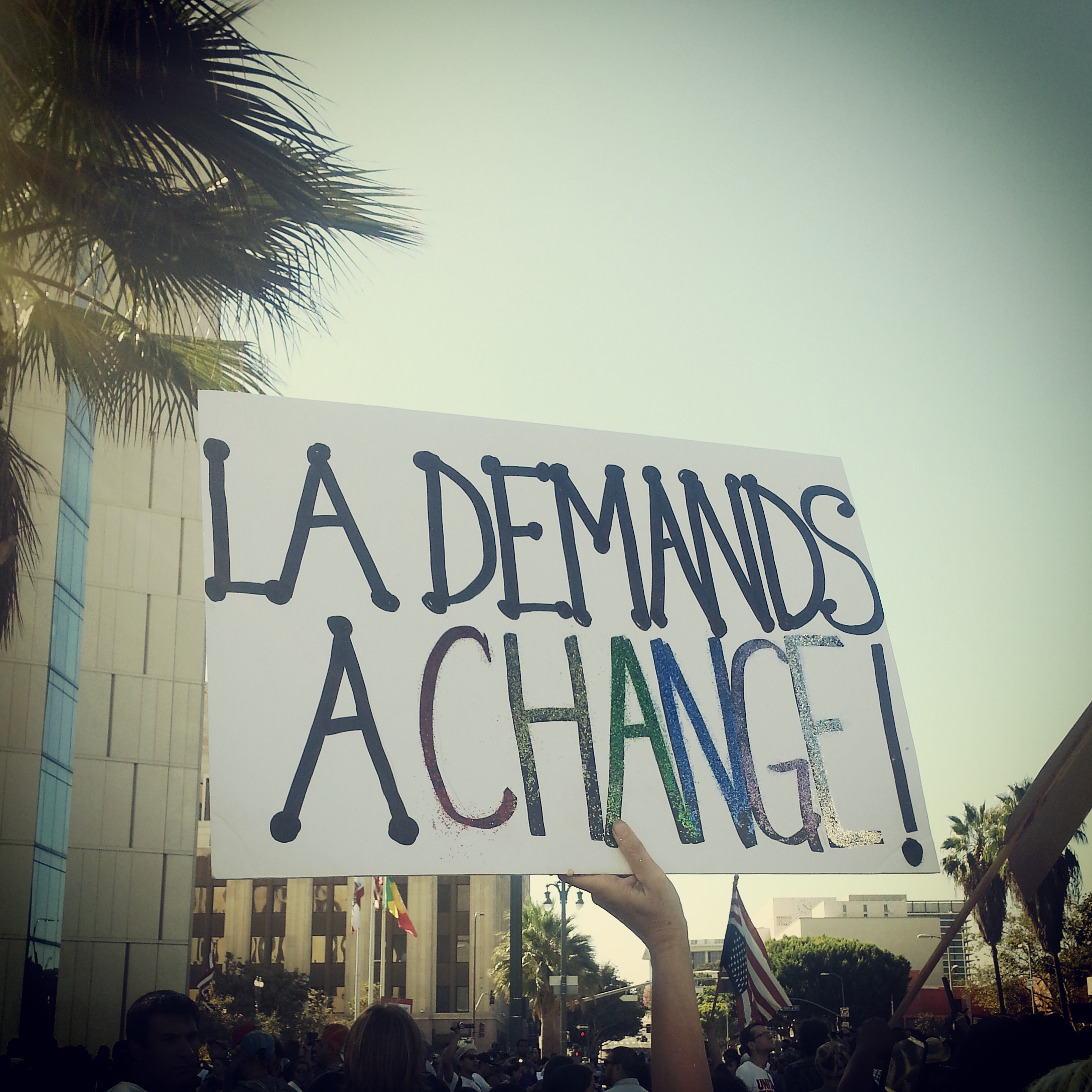
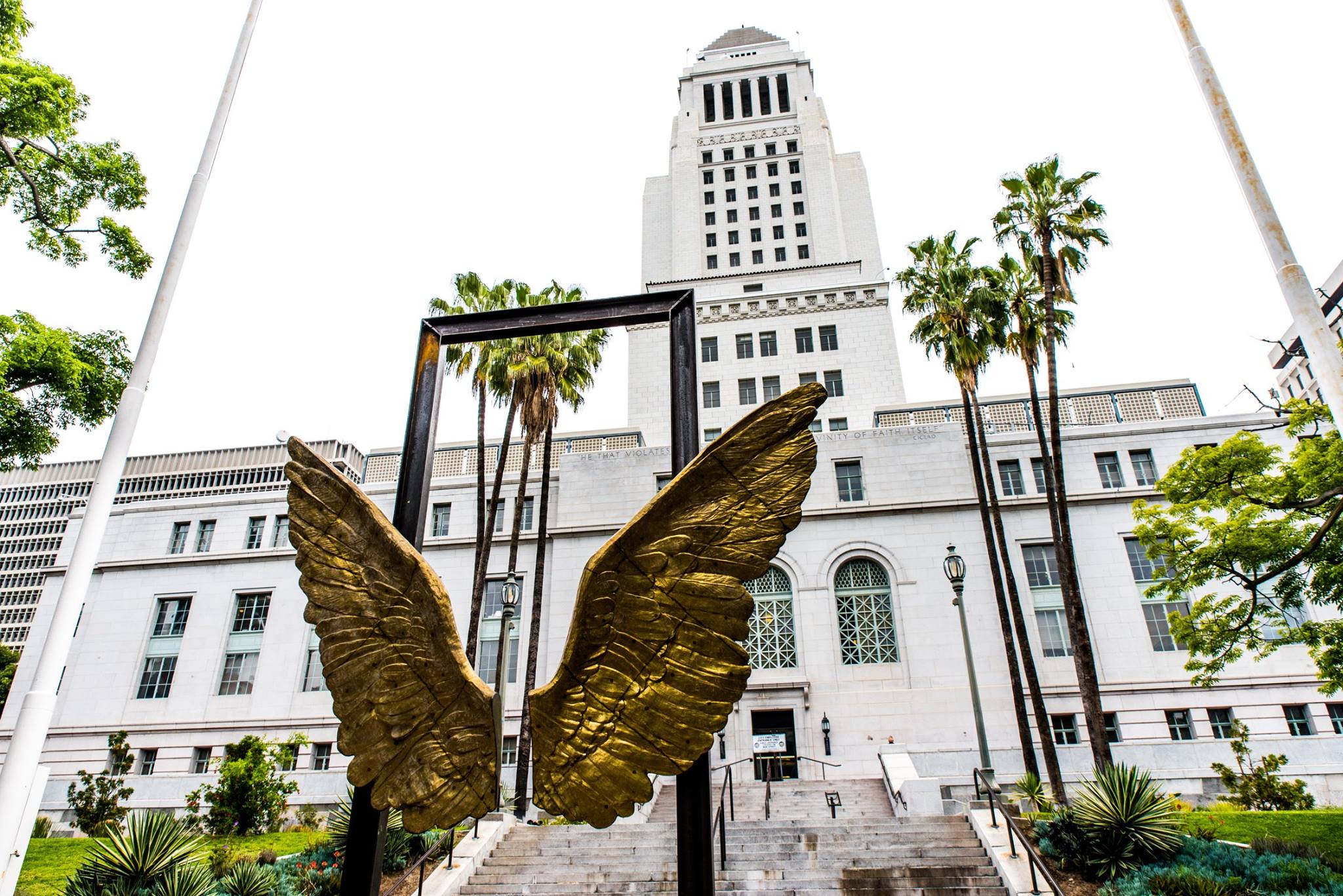
Let’s make L.A. a City of Angels for everyone.

Kindly express interest through emailing Florencealiese@gmail.com.

12973348_10154116003704806_3556664737002559885_o


Cultural Citizenship, Homelessness, Spirit of Place, Uncategorized

Bloom where you are planted

A missing component of the homelessness services delivery system is the integration of anti-racist healing interventions for survivors of trauma inflicted by inter-generational racism. In particularly systemic racism experienced by Black people experiencing homelessness that impacts recovery and establishment of a sense of belonging in newly housed spaces. Racial trauma often presents as mental illness in Black people, and perhaps it is if we consider racism a mental disease. hooks concept of a homeplace provides a framework of community based solutions that have existed in one form of another in thriving Black communities before the disruption created by the invasion of “luxury apartments” and gentrification.

Hooks described a homeplace as “the construction of a safe place where black people could affirm one another and by doing so heal many of the wounds inflicted by racist domination” (p. 42 – Yearning; race, gender and culture politics – 1990).

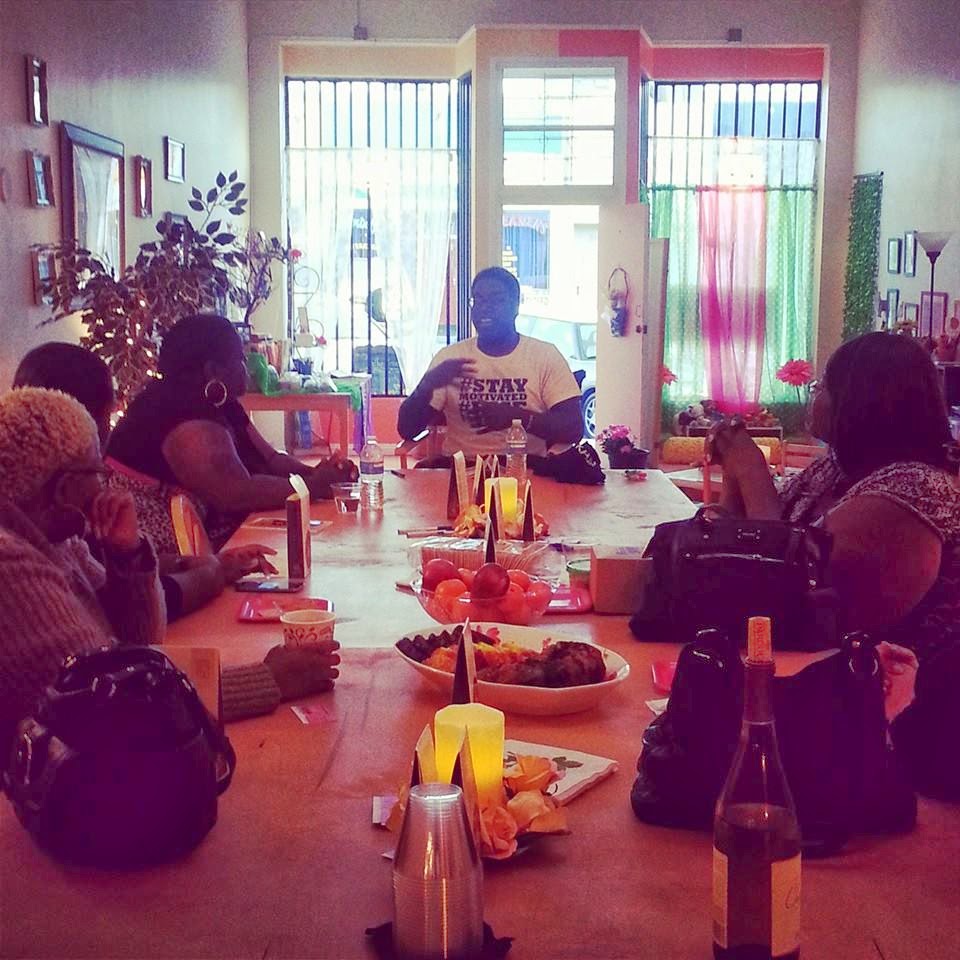
In 2014 inspired by hooks’ concept of homeplace and childhood memories of safe spaces I withdrew my nonprofit retirement savings and pre-paid a year’s lease for a storefront in downtown Inglewood. Like a magic seed, the storefront transformed into a literary arts cafe called Callie Rose Literary Arts or Callie Rose LA.
Theo's reading

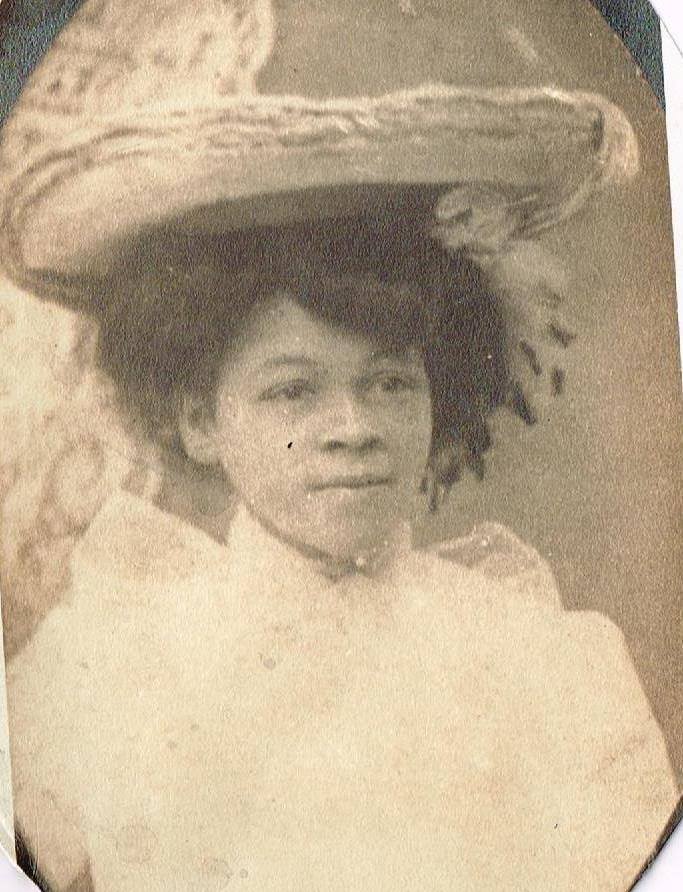
Callie Rose is a nod to my great grandmother Callie whose husband worked at EE Hughes – Memphis Florist Company where he often brought home open roses at the end of the day. Great grandma Callie was the first generation to be born free from the institution of slavery. She would represent the transition of life as a citizen of this country and the mother who then birthed a line of advocates who would fight throughout their life to secure those citizenship rights from the right to vote, to creating a business, school integration, fair housing, etc.
10003423_495389610572094_782724527_n

Through invoking my own family history, I wanted to lead by example in calling forth the memories of our grandparents and other honorable ancestors in a time when so many people are being uprooted and displaced through an invisible movement of containment and internment. So many people no longer know their grandparents, let alone great grandparents and thus believe they are whoever they come across tells them – verse knowing self from within. I believe this is an effect of systemic racism that devalues non-White culture and a symptom of this disease that can be eradicated with intention and safe spaces where such stories could be shared.
20140621_114259

A community building practitioner I wanted to create a homeplace, a safe community based space where people did not enter with deficiency labels such as mentally ill, homeless, re-entry, and other diagnosis. Ms. Jewel’s home, my former caretaker, became my inspiration.

Ms. Jewel was from Louisiana. Her white wooden home with a winding southern porch was on 39th Place off of Normandy. Inside the home one always heard a background soundtrack of soap operas like General Hospital and As the World Turns. And you always smelled food – mainly burning grease preparing bacon for a white-bread bacon sandwich or fried chicken dinner. Inside were many adults called Kin. You never knew how everyone knew each other, but to us children they were just “uncle” or “auntie” and anyone of them could spank you if you got sassy.

Outside on Ms. Jewel’s block you could see the Coliseum at one end. Across the street was a modern apartment building that stuck out on the block, but where two sisters lived who became my friends. Somehow back then, it was safe to play on the streets and neighbors did not have fences so we could run for days across many lawns with no chastisement. It was about time to go back inside when the produce and fish man came down the block announcing the specials of the day “ come get your waterrrrrrr-melon, peaches, collard greens” and the moms and grandmas came out with their carts to do their daily shopping. We would then have to go inside as dinner was prepared and the street would start to repopulate with folks coming home from work. The best memory was the candy house two doors down. When “Tee” the oldest grandson came home, he would take our rascal bunch over with our saved pennies to purchase tart apple styxs, lemon heads, candied mango with chili, and maybe a sour pickle.

In essence, Ms. Jewel’s home represented love, a sense of belonging, validation, safety, food, and hospitality. These were values that may family shared and values instilled within me that I bring to my work today as a community development practitioner with a special focus on addressing systemic causes of homelessness – including racialized land-use policies and attitudes.
20140808_204206

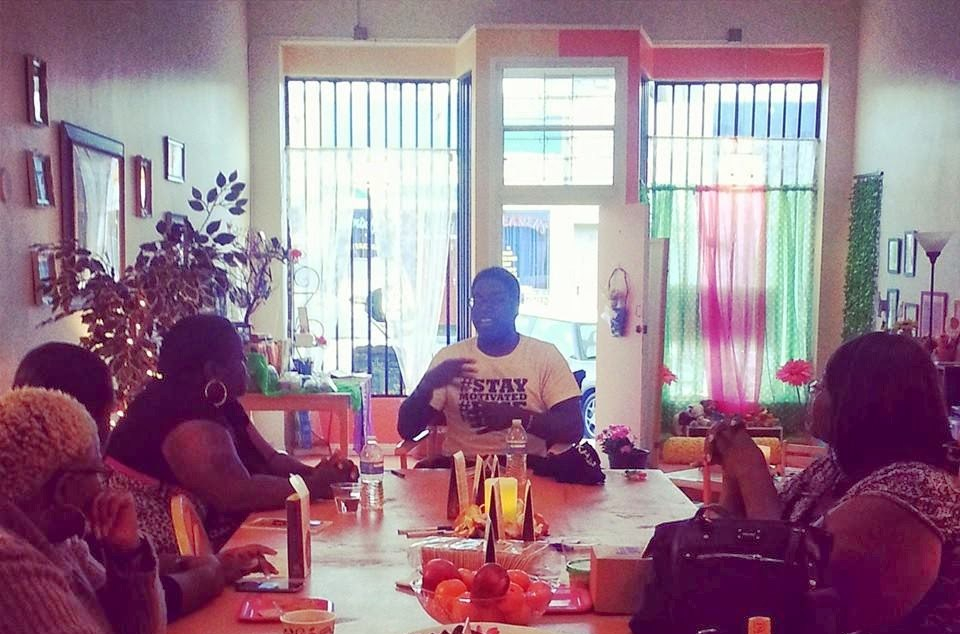
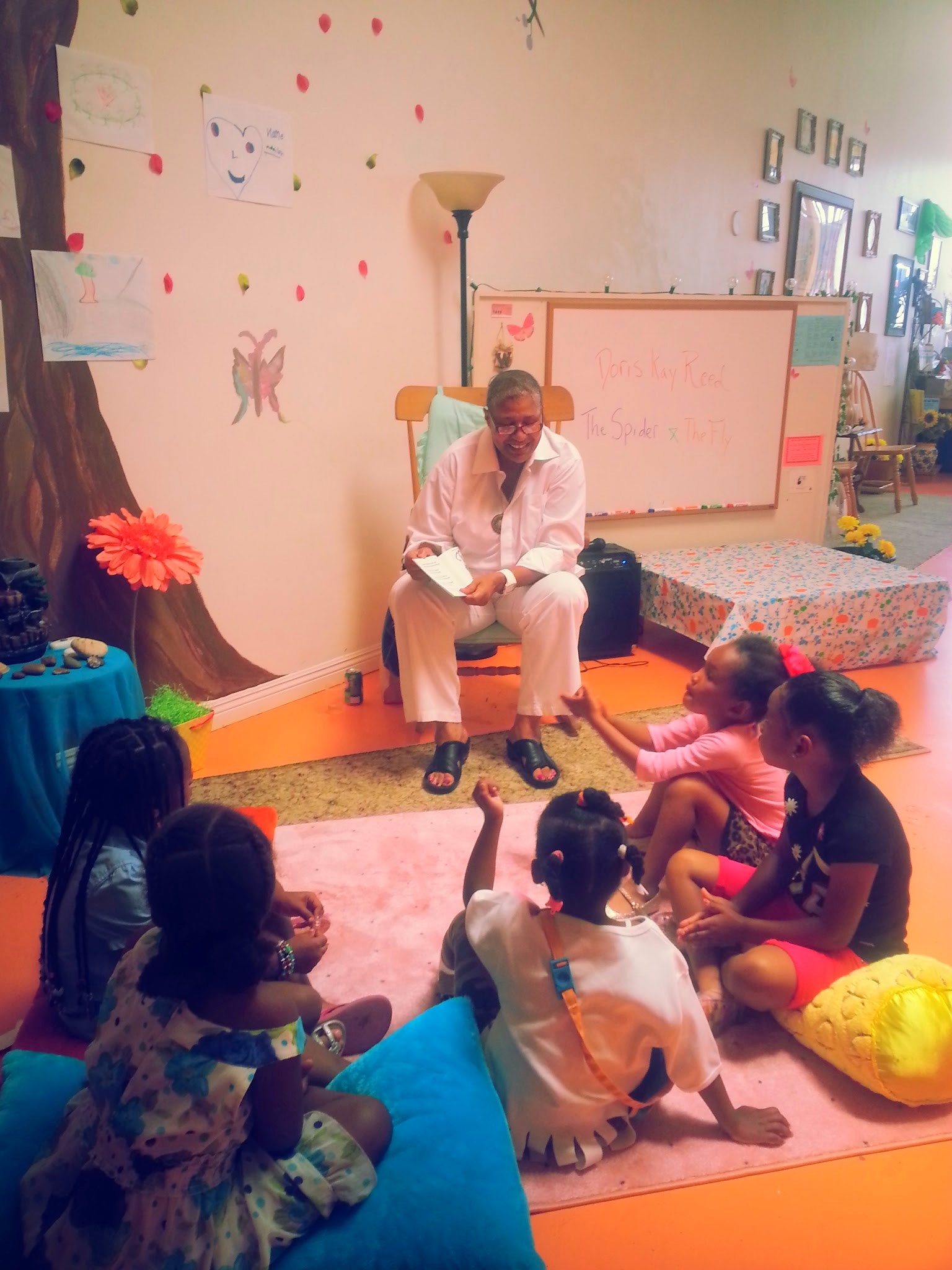
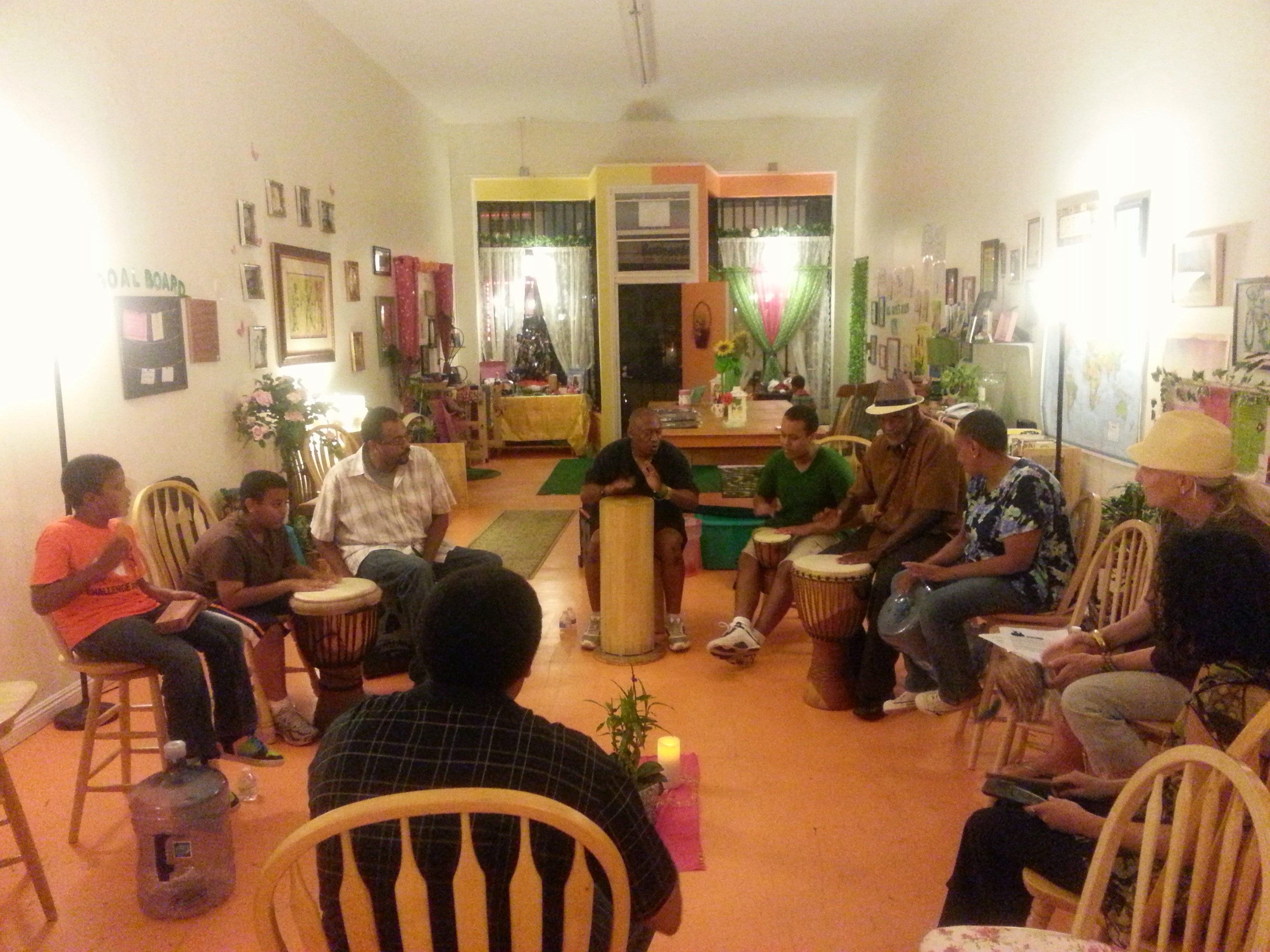
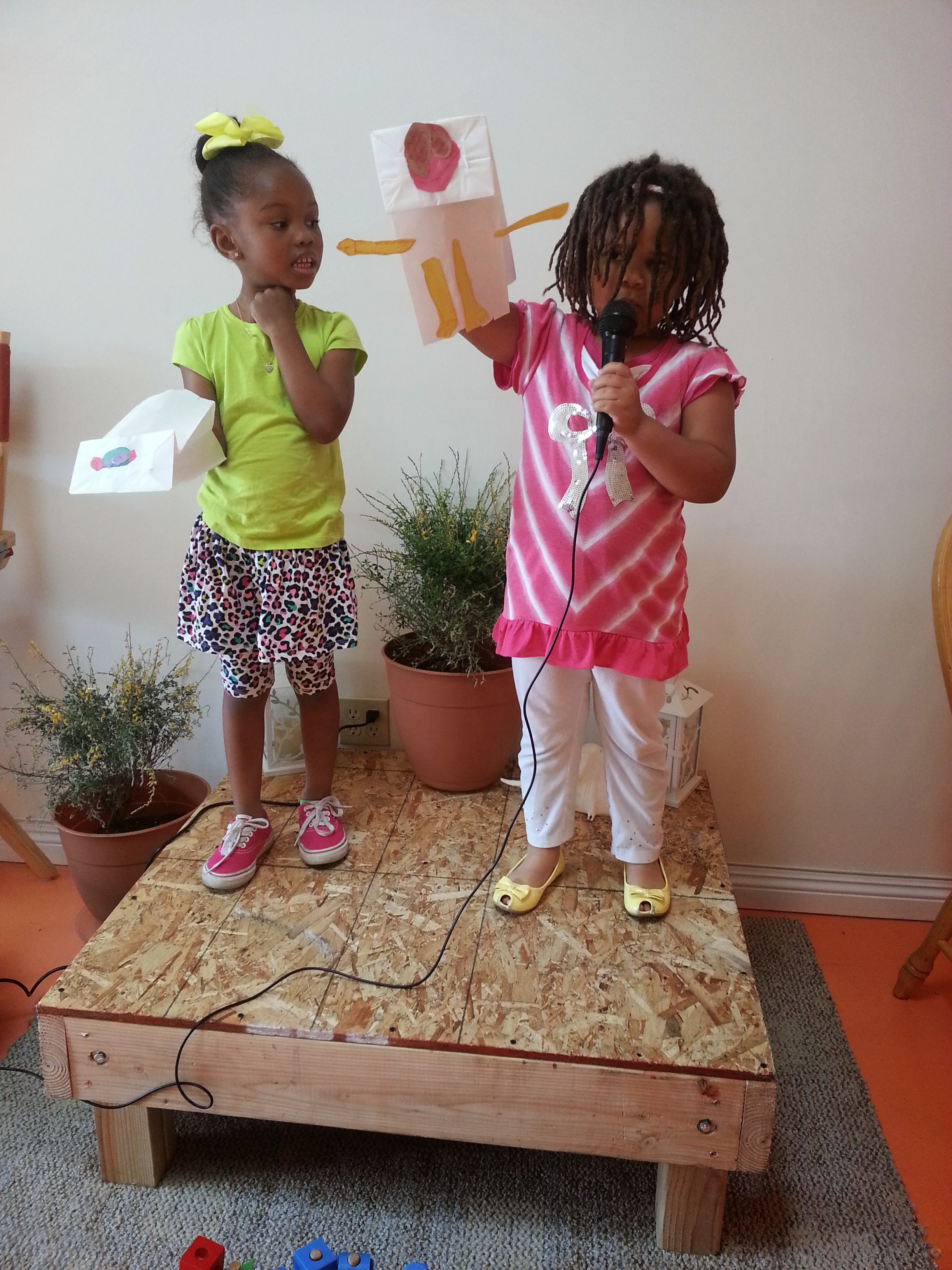
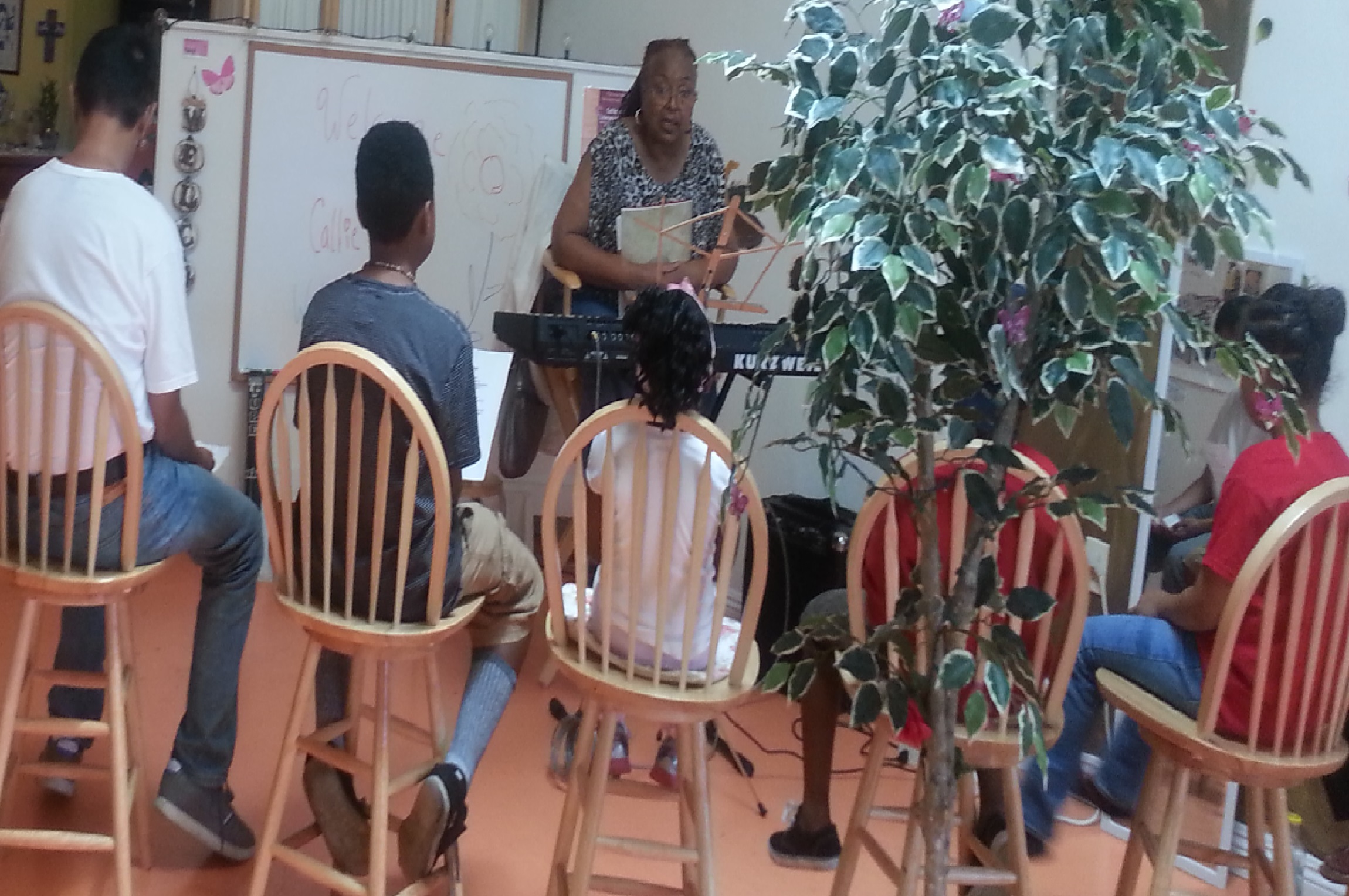
Callie Rose Literacy Arts became the manifestation of this value system. For a year, with the embracement of community members we hosted many dialogues and artistic forms to help people tap into their most authentic self through the literary arts. We hosted spoken word, book readings, films, yoga, drum circles, dinner conversations, writing classes, even genealogy. The cornerstone activity was a small stage that new guests had to stand on to introduce themselves. For many, it was the first time being seen. All of these elements achieved the goal of creating a space where people felt safe, welcomed, and that they could “be”.
20140322_114956

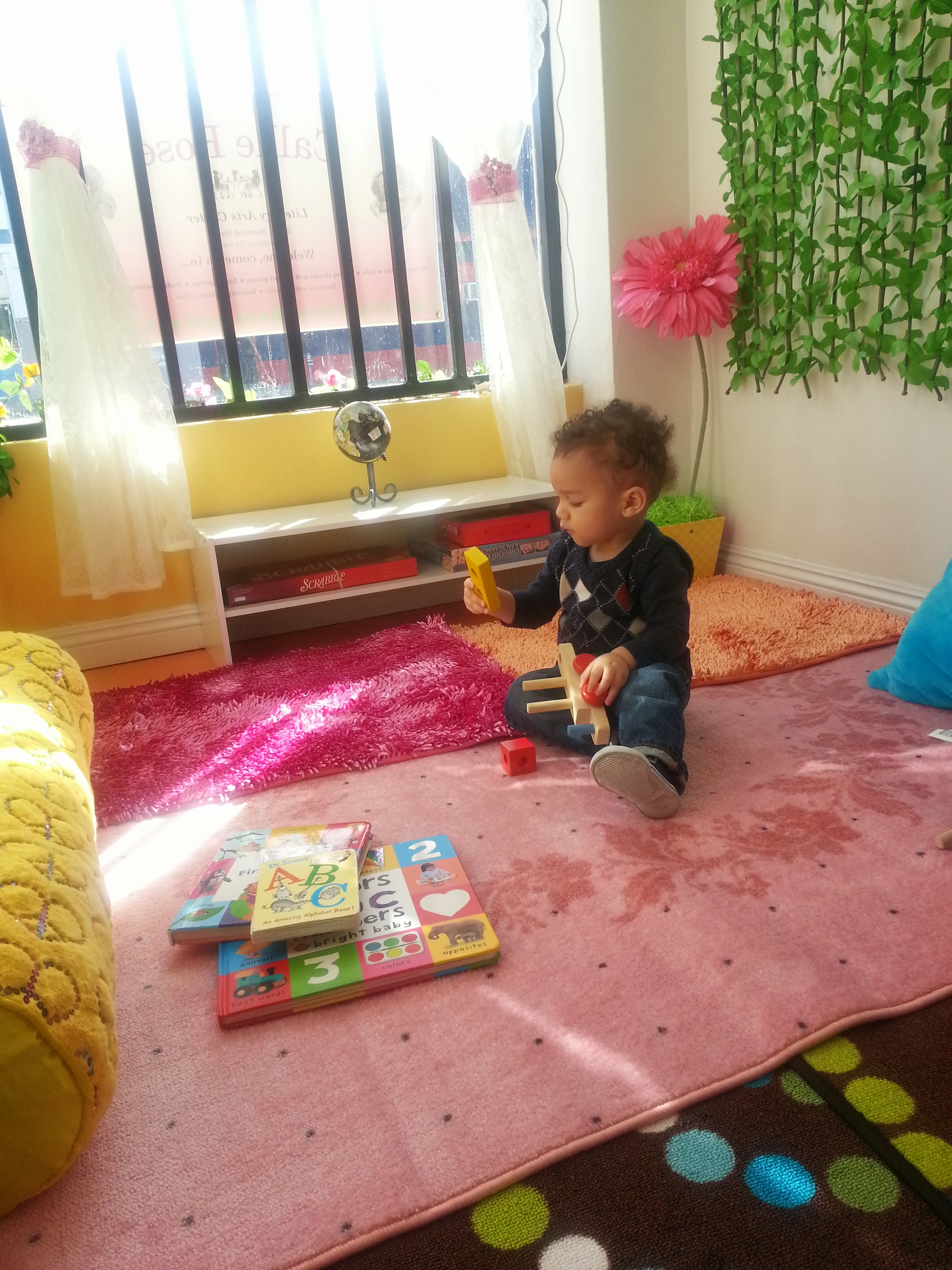
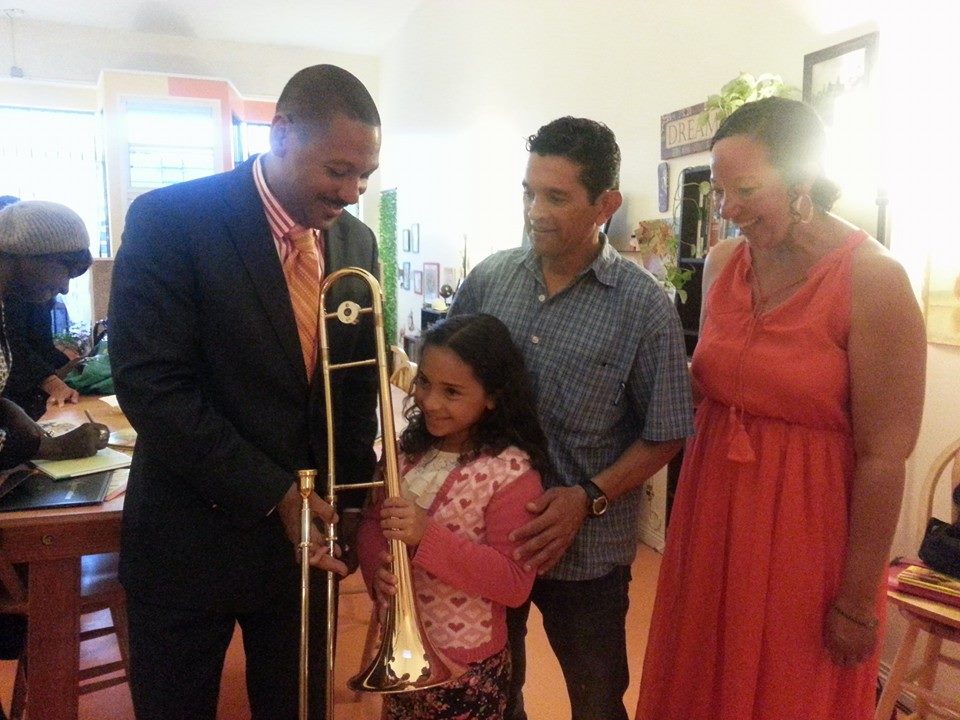
Youth from Inglewood High taught other youth chess. Parents dropped off their children for help with writing – leading to one 7 year old writing her first book on her family trip to Yosemite. We had people experiencing homelessness tutoring children after-school. I had parents with young adults living with severe mental illness leave their information in case their children came through our doors and in one case, the mom anonymously paid a stipend so her daughter could volunteer as it gave her peace of mind that her daughter had a safe place to go that she liked and was understood. Another mom of a severely medically fragile five year old often came in to allow him to play in the children’s corner where a volunteer worked with him so she could have a little break to read a book or take a nap. Callie Rose magically bloomed community where it was planted.
20140213_142601  10308902_520021148108940_5823077035564430549_n

Sadly I had to close Callie Rose in February 2015. I had run out of money and listened to the bad advice. I operated on a donation basis to sustain the value system that everyone was welcomed. Her presence was so great, I know I will reopen her again in the very near future with greater understanding of how to generate income and sponsorship. The experience taught me first-hand how cultural centers operated by cultural workers are a missing piece of our mental health and homelessness systems – particularly as a cultural informed means to have a greater impact on Black people. In cultural practices performed by Black people are not about “showing off” but about “showing in” – a total recall or mirror of one’s authentic self often made invisible or outright denied in greater society. In cultural spaces with Black expressive arts genres, Black being is not a projection to create whiteness – but an expression of a liberated form of the divine right to be.
IMG_20140823_120434

For these reasons to this day I strongly support indigenous Black cultural informed arts practices such as Urban Voices, Urban Possibility Storytelling, Skid Row Walk the Talk Parade, 3 on 3 Basketball at Gladys Park, Africa in the Americas Annual production, Vivir Brasil, FlowSkool, and so many unknown programs that are doing the work on food stamps, donations, and other sacrifices. Too many Black people are dying at the hands and consequences of the disease of racism and its spread through violence. These programs make a difference in the lives of Black people and non-Black people engaged and the greater community. My dream would be to allow these programs to be funded through mainstream services as part of all recovery programs – recovery with mental illness, substance use, and homelessness in particular. I will continue to advocate to make this change.

Today, I am heading out to Trieste, Italy with a large delegation in Los Angeles for a World Health Organization convening sponsored by the Forum Salute Mentale called ‘Good Practice Services: Promoting Human Rights & Recovery in Mental Health’. I am hoping to meet fellow advocates, consumers, and practitioners from around the world on their experience in implementing community based mental health services that support the integration of people with mental diseases and trauma verse criminalizing and isolating like we do in the States. The trip feels a little overwhelming, and yet at the same time I will be bringing a few Callie Rose seeds to plant into the conversation. I can’t wait to see what blooms.Logo2

Homelessness

Feminine Leadership Rising

“Make your home where your spirit live” (Armah, 2002)

Today is the last day as the Homelessness Policy Director for the City of Los Angeles. Led by spirit and latent ambition, I have accepted a leadership role in a smaller, but adjoining city to help convene city leaders and residents around the issue of homelessness.

This move came from a spiritual place. It was a calling from deep within my own path toward destiny and was first presented during my annual “dafa” divination reading in the Ifa tradition. Within the Odu Oshe Meji – my spiritual guides informed me to accept new opportunities. But even when told from a spiritual source, there were many emotional and material considerations before stepping out on faith.

Over the last year I faced head-on the presence of Western patriarchal approaches to homelessness that severely conflicted with my evolving feminine approach. These approaches were not new, but suddenly came into focus with new perspective. To me, homelessness is a symptom of deep social ruptures going back to the process of colonialization and industrialization when Western culture began to silo and compartmentalize aspects of nature disagreeable to the imagined communities drawn up in the minds of a few with power. People living with mental illness, varying degrees of physical abilities, and persons with non-white skin or who did not believe in a Christian God- were banished from society as the emergence of institutions came into being to continue the marginalization of such populations such as the rise in the prison industrial complex.

Homelessness is not a thing to be counted and measured. It is a psychological condition that reflects imbalance of place and power among human relationships. Yet the objectification and dehumanization is how many in the homelessness services field approach solving homelessness – unless they see it as charity – an intractable issue. A Western patriarchal perspective informs homelessness as a public nuisance performed by nonconforming groups of people choosing to live a life out in the margins to disrupt the dominant Utopian views created by Enlightened European men. A Western approach to homelessness neglects cultural complicity in the creation of inequitable societies and the preservations of systems of oppression that continue to be reproduced in each succeeding generation.

As a woman and a not only a woman of color, but a woman with historical inter-generational memory of my African and Native American and Irish ancestors who somehow survived the Trans-Atlantic Slave Trade, the institution of slavery, genocide, and indentured servitude, it pained me physically, emotionally, and spiritually to sit in conversations where humans and the human story were reduced to numbers detached from insight into the soul behind the numbers. While my pain was conscious, I know this detached talk impacted all in the room.

IMG_20180202_083241

In reawakening the goddess consciousness – Starhawk states – “women are not encouraged to explore their own strength and realizations; they are taught to submit to male authority, to identify masculine perceptions as their spiritual ideals, to deny their bodies and sexuality, to fit their insights into a male mold” (Spiral Dance: A Rebirth of the Ancient Religion of the Great Goddess).

In a moment of alignment where my spiritual growth, my academic studies, and my professional work all collided, instead of submission or rebelling in anger- I found a profound appreciation within the situation. I accepted what I first thought were nemesis as teachers. And I have come to thank them for teaching me the language, feel, and energy of the patriarchy. For they pushed me into such a place that my own internal feminine spiritual warrior had no space but to step out of hiding into being. Within this performance and awakening- I began to find peace, joy, and a new creative flow. My current job opportunity emerged during this cycle of acceptance. I began re-evaluating my network and connecting effortlessly with like-spirited allies. Thus while I am moving on to a new position of leadership, I have the opportunity to step deeper into my own power as a feminine-style leader. I am manifesting the me I want to be and the environment to support such growth. What a beautiful place…

Re-energized, I look forward to learning, sharing, co-producing feminine style approaches to the phenomenon on homelessness that focus on collaboration, relationship building, creativity, and inclusion of the voices from the margins. Through an emergent “tribe” of spirited like people- I look forward to creating new metrics and outcomes that quantify edges of the issue, while reflecting movement of the needle of our own social attitudes and behaviors as they rise to a new consciousness of human relations.

IMG_20180202_083625

Homelessness

My Ideal Homelessness System in L.A.


image1

The City of Los Angeles is experiencing continued growth in its homeless population. Rising rents and not enough housing for residents of any means has stacked up against the continual inflow of new residents seeking opportunity, those re-entering after serving time in the military or prison, and younger families gathering their economic footing. A desert with little rain, we have created our imperfect social storm.


Although I have been fortunate to have positions that allow me to sit at the table of decision making- I have found it hard to raise my soft voice against the cacophony of opinions and interest, so decided to do what I do best – write,  and bring my ideas to paper.

25353766_1572695196147671_875692781183107826_n

So I offer these concepts- in no particular order except what comes to mind most pressingly in this moment:

  • Accountability – Establish an inter-regional governing board that owns, oversees, funds, and supports homelessness with people experiencing homelessness- not systems – in mind. This Board would form the Commission that oversees the Los Angeles Homeless Services Authority so that this agency can continue to receive public funding, implement programs, and monitor contracts and performance of homeless service providers. This Board would be responsible for conducting an annual progress report on the state of homelessness within the region, and a unit gap analysis every five years to help with continued planning for those living in extreme poverty.


  • Funding – I am not afraid to say what many are – Measure H and 14991364_10207320556868724_6951534251493100395_o (1)Prop HHH are not enough. Los Angeles is a city of growing inequity and has been for some time. Some reports say we never rebounded from the economic downturn of the 1990’s (when my own parents – fearing the worst – retired early and migrated to Tennessee) and that real wages have not kept up with the population needs since 1979. As such, poverty runs deep and through our Western values- we are a city without many safety nets. Yet we are a city with extraordinary wealth. One hand bag on Rodeo Drive could house a family for six months and one home in Bel Air could house at least 10 older adults. Our investments are selfish and misguided. It will take a re-commitment from all sectors- philanthropy, government, business, and you and me – to truthfully end this crisis.
 

  • Prioritization – Continue to prioritize vulnerable populations. I would like to see an expansion of the chronic homeless focus to include all families with minor children, older adults aged 65+, and youth between the vulnerable ages of 18 to 25. Like in so many other cities – we should challenge ourselves to find shelter for anyone within these populations that presents at a central access station.


  • Specialize – Last year I was gifted to befriend Ms. Habrey, an 85 years young African American woman experiencing homelessness with a long history of feeling like she had been cursed by a group of witches for whom sent the devil to kill everyone she has ever loved. Shelter was not an option for her. She found safety in a hotel room but one day left. I saw her one more time and have not seen her since. She taught me that while persons experiencing mental illness or spiritual curses may experience episodes of homelessness, their needs are so much more and require special care. Mental illness is a brain disease that must be addressed with compassion, shifts mindsets of the broader community, reduced law enforcement engagement, and ability to manage the ups and downs of mental diseases without punishment and criminalization. We must create safe places where residents like Ms. Habrey can find respite as they work with a supporting staff to negotiate safer places to dwell with them feeling a sense of power and control. I continue to dream of a Grandmother’s Village for women like Ms. Habrey.


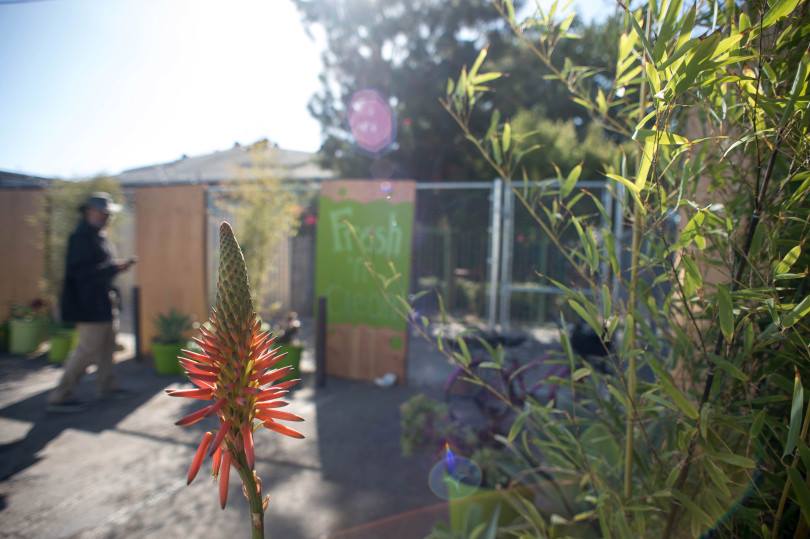
  • Innovate – Not everyone is thinking about permanent housing. For some, the home was the most dangerous place where trauma occurred. Freedom and safety is more precious to them than four walls and a roof. Innovate dwelling arrangements that create incremental steps of safety, stabilization, and community. Have an open mind-set and invest private research and development funding into tiny homes, Kibbutz villages, after-hour drop in centers, Re-Fresh Spots (personal hygiene centers), safe parking, mobile home parks, public help desks. Like brick pavers leading to the front door of a home, create a true pathway into housing that is trauma and culturally informed. Suspend judgment of those who choose this path for we do not understand the breath of their experience.

24067920_1935389503379472_1156248531020217081_n

  • Participatory Planning – No program or housing model should be designed without the voice of those with lived experience. Most folks experiencing homelessness are not service resistant – they were never asked what they wanted and were judged for not wanting what was offered. It is arrogance, not rationality, to design programs and systems for people without having the experience to understand the problem or barrier as to what is truly being solved.


  • Vision over Data – When data drives solutions for a human problem, we have dehumanized and negated the wisdom of lived experience of the people whom we say we are trying to serve. The problem addressed is centered on the needs of those witnessing the phenomenon of homelessness, and not the needs of those living in this chaos or the truthful reflection of failed systems and political choices made by greater society. A collective and shared vision of whom we want to become should champion over data- with data supporting, validating, or challenging our assumptions and measuring our progress.


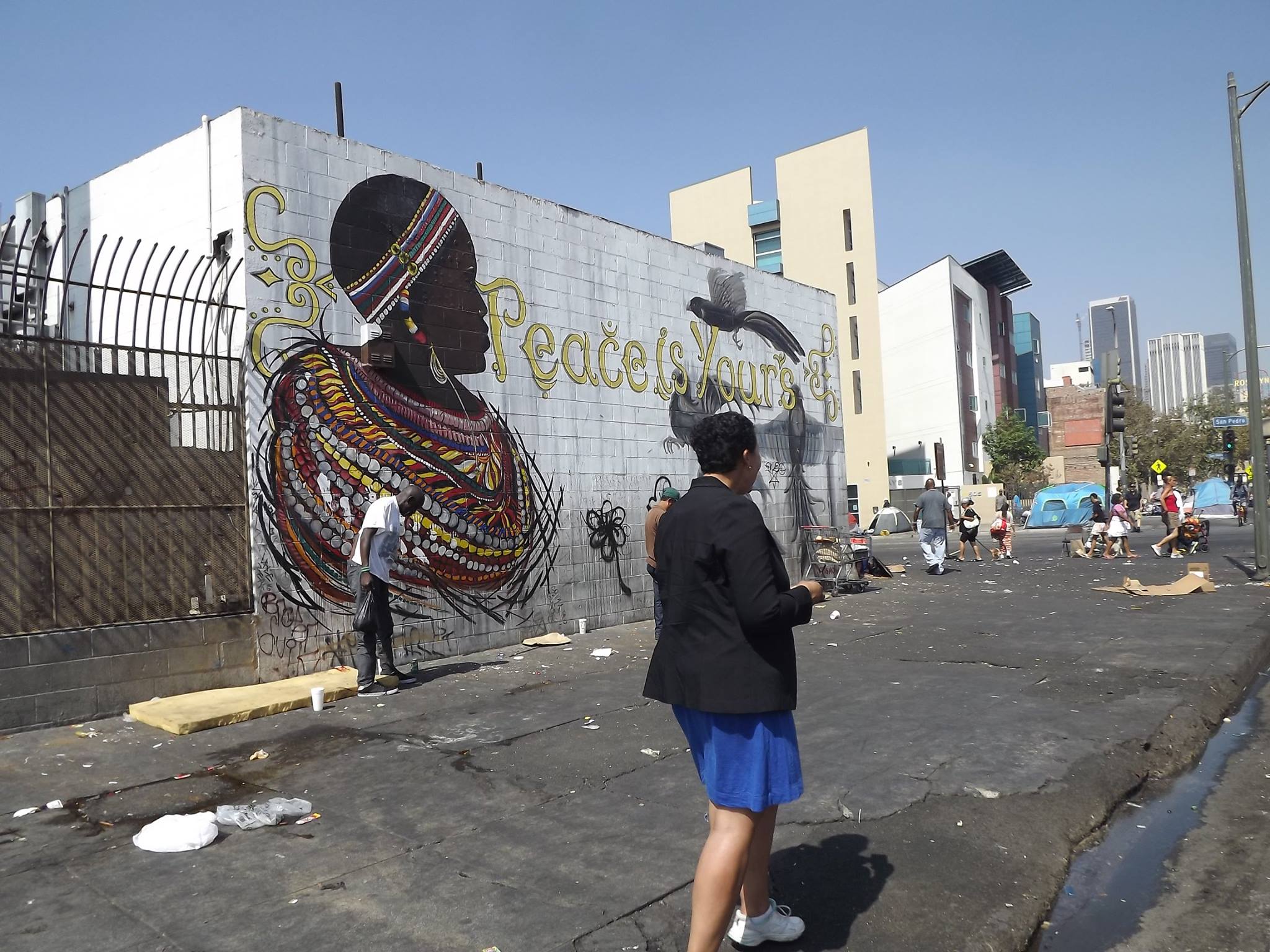
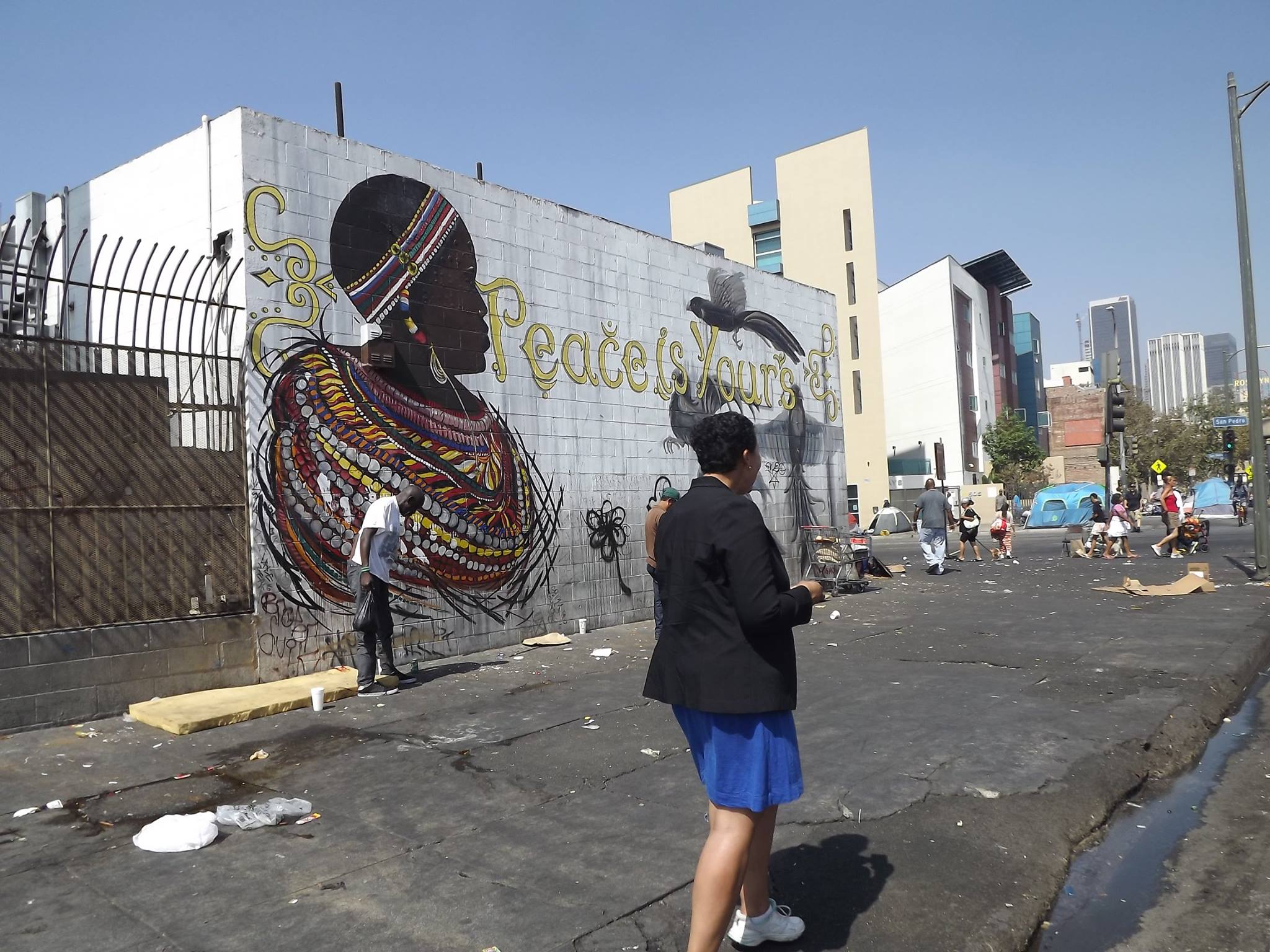
  • Racial Equity – Most painful to me – On day one of m13908951_1383723351642176_2655019672376857232_oy current position, I brought up the topic of race as it relates to homelessness and in a whispered tone was told, “true, but we don’t talk about race.” With over forty-seven percent of people experiencing homelessness identifying as African Americans while African Americans only make up eight percent of Angelinos, and close to eighty-percent of residents in Skid Row, – I was motivated to talk about it, and in fact talk louder about it. Thankfully, two years later, a new Ad Hoc Committee on Homelessness and the Black Community has been formed with a strong presence of members seeking answers and solutions. The veins of homelessness run deep and one cannot escape the sacred history of the African American experience and the performance of this history through homelessness as a daily reminder of our unresolved American wounds.

As Angela Davis inspires to imagine a society without prison- not as a liberal strategy to release persons without consequences- but to challenge the confines of our society and seek new paths of inclusivity and equity toward the vision of Dr. King’s Beloved Community – I too imagine a city that changes its imagined community and no longer discards the “undesirables” into sidewalk tents or dried river beds where they are at threat of the perfect storm. Instead, I  imagine a thriving, diverse city with  many micro-communities feeding the city center with life, nourishment, and sustainable growth. I imagine a city of angels.

12973348_10154116003704806_3556664737002559885_o