[Final paper for Dr. Ed Casey, Ecopsychology 1: Ethics of Place-DPC 732, July 9, 2013]
“To get into the spirit of a place is to enter into what makes that place such a special spot, into what is concentrated there like a fully saturated color” (Casey, 2009, p. 314)
Recently I had an opportunity to intern with the House of Puerto Rico in San Diego (HPRSD), one of the few Spanish Caribbean organizations located in Southern California. HPRSD was founded in 1972 and today serves for the purpose of “sharing and communicating the culture of Puerto Rico to the people of California” (House of Puerto Rico San Diego). Located in historic Balboa Park as a part of the House of Pacific Relations International Cottage program, HPRSD hosts a number of events and activities to highlight the cultures and traditions of Puerto Rico.
Under the guidance and patience of former president Aileen Alvarado Swaisgood, I volunteered to interview former organizational leaders as part of an oral history project to begin archiving the organization’s past. While I had an increasing ongoing interest in the impact on colonialism on Caribbean identity and culture, I was not prepared for the psychological depths of where I would go in the process of finding meaning and context for the stories that I had collected. Entering the work I was fixated on the presence of Puerto Ricans in San Diego and asked: “weren’t Puerto Ricans only supposed to live in Chicago and the east coast?” Or “why would they want to live in a gateway city for immigrants escaping poverty in Mexico and Central America when they have the privilege of citizenship and can live anywhere?” And “how were they able to maintain Boriquén pride in a landscape where they only made up 1% of the Latino culture?”
I soon began to realize that my questions were my own prejudices and biases animated and my quest began to understand how I acquired these perceptions. In appreciation of Levins-Morales’ healing stories and an adaptation of an eco-feminist critique, this philosophical journey allowed me to uncover my own way of knowing and introduced a new way of knowing the world we live in today (Levins-Morales, 1998).
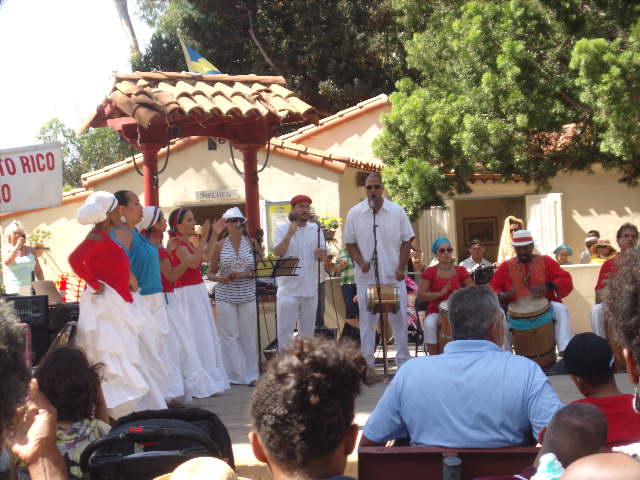
This journey begins in a moment of reverie where I actively imagine the initial intense point of contact between the Western and indigenous worlds enacted through the archetypes of the Conquistador and Itiba Cahubaba, an earth goddess (Bachelard, 1983; Jung C. , 1989):
Intrigued by what lay beyond the horizon at the edge of the deep blue-sea and if the Viking legends of far-away enchanted lands were true, European Man invoked his ancestral wisdom and enlisted the Sirens to call forth young men from across Europe to lead explorations on his behalf (Fuentes, 1992). Hundreds responded and a chosen few were selected to lead voyages in the name of Europe under that mask of his god. Excited, European Man joined each voyage, attached to the bowsprit to guide his troops toward the penetration of new found virgin lands.
Of all the lands he entered, he became most in love with tropics of the Atlantic where a string of emerald islands embellished the rich turquoise-blue waters along the equator created a “field of power” that animated trees to dance, mountains to roar, sea animals to sing, and where the people- adorned in gold – gleefully welcomed European Man onto the land, as if they had been waiting for him (Hillman, 1989, p. 40). The place was magical.
One evening while observing a beautiful, glowing sunset, as only exist in this part of the world, and inebriated with wine, the most beautiful woman emerged from the setting sun (Nunez, 2006). Dusted in gold, her body was alchemically designed out of silver, lead, copper, iron, mercury, and lapis. She graciously danced on the surface of the water, spraying her lands with an afternoon mist to cool off the long hot days. She sang as she danced; her voice was as calming as the wind. She was the goddess of the land and her name was Itiba Cahubaba (Baerga, 2013).
Unable to withhold his desire, European Man leaped forward onto Itiba Cahubaba and raped her. Confident, yet impotent, European Man enslaved Itiba and raped her for 40 days and 40 nights with odd seeds, machinery, and equipment, until at last she became pregnant (Griffin, 1978). Defeated, the light in Itiba’s soul began to diminish and she stopped singing and dancing; stopping her daily blessing of the land. This rupture in ritual impacted the lands and they became less fertile. Instead of lush tropical rain forests and unimaginable size fruits and other indigenous nutrients, the land began to produce non-edible growths such as cane sugar, tobacco, coffee, and cotton. Itiba’s children – the fierce Caribs, mighty Arawaks, and tenacious Tainos – also became more lifeless, withdrawn, and for the first time- suicidal. They felt their land rejecting them in favor of European Man’s children and for the first time felt like strangers within their own environment. What did they do to make Itiba Cahubab abandon them?
Finally Itiba’s embryonic water broke. Yet the dry land could not absorb the heavenly flow so the land flooded. Her people had to settle at on the tops of the highest mountains as their landscape was transformed (Crespo, 1993). Itiba’s labor was difficult. Her people cried out for help, yet she could not hear them due to the intensity of the labor pains. Her contractions shook the earth creating hurricanes and earthquakes. Itiba turned toward the sun to allow its warmth to ease her pain and in doing so created a solar eclipse. The people thought for sure the world had come to an end and yielded to death so that only a few survived. As the baby neared the opening of the birth canal, she bled and bled, mixing her blood with those of her people and reddening the earth.
European Man waited anxiously in anticipation of the birth. He was sure that his influence would create a mighty human being. European Man never felt more alive.
Through my fantasy of the colonial conquest, I sought to honor the indigenous epistemology that existed in pre-Columbian society.
A Taino (the indigenous group on the island of Boriquén) creation myth symbolizes this recall process. According to the legend, after a heroic hunter was swept up in the winds and presumed to be dead, his family placed his hunting equipment into a gourd and hung the gourd from the ceiling according to custom. As the village began to experience a food famine, the gourd filled up with enough fish to feed the people. Eventually the gourd is broken over human greed and the waters flow out creating a great flood and the people had to adapt to a new way of life (Crespo, 1993; Jaffe, 2005). While the fish image resembles Jung’s reference of restoring the “lost soul” I believe the flood is the key image in this myth (Jung C. , 1969). The flood, to me, represents the submergence of the indigenous thought and belief into the unconscious under 500 plus years of colonialism.
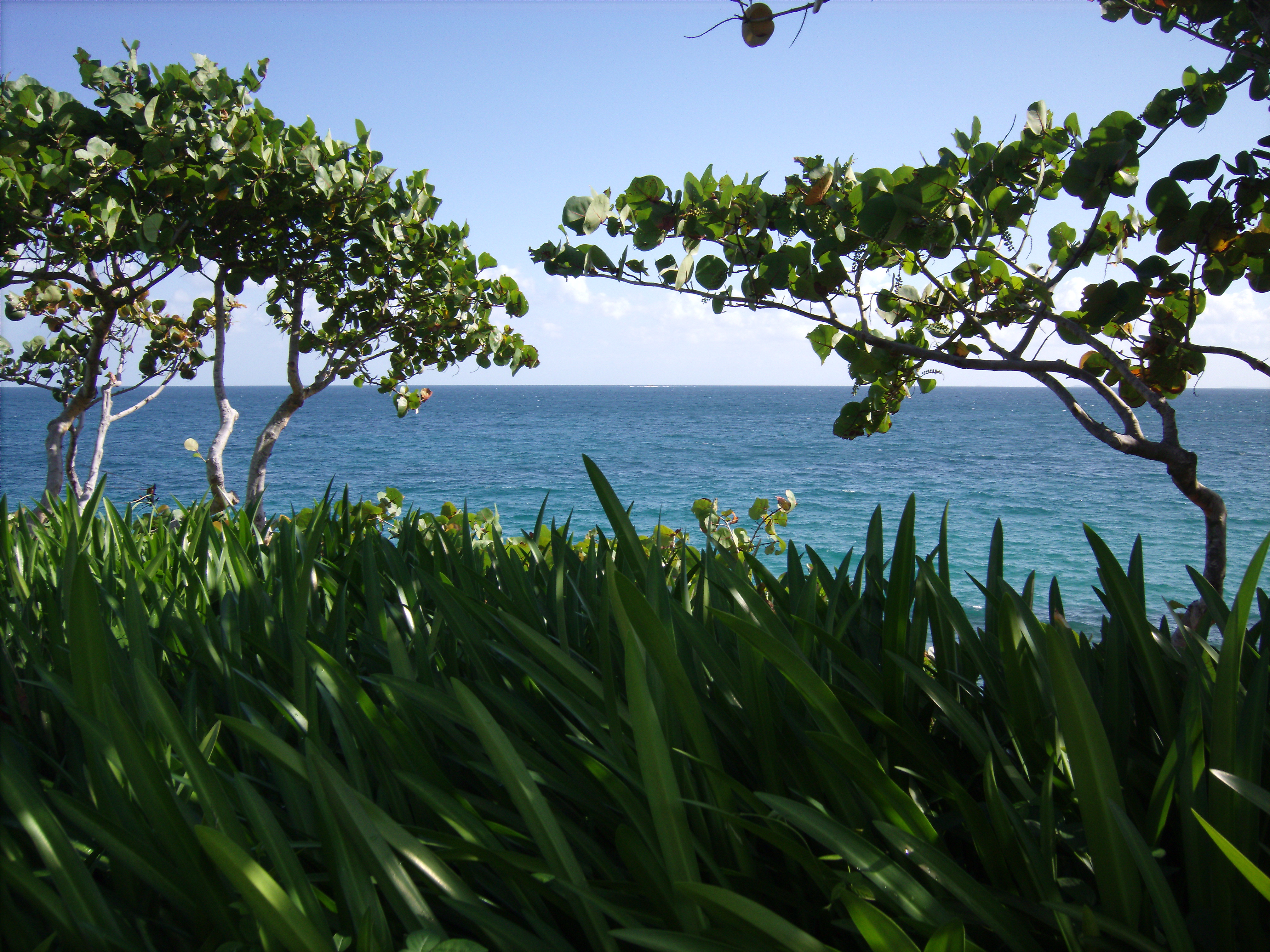
The pre-Columbians believed in an integrated relationship between man and nature where the world was animated and spirit existed in matter (Ani, 1994; Deloria Jr., 2003; Fuentes, 1992). Man respected nature equally in her visible and non-visible forms. Fuentes (1992) observed that indigenous groups such as the Tainos lived with fear of nature in respect for her cyclical nature of destruction (i.e. earthquakes, floods, and hurricanes) and creation. He states, at “the aboriginal culture of Mesoamerica …carried a system of beliefs in which the idea that the world had been created not once but several times was absolutely essential” (p. 94). He believed that the questions of the Indian mind were “how long will we last? How can we build something that will protect us from destruction?” (p. 98). Their epistemology was based on their experience and observations of nature and her changing cycles. Deloria (2003) stated “thousands of years of occupancy on their lands taught tribal peoples the sacred landscapes for which they were responsible….hence revelation was seen as a continuous process of adjustment to the natural surroundings…” (p. 66).
Fuentes (1992) further observes, “The need to understand time was of paramount importance in such a world, for it meant the difference between survival and destruction. To dominate time was to assure the continuity of life” (p. 98). Time was not thought of as a singular event moving along a linear projection as it is in the Western world, but centered on the changes in nature. Deloria (2003) explains, “…a tribal conception of history almost everywhere was the description of conditions under which the people lived and the location in which they lived…when (?)…was …‘a long time ago’ ” (p. 101). Fuentes (1992) also highlights a common theme of a returning god in pre-Columbian stories. Sacred ceremonies and behavioral expectations and norms were set for the community to ensure a positive return. Fuentes (1992) concludes that the initial welcoming among these groups of the initial conquistadors was due to the expectation of the returning god. This understanding of the pre-Columbian epistemology advances our knowledge of indigenous way of life, culture, and values to not only understand how life existed then, but to also uncover remnants that still exist today (Levins-Morales, Remedios; Stories of earth and iron from the history of Puertorriquenas, 1998).
Pre-Columbian view of life contrasted sharply with the perception developed in Western thought. Plato is credited with the initiation of separating the conscious and unconscious minds through his articulation of forms (Ani, 1994). According to Casey, Plato believed “we are creatures of becoming. I am nothing but an imperfect copy of the perfect form” (Class lecture on January 28, 2013). Plato stated:
…therefore, that in all the realm of visible nature, taking each thing as a whole, nothing without intelligence is to be found that is superior to anything with it, and that intelligence is impossible without soul, in fashioning the universe he implanted reason in soul and soul in body, an so ensured that his work should be by nature highest and best (Plato, 1965, pp. 42-43).
Through these words Plato births the foundation of modern Western thought that secularizes the spiritual from the visible world and also initiates a hierarchy among beings. With man created as an imperfect being, the drive toward perfection was also planted by Plato’s words that later became a drive for greater scientific knowledge and even racial superiority (Ani, 1994). Plato’s ideas are also believed to be reflected in Christianity with the thought of an “after-life” where man will finally be able to find perfection (Ani, 1994).
In the sixteenth century Descartes adds scientific value to this separation of the parts as well as introduces man as an individual verse communal being in his thoughts; “substance is a thing that exists in such a way that it needs nothing else in order to exist” (Casey, class lecture on January 28, 2013). By the sixteenth century the European man thus had created the psyche of the colonizer through his incremental drive for perfection over what existed before him, his desire to prove his individualism, and the separation from the spiritual/natural world through secularization. His energy was released in the annihilation of all things “other” including women, natural ways of knowing, animals, and non-European civilizations. Levins Morales (Medicine stories: History, culture and the politics of integrity, 1998) in describing the European witch trials, “among other things, the witch persecutions established elite male, monopolies of knowledge, especially medical and spiritual knowledge” (p. 48). Deloria (2003) further stated:
The very essence of Western European identity involves the assumption that time proceeds in a linear fashion; further it assumes that at a particular point in the unraveling of this sequence, the peoples of Western Europe became the guardians of the world (p. 62).
The European domination of knowledge has remained a key legacy of the colonial period. In its wake, colonized groups continued to be labeled as “other.” Social scientists, including psychologists, have been complicit in sustaining this perspective through scapegoating negative social behaviors among minority racial groups as inherent tendencies versus responses to ongoing oppression (Lewis, 1963; Memmi, 1991). This practice reinforces discrimination and weakens civil societies. The Puerto Rican ethnic group is one example of how these beliefs have manifested in the social, economic, and political marginalization by the U.S. government and institutions.
In his Harper’s Journal essay entitled Manifest Destiny, John Fiske (N.d.) wrote;
It was for Spain, France, and England to contend for the possession of this vast region, and to prove by the result of the struggle which kind of civilization was endowed with the higher and studier political life. The race which here should gain victory was clearly destined hereafter to take the lead in the world….When the highly civilized community, representing the ripest political ideas of England, was planted in America…the growth was portentously rapid and steady. (p. 584).
After the Civil War and the collapsing of other European power in the Western Hemisphere, a young United States with its cowboy attitude sought to prove its muster on the world stage through the capture of the remaining Spanish territories within the Caribbean (Thomas E. , 2010). Senator Henry Cabot Lodge is said to have placed large red Maltese crosses across a large map “to signify future American possessions: Hawaii, Cuba, Puerto Rico, a canal across the Panamanian isthmus” (Thomas E. , 2010, p. 71). Driven by ego-fueled strategy, the U.S. had no thought out plan on what to do with the new territories and the thousands of people who were now in its tutelage. According to Thomas (2010), Lodge and Roosevelt, “knew that empire was no laughing matter, and in the giddy aftermath of victory over Spain, difficult decisions loomed” (p. 369). Economically, Puerto Rico was deeply impoverished due to lack of investment by 500 years of Spanish domination (Lewis, 1963). According to Lewis (1963), while Americans’ initial image of Puerto Rico was “the romantic image of a rustic, unspoiled paradise” it soon turned to an “image of a dirty, backward island…” (p. 18) .
This latter image penetrated the American psyche and has been the root of resistance toward full integration of the island or release for its own independence . Zimmerman (2002) asks, “would the Americans, with their spotty conduct toward the natives of their own continent, treat their new subjects with dignity and respect?” (p. 366). Since acquisition, the U.S. has followed a pattern of social and economic marginalization of Puerto Ricans through an over-emphasis on negative stereotypes and poverty-related behaviors. Lewis (1963) states that “the society has thus rarely been seen as a composite whole” and blames U.S. educators, social scientists, and consultants “pre-empting the very future of the society” through their cultural biases and beliefs (pp. 20-21).
Even after World War II when thousands of Puerto Ricans migrated to the U.S. with citizenship status, they were marginalized in the urban ghettos of Chicago and New York and stigmatized by negative images such as gang affiliation, sexual promiscuity, ignorance due to limited knowledge of English, and laziness Since 1898, the U.S. has used these images to justify maintaining Puerto Rico as a Commonwealth status. Citizen rights have been gerrymandered based on geographic location on or off the island. For instance, it one lives on the island, he cannot vote in the U.S. Presidential Elections, however if he lives in California or New York- on the mainland, he can (Zimmerman, 2002; Thomas L. , 2010). Memmi (1991) states “whenever the colonizer states …that the colonized is a weakling, he suggests thereby that this deficiency requires protection. From this comes the concept of a protectorate” (p. 82).
Through the concept of cultural citizenship many Puerto Ricans have thrived in spite of the politics that seek to deny their existence. Flores and Benmayor (2004) state “unlike assimilation…or cultural pluralism…cultural citizenship allows for the potential of opposition, of restructuring and reordering society” (p. 15). The concept of cultural citizenship also suggests a re-emergence of the value in cultural ties over that of the Western concept of nation-state with its arbitrary geographic boundaries.
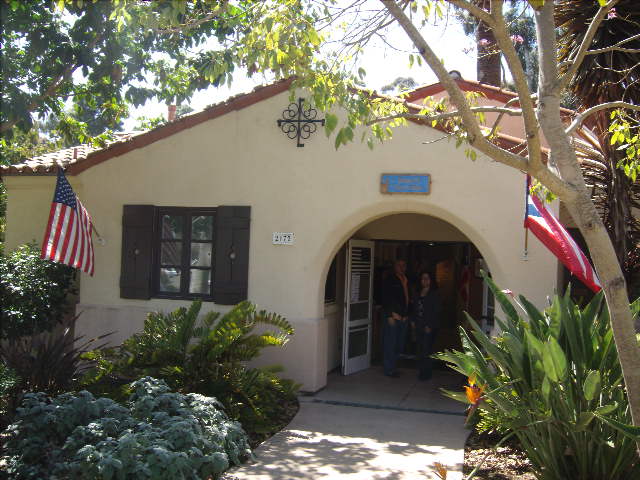
In constructing their cottage in Balboa Park, HPRSD had to overcome very political challenges that reflect mainstream perspectives toward the island. Through a strong belief in their vision they overcame these obstacles and created a homeplace as inspiration to all who visit. HPRSD has also created a third-space where Puerto Ricans can express their biculturalism without the need to over-value their Puerto Rican or American heritage. They are able to resist the dichotomy that greater American society has imposed which centers on complete assimilation into U.S. culture, including English as the only language (Zentella, 2004).
The member’s stories are animated with their own autonomy and not mimicking the immigrant’s hero’s journey that is often reflected in immigrants’ stories (Levins-Morales, Medicine stories: History, culture and the politics of integrity, 1998; Rua & Torres, 2010). There is power when “Ralph” speaks of receiving his first brand new pair of shoes for the flight to NY right after the ending of WWII and how recently a postal worker asked him what kind of stamp was needed to send a letter to Puerto Rico. And when “Tia” shares how the Italian and Jewish women helped her learn how to use the dangerous sewing machine in the garment factory. Or “Joe” recalls how he found academic focus within the walls of ASPIRA, a community based academic enrichment program, during the tumultuous 1960’s in Brooklyn. And when “Emily” talks with pride about her dad who was a doctor and headed the tuberculosis sanitarium on the island as well as how he told family stories under a special mango tree on visits home. There is strength when “Ernesto” shares his ability to “come out” in New York where he met his life-partner and also provided quality healthcare services to Veterans with HIV –often a taboo- during the 1990’s at the VA in New York. And when “Gene” talks about how he united Latinos in Balboa Park on Sundays through drumming. And there is human admiration when Kitty talks with reverence about her mom, Casilga Pagan, who was a founder and first president of HPRSD that promoted tradition, voter participation, and reciprocity within the community.
These voices are no longer stuck in time, victimization, political limbo, or negative stereotypes. No, these voices speak of creative ways that ordinary people have found to embrace the challenges of the twenty-first century with dignity, self-respect and sense of community. These compile a new story that people like me still stuck in a Western dichotomy or right/wrong, good/bad, colonizer/colonized would completely miss without understanding that different ways of knowing exist.
“Intellectual decolonialization is a prequisite for the creation of successful political decolonization and cultural reconstruction strategies” (Ani, 1994, p. 1) Through the creation of a “homeplace” amidst the memorial to Balboa, a conquistador, I believe that the unconsciousness of the Puerto Rican soul has emerged from the flood waters to guide her people into a new world of life where the confinement of “otherness” will no longer exist in the people’s psyche (Watkins & Shulman, 2008). Casey (2009) talks about ways of learning after prolonged displacement and he states:
It follows that to learn something…is to learn how to connect, or more exactly reconnect, with one’s place. At the same time, to reconnect with that place it to engage in a form of collective memory of one’s ancestors: to commemorate them (p. 37).
Furthermore I believe that this process reflects thousands taking place around the world as we each seek to reconnect back to the ways of knowing that have been suppressed too long in our unconsciousness so that we can create new paradigms to guide us in better tending of the World Souls. We live on one earth and it is time that we begin to get to know her through a variety of knowledge systems- seen and unseen. The homeward journey of the members of the HPRSD is an example for creating a new paradigm of physical and mental environmental change.
References
Ani, M. (1994). Yurugu. Washington, D.C.: Nkonimfo Publications.
Bachelard, G. (1983). Water and dreams; An essay on the imagination of matter. Dallas: The Dallas Institute of Humanities and Culture.
Baerga, F. (2013, April). Taino cyber culture center archieved pdf files. Retrieved from Coqui’s Village: http://www.indio.net/taino/pdf/mythcuba.pdf
Casey, E. (2009). Getting back to place: Toward a renewed understanding of the place world (Second ed.). Bloomington: Indiana University Press.
Crespo, G. (1993). How the sea began. New York: Clarion Books.
Deloria Jr., v. (2003). God is red: A native view of religion (30th Anniversary Edition ed.). Golden: Fulcrum Publishing.
Fiske, J. (Nd). Manifest Destiny. Harper’s New Monthly Magazine, LXX(418-38), pp. 578-590.
Flores, W., & Benmayor, R. (2004). Constructing cultural citizenship. In Latino cultural citizenship: Claiming identity, space and rights (pp. 1-23). Boston: Beacon Press.
Fuentes, C. (1992). The buried mirror: Reflections on Spain and the New World. New York: Houghton Mifflin Company.
Griffin, S. (1978). Woman and nature. San Francisco: Sierra Club Books.
Hillman, J. (1989). Polytheism. In A blue fire (pp. 38-44). New York: Harper Perennial.
House of Puerto Rico San Diego. (n.d.). Membership Application Page. San Diego, California, USA. Retrieved July 8, 2013, from http://www.houseofpuertorico.com/join-hprsd.html
Jaffe, N. (2005). The golden flower. Houston: Pinata Books.
Jung, C. (1969). Concerning Rebirth. In The collected works of C.G. Jung (R. Hull, Trans., Original work published 1939 ed., Vol. Vol. 9, pp. 135-147). Princeton, NJ: Princeton University Press.
Jung, C. (1989). Memories, dreams, reflections. (A. Jaffe, Ed., R. Winston, & C. Winston, Trans.) New York: Random House.
Kao, G. (2010). The universal versus the aparticular in ecofeminist ethics. Journal of Religious Ethics, Inc. , 616-637.
Levins-Morales, A. (1998). Medicine stories: History, culture and the politics of integrity. Cambridge: South End Press.
Levins-Morales, A. (1998). Remedios; Stories of earth and iron from the history of Puertorriquenas. Boston: Beacon Press.
Lewis, G. (1963). Puerto Rico: Freedom and power in the Caribbean. New York: Harper & Row.
Memmi, A. (1991). The colonizer and the colonized. Boston: Beacon Press.
Nunez, L. (2006). Orunmila and the hole. In Santeria stories (pp. 215-219). Putnam: Spring Publications, Inc.
Plato. (1965). Timaeus and critias. (D. Lee, Trans.) London: Penguin.
Rua, M., & Torres, A. (2010). Introduction. In Latino urban ethnography and hte work of Elena Padilla (pp. 1-21). Urbana: University of Illinois.
Thomas, E. (2010). The war lover: Rooselvelt, Lodge, Hearst and the rush to empire 1898. New York: Little Brown and Company.
Thomas, L. (2010). Puerto Rican citizens: History and political identity in twentieth-century new your city. Chicago: University of Chicago Press.
Watkins, M., & Shulman, H. (2008). Toward psychologies of liberation. New York: Palgrave Macmillian.
Zimmerman, W. (2002). First great triumph. New York: Farrar, Straus, and Giroux.

 Alisa's thoughts on Beloved Communities