Uncategorized

Somos Cubanos: Afro-Cuban Resistance and Adaptation, 1902-2002 (abbreviated)

The following is a copy of the ‘Introduction’ to a Master’s thesis (a program in Bilingual/Bicultural studies that I actually never completed) written in 2011 seeking understanding of anti-Black racism in Cuba society. This was written before I had the opportunity to travel to Cuba as part of a dance program to understand how Afro-Cuban culture was embodied in dance and other Afro-Cuban Folkloric cultures, so some ideas have since evolved. However, Trump support out of Florida in the recent election made me reflect on this study and wanted to offer it to others seeking understanding, particularly when African Americans and Latinx often talk about building cross-cultural political alliances.
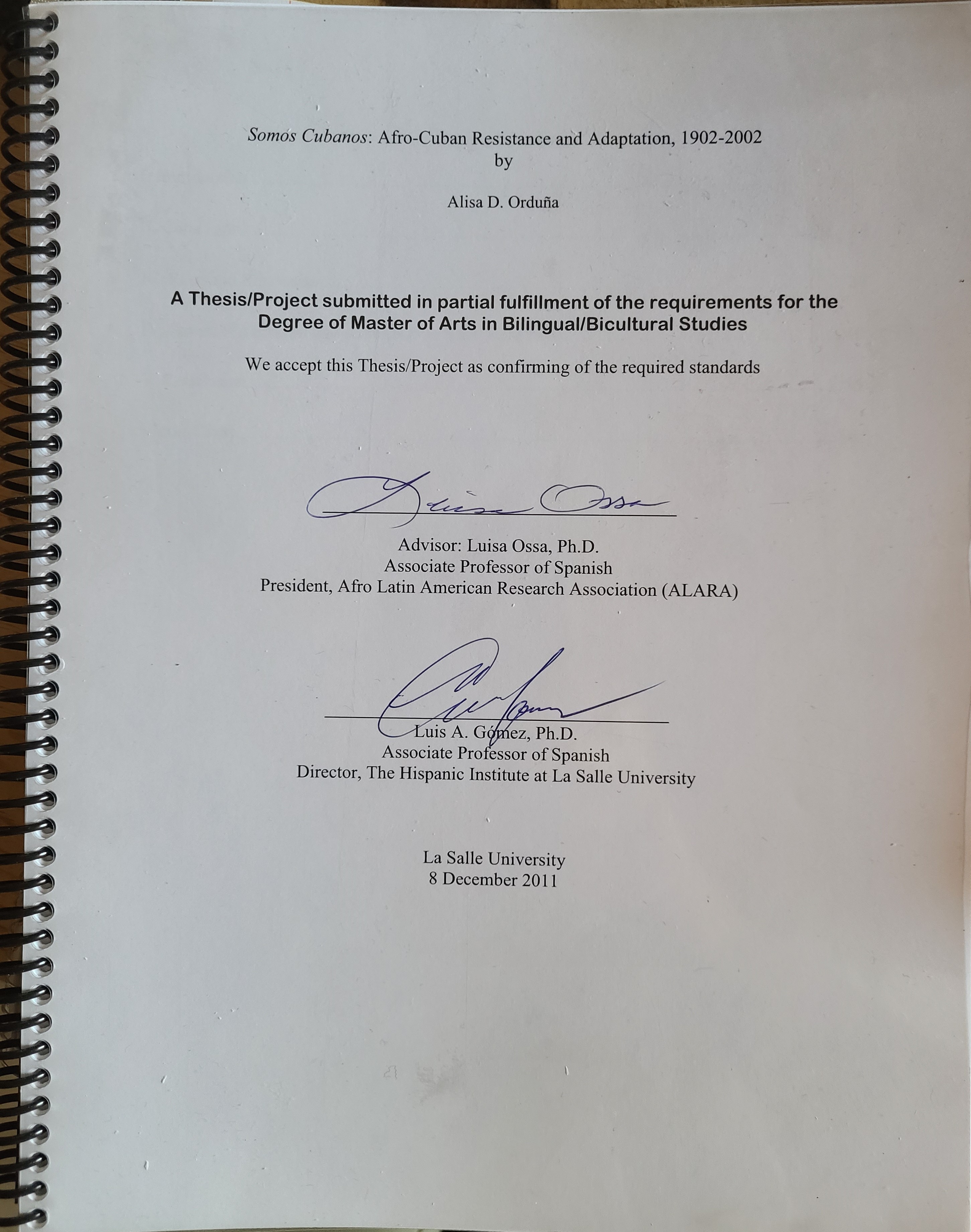
“In the nation beloved by me I would like to see born the nation that can be without hate, and without color. In the generous game of limitless thought, I would like to see building the house, rich and poor, black and white” (qtd.in Kirk 130). In October 1889, José Martí, a leader of Cuba Libre, the insurgent movement to fight for independence from Spain, spoke these words to express a vision of a new patria built on equality where citizens would not be identified by race, heritage, class or religion, but by a common Cuban national identity. Motivated by his words and a promise of emancipation from slavery, thousands of Afro-Cubans took up arms in support of the Cuba Libre movement.

During this time black men such as Antonio Maceo, “the Bronze Titan,” were able to rise through the ranks of the military based on their skill and achievement and were not excluded based on the color of their skin. In this post-Haitian revolution era, European colonists were fearful of additional slave revolts and would not arm blacks under any circumstance; Cuba was a rare exception (Helg 4). Afro-Cubans participating in the liberation movement understood the significance of fighting alongside white mambises and began to believe that a free Cuba could meet Martí’s social promise of a new racially united nation (Helg 119). In the article “ ‘Race and the Cuban Revolution’ Review of Castro, the Blacks and Africa by Carlos Moore,” Lisa Brock and Otis Cunningham explain that “because the Cuban fight for independence and abolition from slavery shared the same historical stage, there developed an ideological congruity between the fighting for equality for blacks and against colonialism” (n.pag.).  Sadly, Martí was killed on the battlefield in 1895. However the war with Spain continued under the passionate leadership of the Cuba Libre revolutionaries to create a Cuban society under a new social paradigm in alignment with his ideal nation. 

After many years of fighting, United States intervention brought an end to the war and ushered in the political transition of Cuba as a new nation-state. Cautiously optimistic of the U.S. post-war on-the-ground presence, many Afro-Cubans still believed that their sacrifice and efforts in the fight for independence would be recognized and honored through executing the promise of Martí’s ideal nation (Peréz 160).  In addition to their military sacrifice during the wars of independence, slavery had been abolished and blacks had begun a process of emancipation.

Metaphorically, the Cuban national narrative embraced an image that the new nation would be racially democratic and built on the principles of Martí’s vision of a “race-less nationality” (Ayorinde 33).  In reality, during the first quarter of the 20th Century a social hierarchy based on preferences of ancestry, class, and race that mirrored colonial society was instituted.

Having undergone three significant national transitions during the first hundred years of nationhood; Independence, the 1959 Revolution, and the Special Period, and facing a fourth in the millennium with the transfer of power from Fidel to Raul Castro, there is a growing sense that the aforementioned social hierarchies will no longer be accepted. In his article “Recreating Racism: Race and Discrimination in Cuba’s ‘Special Period’ ” Alejandro de la Fuente states, “as in previous transitions, blacks will not quietly acquiesce to displacement or exclusion from a nation they helped create” (n.pag.).

Frustrated by the continued exclusion from the nation building process, blacks in Cuba have sought various strategies of resistance and adaptation to hold the republic accountable to promises made during the time leading up to its founding (Planas 89).  In this thesis, I will examine strategies applied by Afro-Cubans in response to national leaders who during periods of political transitions, failed to deliver on the colonial promise of “one” nation; raceless and non- discriminatory. 

Chapter one entitled “Cuba Libre,” will examine the construction of the conditional promise of freedom in exchange for Afro-Cuban participation in the Wars of Independence. Cuba had been fighting for independence from Spain since the 1830’s.  In 1868, Manuel Céspedes, a wealthy Creole sugar mill owner, organized a massive rebel movement that included his slaves who he freed to help with the insurrection. This led to the Ten Years War. The rebels were defeated, however, the spirit of independence continued along with growing international pressure to end the slave trade in Cuba and to emancipate all slaves. Approximately 500,000 slaves were imported to Cuba between 1812 and 1865.  In the 1850’s, the combination of Afro- Cuban freemen and slaves made the black population over fifty-six percent (Benson 26-27). Due to Haiti’s recent independence caused by a slave rebellion, many plantation owners were fearful of slaves overtaking the island if freed and therefore; were reluctant to emancipate their slaves (Jiménez 37-38). Through an agreement with the British, Spain abolished slavery in 1886, at a time when sugar profits had begun to decline and the nation was experiencing an economic depression.
During the time period of 1878 to1895, José Martí, a young writer, journalist and activist travelled to the United States to leverage support for the independence movement within the Cuban exile community (Kirk 48-49). While traveling around the United States, disgusted by the discriminatory treatment of blacks, Native Americans and Chinese, Martí was inspired to design a new social paradigm in his patria that would support social equality without regard to skin color or national heritage (107).  Upon his return to Cuba, Martí gained support for his vision of a free, united Cuba and was elected party leader of El Partido Revolucionario Cubano (the Cuban Revolutionary Party). Martí was killed in 1895 before his vision was realized. In 1898, the United States joined in the Cuban Independence War after it was believed that one of its naval ships, the USS Maine, was attacked by the Spanish, although later it was discovered that a boiler on the ship had exploded. In three months, the eager, young, U.S. navy had defeated the Spanish and gained ownership of Cuba, as well as Puerto Rico and the Philippines (Thomas 369). Cuba had traded one colonial master for another, as the U.S. did not formally grant sovereignty to Cuba until 1902 after integrating the Platt Agreement into the new nation’s constitution. This act allowed the U.S. military to occupy the island according to certain terms and conditions, one of which was the exclusion of Afro-Cubans in decision making capacities.

In response to their exclusion from the nation-building process by the new Cuban government, Afro-Cubans, especially veteran leaders from the independence wars, formed their own political party, the Partido Independiente de Color (PIC), in 1908 (Andrews 129). In 1910, Senator Martin Morúa Delgado, a mulatto, sponsored an amendment in the Cuban Congress to outlaw political parties composed of a single race. The general consensus in the literature regarding Morúa Delgado’s motivation is that he believed racial distinction in the new nation-state would only continue to fragment the social structure and impede “up-ward mobility” among Afro-Cubans (Helg 122). Others in the government simply viewed the organizing of a black political party as a potential threat to national security (Thomas 227). Consequently, over two hundred PIC party members were arrested and imprisoned (Andrews 129). In protest, remaining members of the PIC party planned an armed demonstration in Oriente Province in 1912 to overturn the Morúa Amendment. Militia of the Cuban government met them with a “campaign of extermination” and several thousand Afro-Cubans were killed, including most of the PIC leadership and rank and file, as well as bystanders, around 3,000 in total (Andrews 130). This event influenced social integration strategies later pursued by Afro-Cubans that ranged from public school integration campaigns to subversive expressions of African heritage through religion, dance, and music. 

            Chapter two, “Race and Revolution,” will focus on Fidel Castro’s rise to power on a wave of anti-Batista sentiment and his leveraging of Afro-Cuban loyalty in support of his “new society” (Strug 14). Ruben Fulgencio Batista Zaldívar seized military power of the Cuban nation on September 4, 1933 through the Revolt of Sergeants where he overthrew the government of Gerardo Machado (Sierra, “Batista” n.pag.). A mulatto from Oriente province, Batista offered an initial glimmer of hope for Afro-Cubans. However, even as President he faced racial discrimination, as he was not allowed to enter certain public and private facilities. The fact that even the President of Cuba encountered racial discrimination dampened the hopes for the realization of Martí’s dream of a Cuba based on the equality of all it’s citizens.

During his presidency, Batista was known for using brutal force against his opponents. In David Strug’s article, “Why Older Cubans Continue to Identify with the Ideals of the Revolution”, Alicia, a seventy-eight year old Afro-Cuban who participated in his interview, lived near a police station during the Batista era and recalls the “cries of jailed political prisoners”(n.pag.). She stated that “one felt the pain of these people being tortured. It was horrible”(n.pag.).  It is no surprise then that she and her neighbors were fearful of going out at night, especially if Batista was traveling through, “If you were caught on the block, they [the police] would round you up” (n.pag.). Living conditions among Afro-Cubans and others were also poor prior to the 1959 revolution. “Forty-five percent of Cubans had never been to school and half of them were malnourished to some degree. Most dwellings lacked running water, and most homes had dirt floors” (Strug n.pag.). The island’s elite were also frustrated with Batista for his on-going governmental control, brutal force against anyone who spoke out against him, the shutting down of the University of Havana after many student protests, and his preference for U.S. investors and members of the U.S. mob in opening large-scale gambling enterprises. Instead of re-investing revenue back into the economy and the nation’s general fund, Batista pocketed many corporate kick-backs for himself and members of his inner circle, enriching the quality of life for very few Cubans (Sierra, “Batista” n.pag.).
            Fidel, the son of a wealthy Spanish sugar planter and the former maid of his father’s first wife, became interested in social justice issues while pursuing a law degree at the University of Havana (A&E T.V. Network 1). Later a follower of former senator Eduardo Chibás who fought against government corruption within the Cuban political system, Castro began to shape his ideas about Cuban nationalism, anti-imperialism, and socialism (1-2).  In 1953, Castro “attacked the Moncada Army Barracks in Santiago on July 26” in his first attempt to overthrow Batista (Sierra, “Batista” n.pag.). Having failed, Fidel and several of his accomplishes were sent to prison while others were killed. Freed in 1955, Fidel and his brother Raúl went into exile in Mexico where he met Che Guevara and organized an insurgent plan. After a second failed attempt in 1956, Fidel and Che escaped to the Sierra Maestra Mountains to further organize. Finally on January 1, 1959, they triumphantly entered the streets of Havana. With some skepticism, most Cuban people were ecstatic that Batista was no longer in power.

Within his first hundred days of office, Fidel immediately implemented a Proclamation Against Racism and amended the laws to abolish racism, specifically outlawing racial discrimination and segregation. According to Sara Lobman’s article, “How Revolutionary Gov’t Outlawed Racist Discrimination,” blacks were now allowed to go into public spaces such as beaches, parks, pool clubs, schools, and hotels alongside of whites (n.pag). In a speech delivered on March 22 1959, Castro addressed the nation:

…are we a small people who need each other, need the effort of all, and are now to be divided into white and black?… Are we to be weak and also divided by color?…We have to uproot the last colonial vestiges, conscious of making that phrase of Marti a reality: he said it before, we have to repeat it now, that a Cuban is more than white, more than black, and we are Cuban. (Robaina, “20th Century”102-103)

Clarence Luanes observes that the new law also minimized racial distinction by blacks, “any effort at expressed racial group consciousness for blacks as well as white Cubans, could and would be determined to be racist”(76).  Fred Quintano states, “… for Cuban blacks, with their grievances declared addressed by Fidel Castro, this meant that their claims for distinction was a threat to the regime and repressed” (11). The consequences of the suppression of grievances expressed by Afro-Cubans would become evident throughout Castro’s reign, particularly through economic disparities. However, immediately following the revolution, many Afro-Cubans interpreted Castro’s new order as an opportunity for them to achieve the social mobility they had been denied historically. For example, Carlos Eire’s shares an exchange with his Afro-Cuban housekeeper a few days after Fidel came to power when she says to him, “pretty soon you’re going to lose all this. Pretty soon you’ll be sweeping my floor. Pretty soon I’ll be seeing you at your fancy beach club, and you’ll be cleaning out the trash cans while I swim” (4).
Fidel launched an island-wide social campaign funded by the government that included compulsory education, healthcare, food and nutrition, public housing, and full employment. In education alone, “black educational advancement was most impressive … Afro-Cubans capitalized on the opportunities created by the post-1959 revolutionary government to such a degree that racial disparity in education almost disappeared” (Andrews 163).

Castro’s swift actions to modify the law to reflect his vision of Cuba proved that he had the power and the commitment to fulfill his promises for creating a new nation built on the principles of José Martí. In response, the Afro-Cuban community joined the revolutionary movement taking full advantage of Fidel’s social programs, active engagement in military affairs, and participation in the various unions of the Confederation of Cuban Workers. Gonzalez and McCarthy frame this exchange as a “social compact” that “the state promised to deliver a better life to its citizens in return for their support and devotion to the Revolution” (7).

Chapter 3, the “Soviet Withdrawal and its Impact on Race Relations” will analyze the negative impact of the sudden withdrawal of Soviet financial resources on racial equality within the nation and the rising voice of dissatisfied Afro-Cuban youth. Castro’s infusion of state funds to subsidize critical social programs supported his elimination of discriminatory practices and helped to reduce social hierarchies. According to Dr. Johnetta B. Cole:

…the primary cause of the oppression of black people in Cuba was an inegalitarian economic system …socialism struck at the heart of that cause. When unemployment was totally eliminated, it was the single most important blow against racism as it eliminated competition between workers for what had been a limited number of jobs. (9)

Thirty years after the revolution the quality of life of Afro-Cubans had improved significantly. According to Alejandro de la Fuente in “Recreating Racism: Race and Discrimination in Cuba’s ‘Special Period;’” life expectancy among Cubans of all races (i.e. black, mulatto and white) was close to that of developed countries, illiteracy was eliminated, the proportion of blacks and mulattos who had graduated from high school was higher than whites, and blacks and mulattos were well represented in the professional labor force, including composing 31% of workers employed in the Cuban medical field (n.pag).

            Social advancement for Afro-Cubans ended when the Soviet Union withdrew financial support to Cuba in 1987 and subsequently collapsed in 1991. These events led to great economic instability in Cuba, which in turn resulted in the return of racial hierarchies. Oil, consumer goods, agricultural products and other essentials needed for daily life and production disappeared almost overnight with very few available alternative suppliers (Pérez, “Cuba’s Special Period” n.pag.). Washington Post journalist Eugene Robinson states, “the whole country, used to middle class living standards, suddenly had had to endure an awful poverty. There was no gasoline to fuel the trucks that brought food from the countryside to the cities, so people were hungry for the first time since the Revolution” (154).
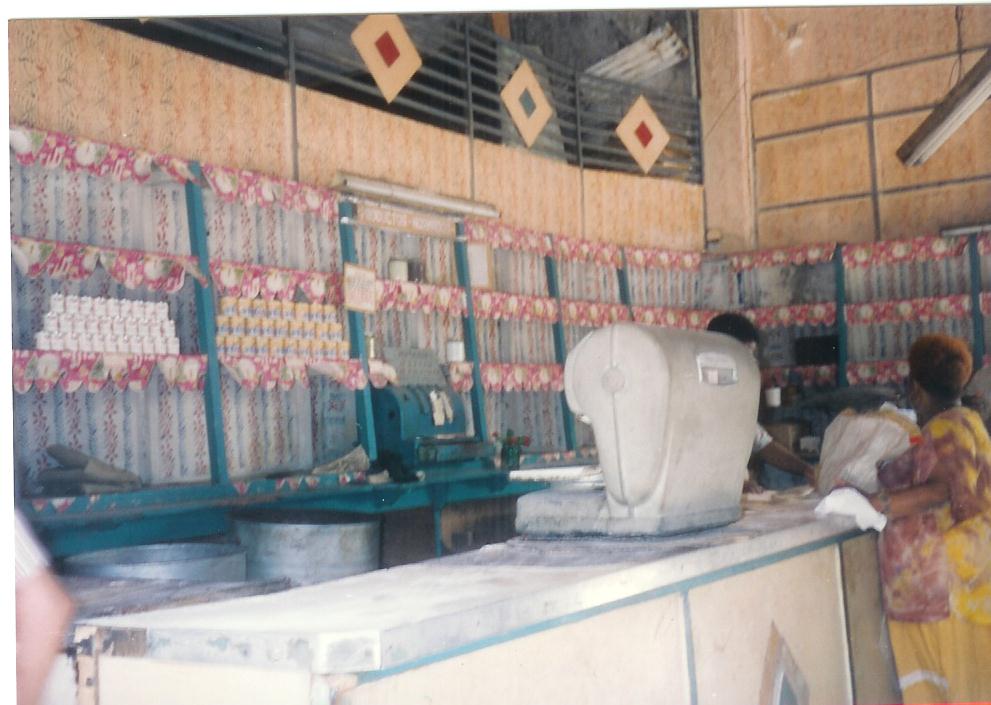
To manage the nation’s rapid downward spiral, Fidel instituted an austerity program that limited the allocation of goods (Pérez, “Cuba’s Special Period” n.pag.). He also allowed the in-flow of U.S. dollars to help boost the economy through remittances and private joint-ventures between the state and non-U.S. nationals (Fuente, “Recreating Racism” n.pag.). This process created a severe class distinction as whites, with greater ties in the Cuban Diaspora in Miami and others cities, tended to be the recipients of remittances (E. Robinson 35).  Fuente states that Afro-Cubans could not even benefit from paladares, restaurants inside of private homes, because many of them lived outside of the tourist routes in predominantly non-white housing projects that were deteriorating and had higher crime rates (“Recreating Racism”n.pag).  Quintano concludes, “the bifurcation of the Cuban economy in the early 1990’s into dollar and peso currencies and the increasing supremacy of the dollar in the Cuban economy has effectively created the conditions for the marginalization of black Cubans” (15).

In addition to the a new system to create private wealth, the government also faced no choice but to defund many of the social programs that had given Afro-Cubans a fair opportunity to advance such as adequate healthcare, education, housing, and guaranteed employment. Fuente notes that the commitment to racial discrimination also ended in the workplace as in the fury to attract foreign investments, particularly in the tourism industry, the Cuban government turned a blind eye as foreign firms only hired whites and very fair skinned mulattoes in hotels and casinos (A Nation, 321). A 2002 study by Cuba’s Center for Anthropology states that “whites accounted for 80 percent of the personnel in the tourist industry, compared with 5 percent for blacks” (Gonzales and McCarthy 58). 

With limited access to dollars to purchase basic goods such as fresh fruit, toilet paper, and appliances, Fuente states that Afro-Cubans fought the growing economic disparity through active participation in the emerging black market (A Nation, 326). Older Afro-Cubans like Alicia, “believe it is important for parents to teach their children about the energy and sacrifice on the part of her generation that went into building the revolution and sustaining it through difficult times, including the special period” (Strug n.pag.). However younger Afro-Cubans who were born after the revolution are waning in patience with the revolution’s motto of self-sacrifice while it ignores inequities. Eugene Robinson states:

Like it or not, the Cuban Revolution had produced, and now would have to deal with, a hip-hop generation- a cohort of young people who had no memory of life before the Special Period, who know all about the promises the Cuban Revolution had broken, and very little about the promises it had kept. (255)

Using the same social channels as the black market, Afro-Cuban youth in Alamar, one of the largest housing developments outside of Havana, began writing, performing, and recording hip-hop (E. Robinson106-107). Influenced by the African American sound that they heard over the airwaves from Miami, Afro-Cuban youth found a vehicle to express their frustration with failed government promises (E. Robinson 107). Raps like “¿Quién Tiró la Tiza?,” “Who threw the chalk,” by Clan 537 opened public dialogue about growing racial disparities as it asked the audience who would the teacher blame for throwing the chalk, the white son of a prominent doctor or the unknown black son of a sugar cane laborer (E. Robinson 205). Eugene Robinson further notes that, “Cuban hip-hop sounds as if it isn’t really about the music at all, but about the screwed-up present and the uncertain future of the nation” (107).  The government eventually tried to control the hip-hop movement after an incident at the Eighth Annual Alamar Rap Festival through the Cuban Rap Agency, however according to an interview with Papa Humbertico in “Havana Times,” journalist Yusimi Rodriguez learns that a strong underground movement still exists through social media (i.e. You Tube, Facebook, blogs) and black market export channels (n.pag). The Hip-Hop movement is even recognized in the mainstream as during the 15th Annual Arturo Schomburg Symposium, Tomás Fernández Robaina, a researcher and professor in the National Library of Cuba credited the youth hip-hop movement with opening up new space for dialogue about race in Cuba (“The African”). 
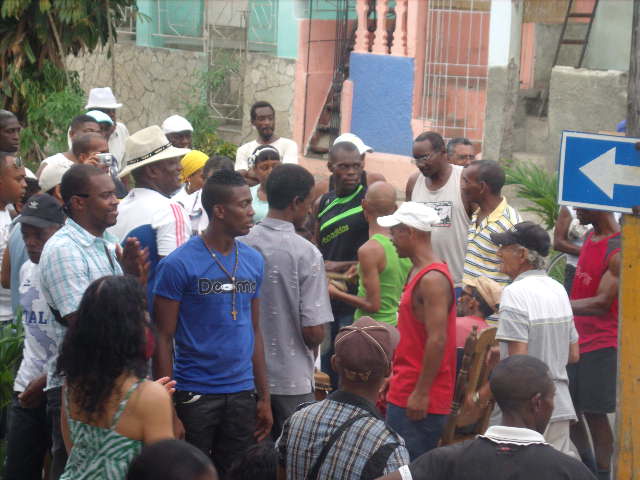
 The transfer of power from Fidel to brother Raúl in 2008 symbolized yet another major transition in the continual development of the Cuban nation. More opened to private enterprise to stabilize the national economy, the government will be promoting self-employment or cuentapropistas to help keep people employed. However, without access to U.S. dollars to purchase supplies and secure necessary permits, Afro-Cubans will continue to be disadvantaged.

As one of the few remaining socialist countries in the world, Cuba is at a critical juncture as it strives to define how it will manage the transition from its “redistribution revolution that benefitted the lot of the Cuban people” and its archaic “powerful state apparatus” into a free enterprise system to sustain its economy (Gonzalez and McCarthy 5). Assumed to be complete loyalists to the revolution’s government for all of its advances, Afro-Cubans are a great topic of discussion among international diplomats and political scientists interested in the future of Cuba. According to the official Cuban 2002 census, 34.9 percent of the11.2 million population is black and of mixed race ancestry. Most Cuban academics however increase the estimation to between 60 and 70 percent black or mulatto (Grogg, Racism n.pag.). Gonzales and McCarthy state “that Afro-Cubans taken together make up close to half the island’s population should give black and mulatto representatives political clout with which to press for greater racial equality in business and government” (65). Currently however, “Afro-Cubans occupy 33 percent of the seats in the National Assembly of People’s Power, and nine of the 31 members of the Council of State” the most powerful political body (Gonzales and McCarthy 60). Furthermore, Afro-Cubans only make up two Ministers of the 40-memnber Council of Ministers, 2 out of 15 provincial First Secretaries of the Communist Party of Cuba, 0 of the 15 Presidents of the Provincial Assemblies of People’s Power, 0 of the 10 top generals or senior posts in the Revolutionary Armed Forces, and 5 of the 24- member Political Bureau of the Communist Party of Cuba (61).  What will be the place of Afro-Cubans in a new future state?
Uncategorized

After the votes: What happened in Florida?

Many Americans are often perplexed by political support among Latinx and Hispanic-American voters for candidates who often demoralize and create anti-immigration policies, closing the same passage ways that they or their family members came through over the last few decades, with exception for those families for whom the Southwest United States has always been home.

The relationship between the US and Latin American countries geographically dispersed from Mexico to South American and the Caribbean, is long and complex. It follows the sails of a dream called Manifest Destiny, whereby White American property owners and presidents have looked South as if gazing down the rolling hills of the National Mall, toward these countries, not as sovereign nations, but as extended plantation fields for the extraction of natural resources and labor exploitation since the South’s loss of the Civil War.

Modern American politicians have an equally long history of coercing Latin American leaders through trade deals, military support including training by the School of Americas, and even funding intra-regional conflict including regime changes. Examples for further self-study include critical analysis of the creation of the Panama Canal; the 1980’s wars in El Salvador and Nicaragua; Iran-Contra Affair; NAFTA and the creation of the maquiladoras; the World Bank’s Structural Adjustment program; drug wars in Columbia; the 2009 regime change in Honduras; and of course the infamous Bay of Pigs off the coast of Cuba.

Like a mathematical quotient, these nations (and the Caribbean) have been unduly impacted by American foreign policy, creating winners and losers, and a driving force for members of both group seeking resettlement in the United States for a safer lifestyle. For some, they come in praise of a government that protected their upper-class status while in-country. For others, they come to escape the lack of economic opportunities created by monocrops, environmental degradation caused by years of over-harvesting by US companies like Dole, militarization of police and suppression of human rights, and/or to escape violence created by escalating drug wars and a rise in youth gangs as economic opportunities to make a sustainable-living continue to decrease.

In addition to arms and structured debt, American foreign policy in Latin America has also included the spread of American racism and the ideology of White Supremacy. Insecurity driven by rejection of creole generations by their European ancestral roots of origin (read Wide Sargasso Sea by Jean Rhys), many nations pursued a path of Blanqueamiento – whitening- to erase their African and Indigenous peoples’ lineages. This included strategies to increase European immigration and attempted erasures of African and Indigenous languages and culture, domination of their lands, and genocide pogroms. Resettlement of Italian and German fascist regimes escaping prosecution after World War II also contribute to an anti-Black sentiment. Finally, Latin America’s historic Catholic roots, embedded in a process to de-Indigenize and be reborn ‘civilize’ – and continual spread of Evangelism- continue to fuel alignment with America’s conservative political philosophy.

This synopsis is an over simplification of course, but offered to shed light and understanding on why many (not all of course) Latinx and Hispanic cultures align with America’s right, even when contradicting their own day-to-day best interests.  It is also my intention to highlight the critical need to address anti-Black racism embodied within these cultural groups before we can strive for a utopian dream of building authentic Brown-Black political alliances.

In my next blog post, I share an introduction to a thesis paper written in 2011 as a case study in the rise of anti-Black racism in Cuba as an example of struggles found in other Latin American countries today.  

As we seek to heal our nation, regardless of who wins this current election, may we take the time to have authentic and honest conversations on our histories and seek a common understanding to build empathy, open-mindness, reconciliation, and opportunity for true community building of a pluralistic nation.

Uncategorized

School integration: Learning through crossing LA’s cultural borders

A running joke growing up was that nothing aged in Los Angeles because the landscape was always changing before it had a chance to age. A shadow side of this dynamic is that far too often, the stories of neighborhoods often disappear with the demolition of buildings and paving of new parking lots, or erection of new condos. It is this historical amnesia that makes the topics of gentrification and displacement lightening rod topics. In a recent housing policy seminar, the facilitators approached this topic through storytelling. In doing so, we were each able to contribute our story to create a greater narrative of the attributes of the real L.A., the one unspoken under the bright lights of Hollywood and the development boom.

The discussion invoked childhood memories of my first encounter outside of my community and how this early experience called me to the field of community development.   

When I look around today, I often wonder if I was just imaging of the Black Los Angeles of my childhood. Things have changed so much, yet every now and then I find an old landmark or photo validating my memories.

I was born in Kaiser Hospital located in Harbor City in 1972. I grew up in a traditional Black family – traditional to us, yet not in the framework of America’s White Anglo-Saxon Puritan norms of a nuclear family structure. My parents were both from the Midwest- Chicago and Omaha – with entangled southern roots in Kentucky, Mississippi, and Tennessee.

Before the age of 8, within the mosaic landscape of my childhood that extended from Inglewood to Pasadena, Watts, Jefferson Park, Crenshaw Manor, Baldwin Hills, and Angeles Vista, my kinship network was mostly Black and middle class. Just about everyone owned a home, even if there were multiple families living there. More than housing, family homes were the center of Black life; a place where people gathered, where a sick child could stay home with an elder, where people in transition could rest, where family history was shared around the kitchen table, where tradition was nurtured, and children validated as armor to step into the world beyond.

My parents worked in the public sector; my mom an educator and dad a public administrator who worked for an elected official for many years. I lived with my mom and through her, navigated through our community purchasing goods and services from our thriving Black business community. Everyone from the mechanic to the shoe repair store to my daycare center, piano instructor, and dentist, were all Black.

Back then, my grand-uncle who experienced homelessness after returning home from World War II was cared for by the community. Whenever we looked for him, we could stop in a local barber shop or bar and someone would know where he was and go get him for us.

Within this world, there were other races, the greatest of which were Japanese. Christy was my first best-friend and she was of Japanese descent. My kindergarten and first grade teachers were Japanese as well as the gardener. As were the owners of the drive- up grocery store on Crenshaw where playing in the car one day while my mom ran inside, I accidently knocked it out of gear and made the car roll down the driveway toward the boulevard, creating a great stir.

Although there was an older White woman who lived next door to us (my mom was the first cohort to integrate Inglewood in the early 1970’s), White people were only on the periphery of this world. Maybe the librarian at the local library, the swim instructors at the Westchester Y, and the emergency room doctors (when I was stung by stepping on a bee, and when I ran through my mom’s room and stepped on a sewing needle that broke in my foot J). Then of course there was Santa Claus. Santa Claus was always White back then. I think this may have been why the myth was really hard to believe; why did we need him when everything was already provided for within our community? Weren’t there starving children in the world that needed his help more?

My proximity to Whites however suddenly changed in 3rd grade. For the first time I had a White teacher. She had the most beautiful cursive writing and I stayed in her crosshairs for having the worst. I wasn’t a great speller so purposefully learned how to write to hide my letters. At the same time that I was adjusting to this new teacher, a group of White students suddenly appeared in our class. Literally, off of the bus, as they were bused in from Pacific Palisades for a semester as part of the school district’ integration experiment. They looked so fragile and out of place. I guess I was not the only one who felt this way, as like company visiting, the school dynamics changed.

Before long, I found myself standing on an unknown demarcation line. My inclination was to be polite and welcome the new students as my mother taught me to welcome all visitors. Yet at the same time, my allegiance to Blackness was increasingly challenged as some of my friends responded by separation. As my friend Queen Leia once stated, this moment was a new test into the initiation of Black girlhood: don’t eat lunch with them. Don’t start talking like them. Don’t invite them to play with us on the playground. This was stressful.

The next semester, we had to go to their school – Marquez in the Pacific Palisades. It was out of my comfort zone. My first impression were lines. You had to line-up to go into class. You had to line-up to go out of class for recess or lunch. You had to line-up to check-out and check-in a ball (I once had to stay after school for jumping the line to return the ball so I would not be late to the line to go back into the classroom).

I also remember Mr. Vaughn. To his credit and interactive teaching style, I learned the Greek gods and multiplication.  But he hated us. He did not appreciate us intruding into his space and he was not shy about letting us know this. I was in his class the day President Regan was shot. He cried. I smiled. I wasn’t happy that our President had been shot, I was just relieved that something he cared about had been harmed so that he would know how we felt by his antagonism.

I made friends through clothes. At the time Jordache, Vidal Sassoon, and Gloria Vanderbilt jeans were in style. My curves would not fit into the first two brands but my mom was savvy enough to take me school shopping at the Alley in the Downtown Garment District. She made my day when she bought me a pair of cool iridescent purple Vanderbilt jeans and matching handbag. I was Palisades cool.  

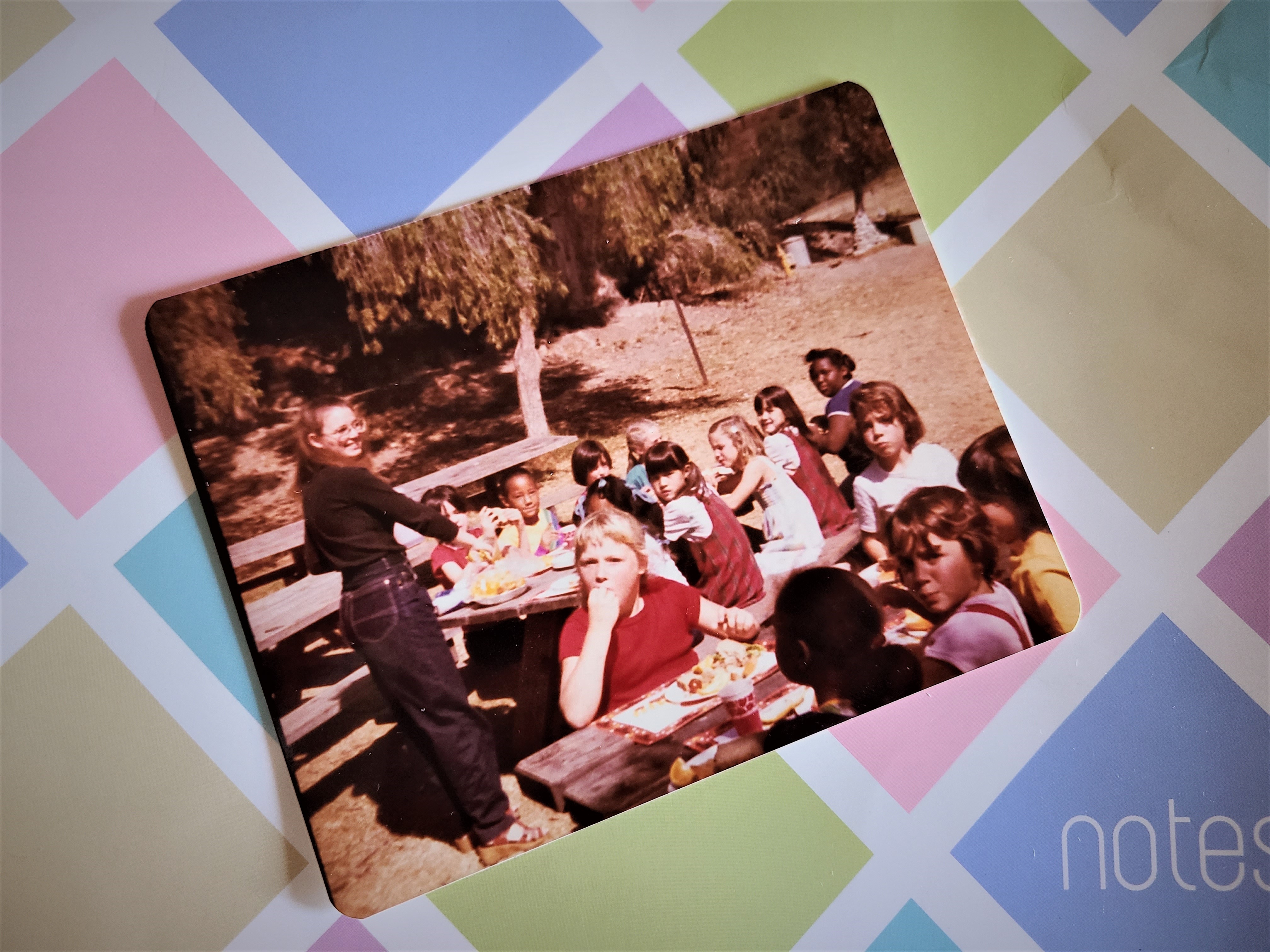
While we learned to play together on the yard, we did not socialize outside of school with few exceptions. One was the celebration of “the triplets” birthday at Will Rogers State Park showed in the photo above. The second memory is of a guy friend who was always very nice to me. Somehow we just clicked although we kind of knew that neither of our peer groups would approve of our friendship. One day he gave me a frog in a plastic juicy bottle. He had punched holes in it so the frog could breathe. It was so sweet. Our bus driver was mean though and I was so terrified of what she would do if she knew I had a frog on the bus that I think I accidently suffocated it trying to hide it, as it had departed by time I got home.

The summer after this year, my life significantly changed as my mother remarried and we moved to Pasadena. At the time she worked at a magnet school in the valley called West Valley Center for Enriched Studies. To make things easy, after passing the entrance exam, I started at the same school. It was more diverse than Marquez, but was a predominantly White space and very different than my home community. My time at West Valley CES was a further study into learning White culture. I learned of class divisions among Whites (Encino verse Canoga Park), Jewish culture, and even the meaning of “snobs” and “stuck-up”- aesthetics of mean girl culture that I later experienced in majority White spaces.

Looking back the memory of all of these experiences expanded my understanding of the multicultural Los Angeles that I lived in. I learned a deeper knowing beyond skin color to understand culture, and how it is operationalized into place through norms and behaviors. The more we are segregated, the more our norms are reified and while they provide a common way of being & sense of protection, they can also attribute to the creation or denial of a sense of belonging to the ‘other’.

My parents came to Los Angeles in search of new opportunities. Today, new generations of immigrants continue to resettle in Los Angeles in search of home; a place to reunite family, create a safe place free from violence, and manifest new opportunities previously denied.

Yet they are entering a story in motion, a movie replaying America’s unresolved systemic segregation and racialized landscape, projecting their experience of their previous situations adding new characters, making our evolution into a more equitable society more complexed and polarized.  

The road ahead is steep, but through sharing stories we can bridge understanding and offer acknowledgement to facilitate healing and reconciliation of past injustices with an eye toward supporting an evolving America. Stories provide a great way to find common ground and center our efforts in humanity. What is your story?

Uncategorized

I Am Not A DEI Consultant: So what in the world is the Florence Aliese Advancement Network?

During this time of reset as each of us continues to adjust to the evolving way of life in co-existence with the novel Coronavirus, my Iya Fayomi Osundoyin Egbeyemi (my godmother in the Ifa tradition), wrote a poetic message on the need to surrender to Spirit. Surrender to Spirit. . . This was a similar message to one I received growing up in a circle of Aunties, wise women who collectively poured into me advice passed on from our lineage. When facing decision-making moments, they would often advise – “ask God and turn your plate over.” In other words, surrender to Spirit.

Although deeply spiritual, the concept of letting go and “leaving room for God” is one that I struggle with. It contradicts the messaging from the internal critic that often complains that I am not working hard enough. So after a COVID related layoff in May, testing positive for COVID in July, and submitting a completed dissertation manuscript in September of the Phenomenon of Black People Experiencing Homelessness in Los Angeles (nearing the culmination of an eight-year journey), I found myself in a space of stillness.  What would I do next?

Collectively, the public lynching of George Floyd awakened a latent racial consciousness, igniting a wildfire across the “culturalscape” (as Iya Tirra Omilade often describes[1]) made visible in the performance of street demonstrations in urban downtown financial districts to suburban streetscapes and around rural civic squares – advancing a cacophony of chants calling for the end of police brutality, racism, and affirmation of Black Lives. Immediately, nonprofit organizations and corporations began plastering “Black Lives Matter Statements” on their webpages, reminiscent of Black owned business owners spray painted their buildings during the 1965 Watts Uprising.

It was a moment of incredible hope- and yet fear of the instability. The sudden worship or the eroticism of our pain – amplified through video replays of our deaths and paneled voices of our failed outcomes became deafening. Familiar white spaces felt unsafe. I questioned the sincerity of the sudden presence of “allies.” Where were they in 2013, 2014, 2015, 2016 (before the election)? Why now? Are they equipped to listen? Are they able to stand back and let those historically excluded from deciding their fate, lead? Dr. Mary Watkins, a community psychologist, observed, those “who think of themselves as ‘allies’ may maintain positive images of themselves as helpers to those less powerful, while failing to interrogate and redress their own excessive privilege”[2]

Soon friends and former colleagues reached out wondering if I was interested in getting involved in Diversity, Equity, and Inclusion (DEI) consulting work or Equity positions. I was curious, what did DEI mean to the organizations that sought out this work? In response I heard a consistent theme spoken through various words about a resounding need to remake white spaces challenged by contestation, safe again-  for white people. I heard a lot of shame conjuring and “cancel culture,” yet I heard little to nothing about commitments to Black liberation.

In the DEI conversations, I also did not hear any strategies to change the American social and economic hierarchy that construct the conditions making a disproportionate number of Black people so dependent on the very organizations seeking reform. I felt an immediate pointing of a collective finger to the image of the 2020 version of an overt racist – law enforcement – and not us, the marionettist pulling their budgets and performance management goals to sustain the privilege of middle class life and that kept White communities segregated. Nor was there a true willingness or recognition of need to look in the mirror to understand how nonprofits and local governments stand as border agents who guard the boundaries of our social hierarchy. Instead it felt as if people were seeking validation for being a “good person” – a privileged position over the groups of people whose lives have been violently impacted by racism in all forms across generations. Rev. Jesse Jackson and a flood of images of 1990 “Diversity” training books came to mind. Before I could assign language to my abjection to these requests, my soul gently whispered – “no.”  

In tune with my understanding of the World’s Soul, I knew that the “known” was not unraveling to develop new ways to conform to the status quo. That it would be going against Divine guidance to seek solutions that made Black people comfortable in systems that actively worked to sustain entrenched marginalization with a few more luxuries. This was not a time to wait. It was/is a time to not remain silent on a fundamental belief in scarcity where progress was only measured in ‘winners and losers’ verse a belief that the world has provided ‘enough’ for all of her children. We just needed to develop right-size solutions to help everyone meet their basic needs and joys.

It was and continues instead to be a time of re-imagination. This has to be a time of healing, reconciliation, permission, and deep listening until we begin to understand other languages long suppressed by colonial machines.

It is a time to center the protection and wellbeing of Native American and Black people at the center of extracting racism from our culture. This requires a positionality of humility to understand that the way in which we know and engage with the world in public and mainstream spaces, is based on a construction of knowledge and knowing that is centered on the privilege of whiteness. We must reckon with public policies, academia curriculums, laws, Supreme Court Decisions that assign meaning to these constructs that dehumanize Blacks and Native Americans in the general imagination of the American people regardless of racial identity. This means that as we learn, seek to undo, and redesign, that we must be open to the abandonment of institutions birthed to operationalize these beliefs of Black inferiority and Native American erasure from our predominant memory. Even if these are the very institutions, programs, and policies that we have helped built, have dedicated our careers to, and have created as the “known road”[3].

I soon knew that I could not meet the challenge(s) of the moment under the confines of any one position, organization or government entity. So it is with perspective and understanding that I gave birth to Florence Aliese Advancement Network (FAAN). It is a community advisement firm named after my maternal and paternal grandmothers to call on the protection, strength, and wisdom of the feminine from my lineage. Florence Aliese is a platform that I have surfaced from time to time, but in this moment I am prioritizing the support of its birth and development by placing my own fears of economic survival aside to let Spirit lead.

FAAN is dedicated to creating beloved communities through participatory research and evaluation, strengthening of social capital and networking, and policy development. FAAN introduces Indigenous knowledge and practices from the Afro-Feminine perspective into our work. These approaches and philosophies capture ways of knowing passed down through the Grandmothers from the Trans-Atlantic Slave Trade until now. Dr. Nuria Ciofalo describes Indigenous Psychologies as a means to “question the universality of existing Western scientific paradigms and incorporate context, meanings, values, beliefs, and locality into research designs and knowledge generation[4].” Through our services, we therefore;

  • Recognize that there are unheard, embodied stories waiting for someone to ask for them to be shared as insight into today’s concerns;
  • Recognize that time is circular, not linear, and thus the pathway forward cannot occur without reconciling injuries made in place in the past, even if no one currently present was there;
  • Recognize the credibility of life experience and life stories as critical inputs for data collection – allowing voice to stand alone without need to justify by written words published by White men or academia;
  • Recognize the empowerment of Black Literary Arts and Indigenous methodologies (i.e. listening to Elders, poetry, Walk-Abouts, spoken word, dance, song, gardening, quilting) in surfacing identities and needs of the human spirit without the projected biases of binary White/Black constructs; and we
  • Recognize that the liberation of Black and Indigenous people from the prejudice of American culture will elevate the national consciousness, and influence the freedom of others including women, LGBQT, and people of diverse ethnic backgrounds while creating global anti-oppressive strategies to liberate colonized people and the world – including the liberation of Mother Earth herself.

Florence Aliese Advancement Network’s accepts that our recognition of the African American and Native American Souls is itself a form of resistance to American culture, and therefore our work is performed outside of the boundaries of “respectability politics.” We lead with heart.

We accept the potential consequence that because of our beliefs and approach, we may be denied consideration, opportunities, and invitation. However, we stand on our history of success in many communities across the country. We stand in the faith of the destiny chosen when coming from Heaven to Earth. We stand in our power in knowing our role is not to sustain comfort, but create compassionate discomfort to lead forth sustainable and healthy cultural change.  

We are an intentionally eclectic firm standing on the shoulders of our Ancestors and their rainbow warriorness. We are what is needed to bring order to chaos, healing to deep pain, and joy in discomfort.

In writing this piece, I see a humorist irony as I have been experiencing an increasingly excruciating toothache. I have long neglected proper dental care due to shame, previous bad experiences with dentist, cost, and plain fear. However, I now accept that the remedy will be some form of extraction from the root – a root canal or tooth removal. I think many people approach or avoid confronting anti-Black and Indigenous racism like they do a toothache. We are satisfied if we can dull the pain, but it will only grow worse without radical attention. Florence Aliese is here to help organizations and entities ready to go deep and activate cultural change; that have the grit to move through this next labor pain in creating equitable and just societies. With you, we are committed to removing barriers so that Beloved Communities may bloom.  

P.S. If you still in need of a DEI Consultant, we are happy to refer you to a few in our network 🙂


[1] Tirra Omilade, Goddess Guru https://www.youtube.com/watch?v=v9n3fq8dvnE

[2] Watkins, Mary. Mutual Accompaniment and the Creation of the Commons, Yale University Press, New Haven, CT,2019

[3] Jung, C.G. Memories, Dreams, Reflections. Vintage Books, New York 1963

[4] Ciofalo, Nuria, Editor. Indigenous Psychologies in an Era of Decolonization. Springer, 2019

Uncategorized

Healing through Corona: Finding life in the break of a pandemic

On July 8th, I received an early morning call from the doctor informing me that my test results were positive for Coronavirus. I tested because I had mild symptoms that I thought were seasonal allergies and my dad wanted me to be “safe than sorry.” Asymptomatic with allergies or COVID showed up in my bodies masked as allergies. Bottom line, I was infected with COVID-19. Thank goodness my gut told me to stay home on the 4th or I could have endangered my family. Contradictory feelings of fear and relief fell over me as I hung up the phone. Thankfully I am still doing well and just about on the other side. Sharing these words of reflection to process and offer HOPE.  

After three and a half months of following all of the rules of staying at home and socially distancing, I needed a break. I needed a chance to be with me without the constant intrusion of others’ emotions reacting to this epic moment.    

Not only are we in a global health pandemic, but a social pandemic – one of reckoning morality for systemic crimes against humanity, crimes against Black people, crimes rooted in a system of colonization that has been illusionary from the start. An authentic nation of freedom and equality “for all” cannot be created through the stealing of land, human trafficking, mass murder, and violent oppression of others. Yet reconciliation is a bitch.

Before the tragic murder of George Floyd, Coronavirus was unearthing the effects of systemic racism as Black bodies began unveiling proof of its collective impact in hospital ICU’s, under ventilators, and in pop-up morgues. Like inoperable bullets lodged in the bodies, underlying health conditions such as asthma, hypertension, diabetes, sickle cell, and obesity began truth-telling stories of:

  • Chronic stress from daily micro-aggressions at work, in public, through frequent or anticipated police interactions;
  • Respiratory diseases from living in poor air-quality communities due to historic patterns of environmental injustice such as oil drilling, cell phone towers, auto repair shops, chemical dry cleaners, and meat processing plants, etc.;
  • Hypertension and Diabetes from limited fresh food choices in addition to chronic stress. Why is establishing community gardens so controversial in low-income communities?;
  • Lack of affordable housing leading to overcrowded conditions, especially when everyone is home;
  • Greenspace and recreational inequities that hamper access to daily exercise and respite in nature like found in other communities; and
  • Workplace discrimination that creates apartheid conditions for people of color.

The visible death of George Floyd, with millions at home to watch – unknowingly witnessing the particularities of a Jim Crow public lynching ceremony, was the match that lit the tinderbox in the streets, starting a take-down movement of markers of historical injustice, bringing to the forefront a roaring fire that has been raging in the womb of the nation since at least 1492.

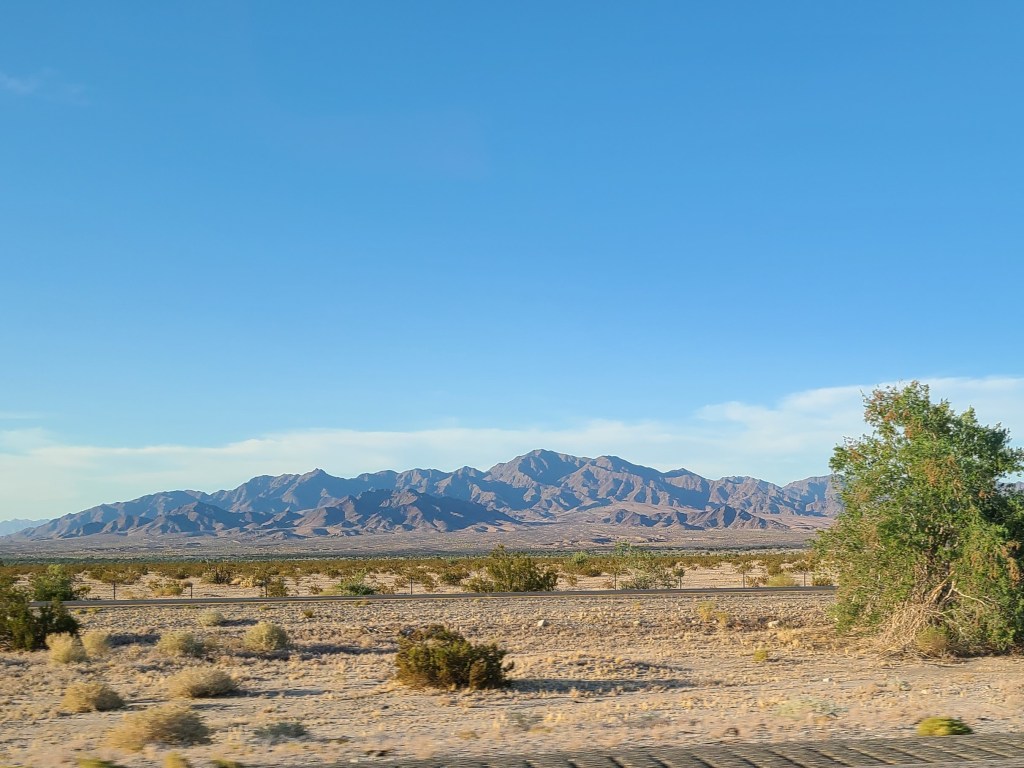
Telling of so many truths of the Black experience buried in the soul to survive began all emerging at once. Righteous anger in the streets. More than 100,000 people dead in 90 days from one cause. Hate intensifying. Growing number of people unhoused on the streets. Black women dying in the “safety” of their homes. Youth committing suicide. Stuck at home feeling helpless against the magnitude. It became too much. I needed to drive. I needed to be in the desert – a hostile landscape that always tests my humanity and will.    


A “walk-about” in the desert is an annual ritual. Normally I go in August, one of the hottest months when I know the heat is unforgiving yet purifying. But I couldn’t wait. Plus the forecast was for triple digits – perfect. I needed the wisdom of its majestic mountain ranges that have seen the toiling of civilizations, the knowledge of the sage and other greenery that find ways to survive through the dry cracks of the earth – regenerating each year. I needed to sit with an Elder who has experienced life and has lived long enough to find humor to see the long-term- game beyond short-term reactions. I also needed to connect to a water source. To me, water in the desert offers a well-spring of hope. So I broke free from quarantine for a personal retreat. On the way back stopped at the Colorado, the source of L.A.’s water, and paid respect and to ask for coolness to moisturize the dry-heated energy that was spreading so much anger and division within families, communities, and the nation.

For my mental wellness, it was worth it. Yet in taking all precautions, somewhere in the journey Lady Corona and I crossed paths. Our fate was inevitable. In fact, predictable given I went to the desert to break free of fears attaching to me in these times.

Still in quarantine, I am doing well. Blessed. Recovery has been a collective effort of family, close friends, and faith. I even saw my Grandma in heaven pray for me.  And I honor (difficult at times) the voice of the Guardian Angel who watches over me: Breathe… Sit still. . . Surrender . . .            

But THIS Moment isn’t about any one person. We ARE in this together. Here are a few self-reflections that I hope may help you navigate through these times.  Writing them helped remind me of what I can control and what I need to continue to release. I pray no one gets infected. I pray we all meet up in person this time next year when we can give thanks for life, grieve all losses, and celebrate small wins as we continue to strive making systemic change that this period’ s sacrifice is calling for.

Mental Preparation

Reduce the hate. Limit exposure to the news and social media. By now you have your opinion on this Administration and its communication strategy to create division. Don’t help them spread further mental fecal matter. Bully’s and psychopaths feed off of attention.

Find your cause. There are a lot of needs in the world right now. Find one cause and go deep- not wide trying to do too many things where you get overwhelmed and paralyzed. For example, distribute food to seniors or people with limited ability, collect and distribute art-projects for people experiencing homelessness isolating in Project RoomKey or even those permanently housed in PSH, become a pen-pal for people in prison, increase technology access to low-income households to help survive social isolation . . . Lot’s to do, but pick one. Forgive yourself for not keeping up with it all – conserve your energy and work on YOUR cause.

Find your joy. Spend at least a half hour on your joy and don’t let anyone judge your choice. If you want to make sourdough bread or walk on the beach at sunset (wear a mask) – do it. My joy is taking care of my plants – houseplants and vegetables; learning pest management & staying vigilant for hornworms on my tomatoes.

Decide to stay. Every day brings news of a newly departed soul. The bottled up grief may sound like a call to depart the planet now, BUT I ask you to resist. Fight to stay. Let the universe and everyone in it know your intention to stay on this planet through this pandemic and beyond. If you find any resistance in saying this take note and reach out to a mental health specialist or trusted support circle.  We need your talents and strengths to rebuild humanity.

Spiritual Preparation

Not a curse. I don’t accept that this virus is a curse but it is a wake-up call. I respect it like I do a rattlesnake. To me, the virus is an energy awakening our deadend soul to the destruction of our collective behavior. In its destruction, it has created a reset, a pause, a release, and re-imagination. Watch judgement.  

Lean into faith. My Ifa practice, spiritual family, and biological family have been by rock through this. Lean into your faith. How is your faith guiding you? What is it asking of you? Have you done it? Do you pray/mediate/connect to your inner power each day? Do you talk with your ancestors? Do you have a prayer circle? Build your support system now. None of us will get through any of this alone. We need community. Build your “spiritual immune system.”  

Talk with Elders. Talk with elder family or community members about their life experience through trying times. It helps to hear stories of victory in the midst of war. If no one to talk too, turn off the computer and read a good biography or autobiography as most people have had to overcome hardships. I am reading “Working the Roots: Over 400 years of traditional African-American Healing”by Michele E. Lee, learning many stories from elders who worked the land for medicine.   

Make your house a home. With the intrusion of Zoom, we must resist “professionalizing” our homes. Now more than ever your home needs to be a sanctuary. Clear out clutter and other aspects that may cause stress. And don’t over clean with harsh chemicals. Open windows and doors every day to allow air to flow through and take out any stifling energy. Burn sage or Palo Santo or other purifying herbs or incense to clear out negativity. Recharge your crystals under the proper moon cycle (not my area of expertise but works). Grow plants, play music, make art for the walls.  If you live with roommates, focus on your immediate living space, while maybe making suggestions through a “family” meeting.

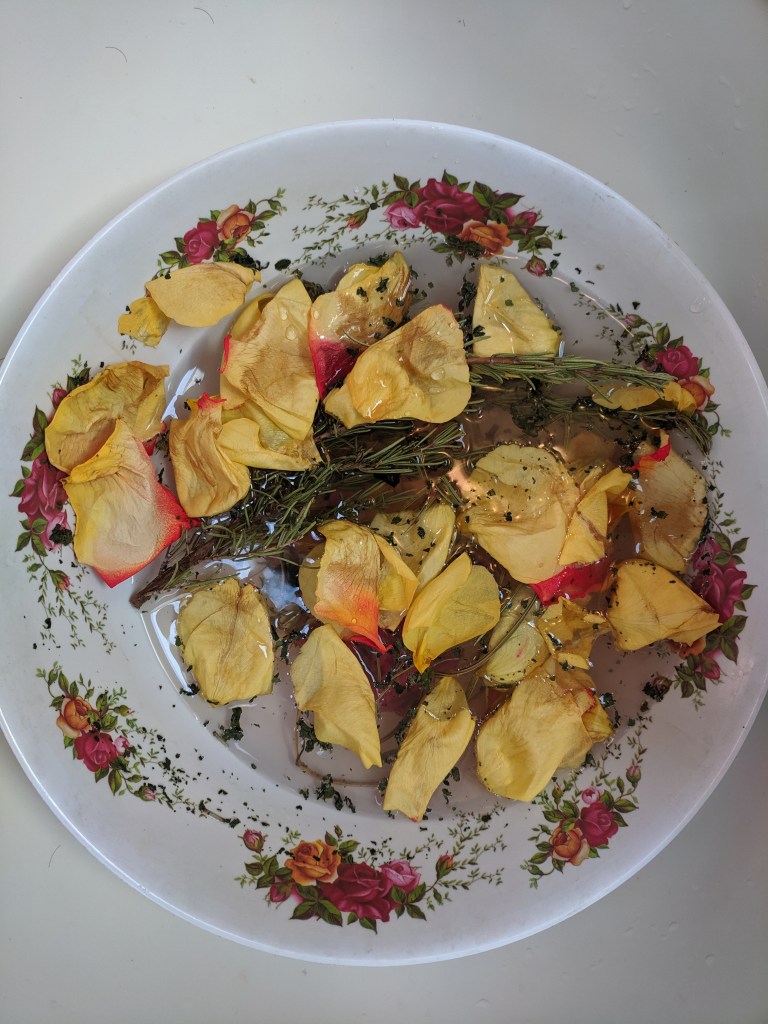
Love yourself up. Our bodies have absorbed so much just since March, compounded on whatever was going on in our lives before then and since then. Rest, eat breakfast in bed, take a fun bath with favorite essential oils and petals and honey and whatever else. If you don’t have a tub, get a large plastic basin and fill it up. After you shower, use a smaller bowl or calabash to dip into the basis and pour on your “magic” over yourself then pat dry, but let the essence that you created linger. Yes you may have rose petals and other things in interesting places but who cares. ***Note self-love is different than over-indulgence. Monitor excessive use of alcohol, sex, drugs, food, gambling, sweets, etc. These may be self-anesthesia- not love. Don’t numb out. Find healthy ways to cope.

Awaken you. Start doing or at least identifying the real things you want to do. Be honest and shake up ideas of what is “enough” or expected. I mean we are in the midst of a global shut-down, toppling of long-standing confederate statutes and burning, demands to defund the police or at least re-image are being discussed, and North Carolina just offered an apology and plan for reparations. When would there be a better time to awaken the YOU desiring to be born?

Physical Preparation

Maximize Protection. Wear a mask. A clean one every day over your nose. Socially distant. Wash your hands – 20 secs in between your fingers and your wrists. Self-quarantine with any symptoms (dehydration, sore throat, sudden tiredness, difficulty in breathing, cough, etc.). Get tested.

Have a plan. Just as you prepare for a natural disaster, prepare for self-quarantine/isolation. If you live with others, what is the designated quarantine room? Do you have access to your own bathroom? Create a “go bag” with a 14 to 21 day supply of personal hygiene, Tylenol, disinfectants, cell phone charger, etc. Is there someone who can pick up your mail and take-out your garbage? Are you signed up for Instacart or can someone buy groceries for you? Make a plan. P.S.: If self isolating at home is not possible or unsafe – know at least L.A. County has resources.

Move. Exercise for at least 30 minutes a day. Keep your lungs active. Breathing meditations are great. So is walking, dancing, yoga, biking, swimming, cleaning house, drumming, anything to move and work your lungs.

Eat Healthy. Check with your grandma (or a nutritionist) about old-school healthy food choices to build your immune system. Choices like honey tea (T/U Damian – my brother), homemade chicken soup, greens (really good reason to start a garden) and fresh fruits, nuts, etc. Also stay hydrated with water, herbal teas, melons, . . .  Reduce foods that cause mucus build-up like dairy products. Black Women For Wellness has great resources (https://www.bwwla.org/v2019/wp-content/uploads/2020/05/Herbalism-2_compressed.pdf) and there are many IG gurus who can offer suggestions- but I would start with Grandma.

Rest. Make sure you are getting enough restful sleep. Also if you are tired during the day, figure out a way to pause and rejuvenate. Naps may not be practical – although if working from home a 20 min. snooze may help- so look into meditations, walks outside, coloring, calls with a good friend, anything to turn off the mind. You want your body in the best fighting position for you.

Don’t push through. This was a hard one for me. Even before I was trying to let go but would become critical of myself for not doing enough and would start packing my schedule with calls and Zoom events. Now, I have no choice. I have to conserve energy so before each task, I ask – will this bring me joy? If not, for now I ignore, send a little email back declining, or setting up follow through for a future date. Now is not the time for 60 hour work weeks, 10 back-to-back Zoom meetings, and other “activity” of distraction to present being busy or significant in this time. Our performance culture has to end- it is stopping us from the rest and deep work we need to be doing. Find ways to resist and set boundaries. Honor your spirit and your body. They will be you BEST defense to push back against this virus.

This virus impacts everyone differently. It shows up and then shapeshifts. Even when you “get it” you are not immune to a re-infection. It has invaded all aspects of our life. Yet we have power over it, especially when we address it collectively, all doing our part.

                               Stay well. Keep your joy. Act with purpose. Lead with love.                

Uncategorized

The Mothers: The lining of the World’s Womb; the caretakers of the World’s Soul

Such as nature loves to hide, I imagine the Yoruba (Nigeria, West Africa) goddess Oshún hiding in a palm grove with her back to the sea as the newly birthed American Navy enters the waters of Cuba for the first time during the 19th Century. Inspired by the Monroe Doctrine to take what is seen, I can hear Oshún laugh looking in her golden mirror as she watches the sailors fight the currents to come ashore with determination in their eyes. Oh, who is this now, she must think after being subjected to the barbaric grasp of the Spanish for over 300 hundred years and several flirtatious attempts for her attention by the British. For fun she spins around and approaches them singing her own praise songs as she bewitches them with the shaking of her sultry hips to the intoxicating rhythm of the batá drum, and the sneak peeks of her firm breasts that poke through the layers of gold and brass necklaces that adorn her neck and arms. Spellbound they fall into the honey grasp of her hands, temporarily forgetting their mission to cultivate the wildness of nature. Oshún laughs pleased that she has shown the animation of this place that they thought was full of dead matter. (Class paper – Yeye Oshún: African archetypes in discovering the anima of the new world’s soul, April 26, 2013)

People laugh – or are offended – at me when I say Coronavirus is the spiritual agent of a Black Mother scorned, like flying beetles rising out of the bow of the earth to seek revenge on human culture that has treated her and the totality of her beings as dead matter without soul. Throughout history she has sent warnings to the current civilization of when humans were out of alignment and too indulging beyond the borders of their plentiful harvests – floods, earthquakes, fires, tsunamis, deadly viruses, sexual disease, child mortality, etc. – and in many situations humans adjusted. But now we have a feral human species that arrogantly believes through technology we are smarter than nature; than God, and the feminine energy that rules the earth domain. And now we are experiencing an explosion of human consciousness uprising.

Right before quarantine – the social conversation centered on war of words, will and action regarding the inclusion of people experiencing homelessness into “our neighborhoods.” Even with the outbreak of Coronavirus – people were risking catching the disease by coming out of their homes- unmasked – truthful in how they felt and whom they were – to protest hotels that wanted to participate in Project RoomKey. Even to this day, people experiencing homelessness –especially unsheltered, have a lower infection rate due to their segregation from society. People experiencing homelessness –like Black Americans in our collective imagination – have been the projected scapegoat of inter-generational wounds metastasizing in the American psyche. They were/are so hated and feared because as long as we could encased them as a banished people- the other – we feel of meaning, of success defined by American masculine capitalists’ norms.

How enslavement spread through racism

The irony is that this need of acceptance and holding onto status on the chain of American hierarchy is our collective slave chain. It is the hook that shackles our pursuit of mental liberation to manifest our spiritual destinies and fulfill our hearts desire by doing what brings us pleasure. We so want to please the invisible gatekeeper whom we empower to deal the hands of fate verse our own fierce, smart, powerful personal heads- Oris, higher consciousness.  We believe that as long as we hold certain position, title, class membership, zip code, education pedigree, hairstyle, body-weight, speaking tones – the Joker will allow us to be. This is American Capitalism’s greatest illusion.

This time of anarchy – of uprising – of discomfort is shattering the glass that upholds the United States House of Cards and reflects the artificial social construct where skin color and places of natural origin – not class even if you are white and born into poverty – that has scaled up White privilege on the necks of everyone else. These roots run deep. They are entrenched into the American soil over a layering of five hundred years.

Like a five year old who dreams of being a super hero, the wounded European entered this land seeking revenge and power to overcome the shame of his Dark Ages, the bastardization of his culture through the spreading of the Caucasoid slave trade and African invasions, the permanent class structure that supported monarchies on the beaten backs of even the most intelligent and ambitious persons, and the limitations on innovating new religious thoughts. Dressed in a man’s body, this five year old traveled the seas to prove his greatness to all who doubted him, reifying his insecurities and projecting them onto the people of a land new to him and where he arrogantly slaughtered and enslaved so he could not be king. When that no longer filled his hording desires, he then raped the West Coast of African and stole communities to sell into the borders of his fantasized New World. And when those subjected to his cruelty “screamed” – as did the burning body hoisted into a tree in a communal sacrificial lynching ceremony  in James Baldwin’s Go Tell it To the Man– our male-boy laughs and sadistically smiles as human torture has become his reflection of power.

This inner fragmentation of the early White settlers/conquerors/looters/thugs – has now crystalized into bacterial form or a gene mutation that poisons the minds of the collective. It is the brain disease that kills the feminine found inside healthy men and women alike – similarly to how crack cocaine and methamphetamine kills brain cells and certain functions of the human mind. It is a disease that splinters the human family and justifies the dehumanization and segregation of those of us who do not fit the imagio in the psyche of an engendered archetype of a festering, walking oozing wound of toxic masculinity finding hosts in wounded and insecure souls – many of whom, but not all – are men attached to whiteness found in wolf packs for power and whom use weapons to sexually perform, to ejaculate.

She who screams and calls for change

As a real maternal energy of the earth – not the Marion images of patriarchal religions- but the creating mother who holds life and death in her hands– another of her special children were sacrificed to demonstrate her displeasement with what we call “normal”. As a captive audience she hosted the perfect performance for us to see, to feel, to experience the slow dying that is happening each and every 8 mins and 46 seconds across this country and this world.  Mother has had enough and now must be appeased.

So out of the mouth of babes, comes truth to power. Out of the bodies of youth – comes a willingness to sacrifice their health (in the spread of COVID) if not their lives, to fight for a future that allows them to exist without the constraints of imprisoning structures or oppression based on skin color instead of the content of our character. The universal police are checking the man-created police force whose job is to maintain the current social structure. And children are tugging on their Mothers’ bosoms asking why do they support such structures. And I am sure male-childs attached to whiteness are like deer in headlights, confused as they were already stunned by the rising “(eco)(woman)feminism and Me too conversation.” Now their power of race is questioned.

Where do we go from here?

All created in a mother’s womb, all living in the womb of the earth- we all have a responsibility to be caretakers of the World’s Soul and she is deeply wounded.

We all have a role and must continue to call for the dismantlement of structures and institutions constructed as gatekeepers of systemic racism. The roulette machines that privilege the 1% while keeping the 99% striving to achieve – staying one notch above the one below and using skin color as a justifying factor. This includes transformative change to our dependence and current structuring in our expectations around policing, housing, education, physical healthcare, behavioral health, gender, nation-state, familial and other institutional agents of the disease of racism. Start in your own workplace understanding complicity in your situation. Look at your leadership, your customers, your suppliers and consultants, look at your founder, the neighborhood you are located in to help identify and begin brave conversations of change.

We must re-engage the ancestors of our past. For white readers – it is not okay to use an excuse that your family history is too painful to study – trust me we know – our family history is made up of that pain and we look back anyway to heal. Instead we all must accept responsibility that few of us have actually studied our own family lineages. We may decorate the front door for Dia de Los Muertos or we may recite stories sold in a history book to project our pain or reason our circumstances, but few and far between know the names going back seven generations. This is our responsibility to appease the Mothers and begin healing the broken bones of humanity. Trace your privilege. If you are living in the United States, in California, in Los Angeles right now – you are more privileged than you know- be honest and trace how that happened. Start sketching a family tree of names and events.

Finally, we must bring in joy to tolerate working through the pain. Dialogues, writing, poetry, visual arts, yoga, dance, music, Blues singing – bring in the joy to WORK THROUGH the pain. We- collectively- are not immune from doing “Our Work” (personal communication with Iya Sobande Greer) Osun/Oshun is the deity of joy- she brings this manifestation through abundance and wealth as medicine to create self-love and functioning structure of humanity. She is the one over the Mothers and she is handing us a mirror to see who we are.

Uncategorized

White Out ‘A reflective prompt to check Whiteness in the shadow of Black rage’

I am just curious from my friends who identify as white – where is all of this sitting within you? What is it about this moment that is activating you when there was so much silence in 2014-2016? If you voted from Trump or marched against him, are you participating in the manifestations happening today?

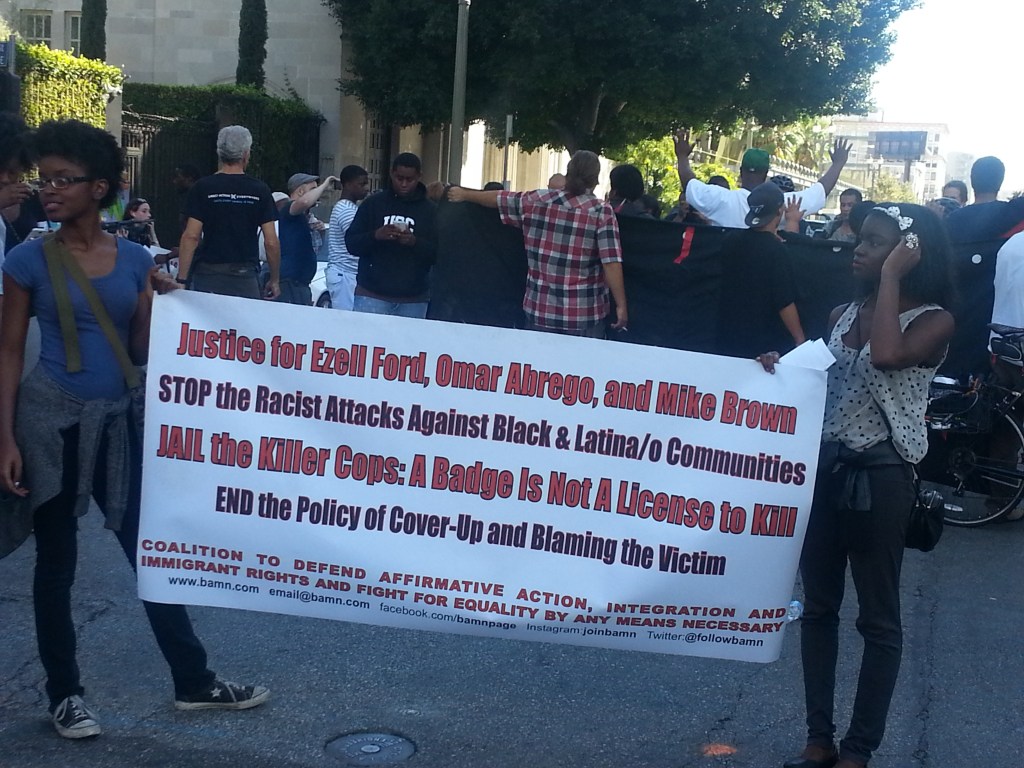
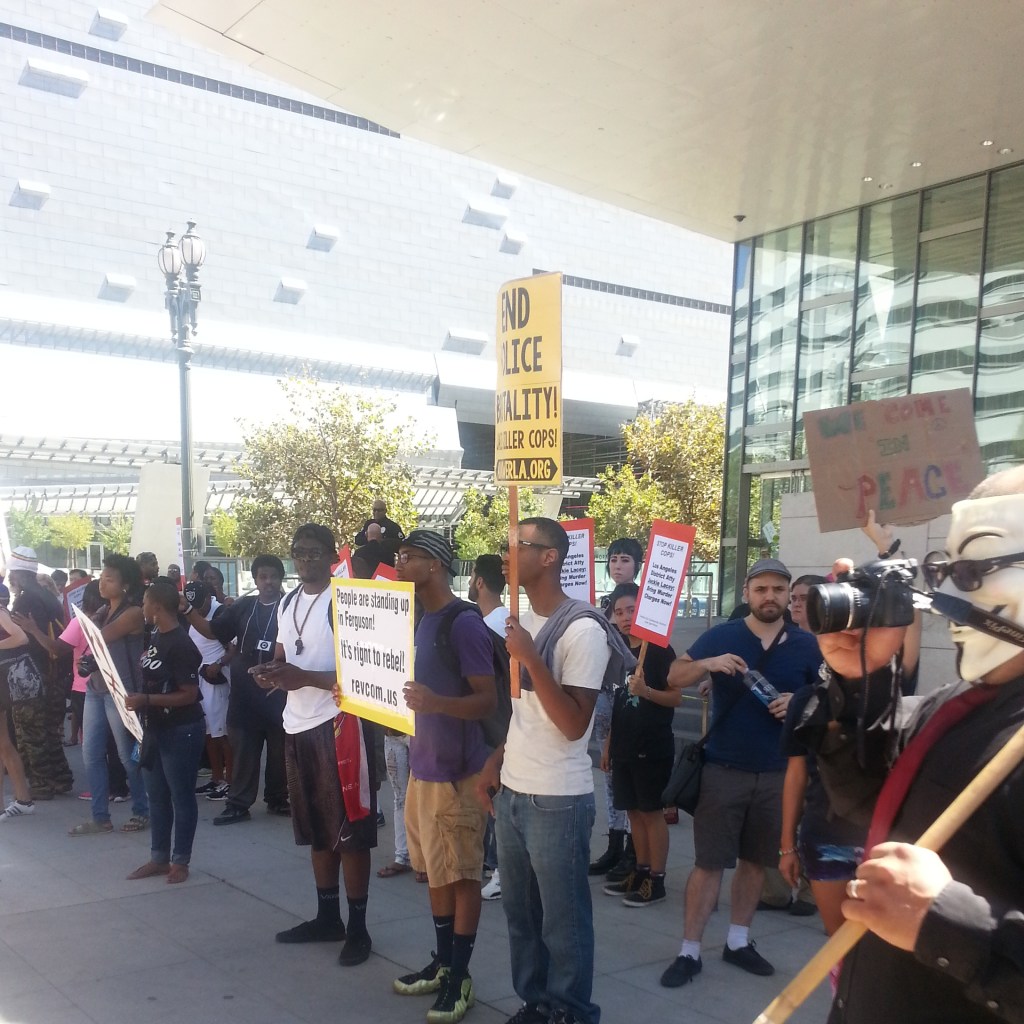
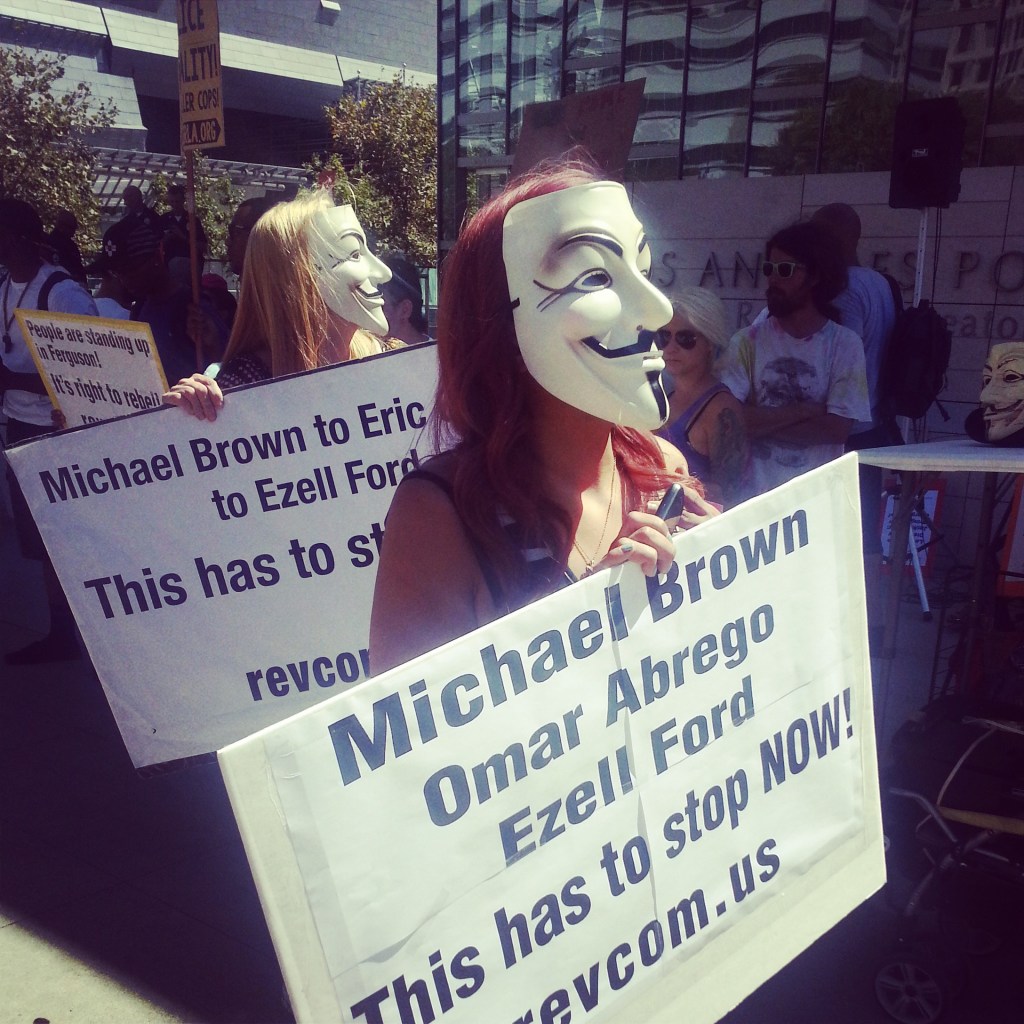
March for Justice for Ezell Ford, Los Angeles, CA 2014

Is your grief over George Floyd or the loss of your property? Have you been honest and thanked God for the privileges that you have had to date at the hourly sacrifice in the loss of Black lives?

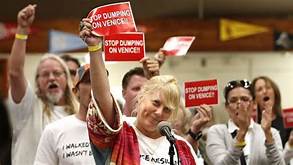
Not in my back yard now . . .
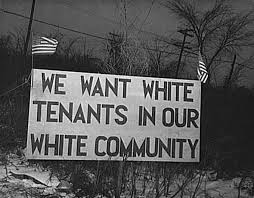
Not in my back yard then.

While I appreciate former president George Bush’s words of “listening” to African Americans in this moment – I disagree in the sense that racism has ALWAYS been a conversation between white men with material and lethal effects on everyone else. So instead of listening to Black folks- are you using this time to turn inwards to your own communities? Are you hosting conversations with each other about how this form of hatred has been able to fester in your hearts across generations and projected on the world for nearly 500 years? Even as this hate originated through your own hurts and wounds by the brutality of warring factions in Europe. It is one thing to be socially cool and post some statement of Black lives mattering on SM and your website – but are you having the tough conversations with your parents, faith communities, children, neighbors? Have you asked a fellow white person – how are you feeling? How is this impacting you (not only your Black friends and staff)?

I appreciate you standing up. But if you are still standing from a place of Saviorship and not your own personal power of healing and redemption; standing from a place of hiding in the crowd but not want to socially be seen; from a place where you and your ego are still in the center and unable to rise up out of your own comfort to stand in a place of discomfort, unknowing, and dis-ease – I ask that you please don’t stand.

I am in my own minority with my community on this one – but I DO NOT want you to read Malcolm and Martin and Angela and bell and other hero/warriors that have helped me stand tall each day even when the fly swatter of white supremacy tries to swing me down in the most minute micro-aggressive action or overt expression of hate.

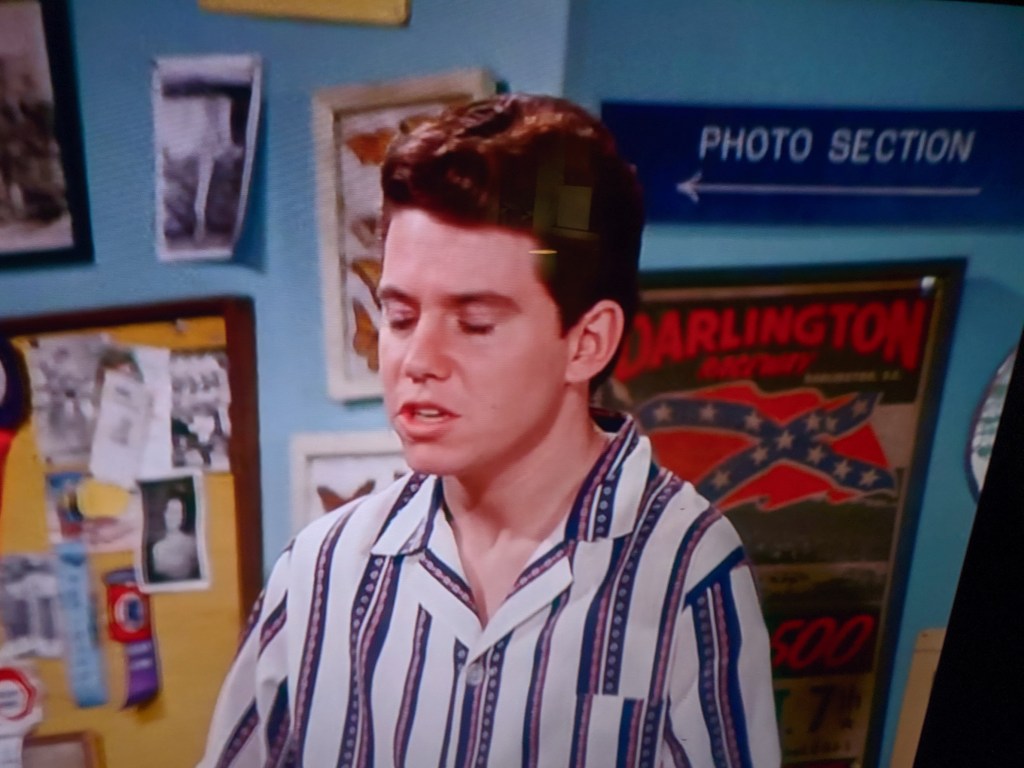
Instead – I request that you have a “White Out” and read White Fragility, White Rage, The Invisible Empire, Noted on the State of Virginia, The Strange Career of Jim Crow, Expansion and American Indian Policy, Bury My Heart at Wounded Knee, The Half Has Never Been Told, Slavery By Another Name, Troubling the Waters, and Without Sanctuary. Re-watch Birth of A Nation, Happy Days, Father Knows Best and John Wayne Cowboy films with critical eyes created by what you have witnessed and experience today.

Episode of Happy Days

I want to trust you but history –events that happened up to an hour ago – is making that hard. Too often your response to our pain and outrage is simply a soundbite, blood on your door to be passed by, an H.R. check box, an IG screenshot, or misplaced guilt.

I need you to get educated, to see for the first time how deep white supremacy is embedded in the culture that we live and breathe everyday so that when we talk about dismantling systems, you understand what we mean and that we are not going away on June 9th with the burial of our beloved George Floyd.

California Highway Patrol Office Daniel Andrew punching Marlene Pinnock, a woman living with mental illness and who was experiencing homelessness, Los Angeles, CA July 1, 2014

I arrogantly want assurance that just as you have placed your privilege on the concrete this week through massive demonstrations – you place your true being into position to feel a response when you read the text of intentional policy formations that are creating the fatal outcomes of today. Racism is not biological. It is constructed into the minds of men as a form of social control and justification to horde global resources.

I need for you to start speaking to how these policies have impacted you and what measurements from a place of whiteness will be changed in the transition to a more equitable world so that we minimize loses and maximize gain.

I need you to start co-creating new language that does not define people in approximation to you, but based on our common humanity and sharing of this one planet (for now).

I need, I need, I need to know what is your commitment to the co-creation of a new world order that is fair and just for all – even when we “return” to work post-COVID.

I love but am tired of being emotionally rape under the banner of solidarity. I am grateful to be alive, but have too many scars and angst from white fragility responses when you are silent in everyday settings. In speaking up, you may lost friends, but we lost lives.

I am truly praying that we are all rising up to meet this moment through unearthing the limiting beliefs that have stunted the growth of our nation and breathing out the readiness of a new field of consciousness for planting heirloom seeds so future generations can “be” and not simply tolerated.

To me this is the real work. Are you with me?

In love, light, freedom, and liberation.

Uncategorized

An Open Letter to U.S. Mayors

Dear  Mayors:

Communities in pain do not need a police state composed of National Guard and multi-jurisdictions of law enforcement to facilitate the grief process after witnessing a public execution in the middle of the town square.

Black people are in pain nationally/internationally. Our spirituality connects us so that when one of us is harmed, we literally feel the pain in our chests, our breasts, our heads, our hearts.

10628490_10202621226240272_7987037346205389930_n

We are in pain not just because of George Floyd, but still in the rawness of grief over the murders of Breonna Taylor, Ahmaud Arbrey, Atatiana Jefferson. Heck I am still grieving the loss of Nipsey. Some are still grieving Kobe. Two public figures who gave our community hope. We are hurting. And yes, contrary to popular belief, we feel pain.

We are at the same time grieving the tragic loss of so many African Americans due to COVID-19. We are grieving the deaths of friends who we just saw smiling as Mardi Gras, nieces and nephews who worked at the grocery store, the pregnant mom who was a nurse, the neighborhood bus driver who safely took us to work each day, or a family friend who worked at meat packing plant. We grieve a parent who lived at a nursing home or the first responder uncle who lacked PPE aiding others.

Instead of reallocating resources to safeguard the health and welfare as numbers of the great racial disparity come out, we are being told to go back to work in unsanitary and unsafe conditions to have stakes to grill this summer, address the health of those who choose not to wear a mask, and replace unemployment with minimum wage jobs.

Coronavirus is a Trojan horse that grasped our attention. Entering into “stage 2 and 3 of re-opening”, we are given an opportunity to face historic inequities and make them right. All of these deaths are at the hands of racism – a state sanctioned strategy weaponized to control placement of the Black body as bio-fuel for the national economy and white privilege.

#BlackLivesMatter posted on SM walls by allies cannot describe this pain. #HealYourHate and #StopKilling may be a little closer.

Right now, our communities need support to heal. We don’t need criticism. We need reallocation of new funding designated for law enforcement and the National Guard to be redistributed to communities for local based solutions that provide living wage jobs, adequate healthcare, land for community gardens and changes in zoning law to allow live animals for affordable access to food.

We need medical reimbursement for art spaces and community centers to incorporate mental wellness and building positive self-esteem. We need to subsidize social enterprises that provide jobs, skill training, and community benefits. We need equitable funding for Black-led organizations and increased funding for community interventionist programs to name a few.

20140808_204206

We need adequate infrastructure investment to upgrade wi-fi networks, increase electrical loads, take the lead out of water lines, unplug sewer lines, mitigate air pollution, and expand greenspace for socialization and respite.

We need flexibility in developing an education curriculum that validates life and offers a comprehensive view of history beyond being taught that we were slaves as if this is all that we can rise to.

We need housing and land ownership to experience a sense of permanency and stake to build community.

We need space and time for our elders, community healers, spiritual leaders, activists, business owners, and other indigenous crisis response network members to gather us and let us grieve safely.

And in this process of healing, we need humility to reach out to our Native American and Mexican American (remember Texas to California was Mexico until around the 1850’s) Brothers and Sisters and sit in a Council of Elders to acknowledge their ownership of this land and ask permission to leverage time, blood, and sweat invested to-date to co-exist here into the future.

Meanwhile – you all can focus on gathering your staff, departments, and non-Black communities in dialogue, anti-Black bias training, and others means to heal anti-black sentiment that leads to acts of hate and decisions that kill black bodies.

Resmaa Menakem stated: “White fragility is a lie, a dodge, a myth, and a form of denial. White Americans can create culture that confronts and dismantles white body supremacy. Any suggestion that they are unable to rise to this challenge is a lie. White Americans are anything but helpless or fragile. They are (of course) precisely as capable as other human beings. But the need to refuse to doge the responsibility of confronting white body supremacy- or the responsibility of growing up.” (My Grandmother’s Hands)

Similar to Minneapolis, Los Angeles is home to a rainbow of races, ethnicities, and identities, however anti-Blackness condoned by a majority white culture has permeated the psyche of all. We need the Latinx, LGBQTI, Middle Eastern, Persian, Asian American, Jewish Americans, Korean American, Feminist, Indian, African, Caribbean, Cuban Lucumi, Mexican, Central American, + communities to address anti-Blackness biases within. The People of Color banner is not protecting us.

We stand in solidarity, but it is important to awaken (you can’t be woke until you have awakened) and heal the embodied anti-Blackness conditioned through American culture that creates behaviors and decision-making that kills us and creates mistrust and tensions between our communities. There are many good organizations who can help you lead this anti-racist work- engage them.

As Mayors your role must change from safeguarding the interests of elite empowered by their monetary wealth and be more collaborative with community calling for Council of Elders to build environments that allow all to rise  and harness the collective power of community regardless of race, income, identity. This is the only sustainable way to reshape America in a post-COVID reality. Healed and Awakened, we can then truly walk in unity, and together birth the nation where we all can “Be” safely in our divine space on Mother Earth.

Thank you Mayors for your attention!

Sincerely,

The seed my great grandparents planted.

32128_1295531995237_2171182_n#OneLove #OnePlanet #HealHate #StopKillingUs
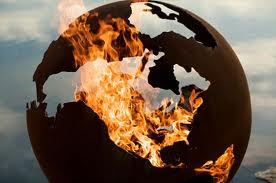
Cultural Citizenship, Uncategorized

Online Communities: Lovemaking of Ogun & Oṣun under the covers of Quarantine

IMG_20200524_123953 (2)

[Writer’s drawing – 2014]

Now that I have your attention:

I know I am so, so late to the online game, but one blessing of quarantine for which I am grateful has been the creativity blossoming around the use of technology for social connection, network and community building, knowledge sharing, and building of an alternative economic system.

In my world of the imaginary we are in a time when Ogun (the energy of metal, technology, implementation of creations through a clear path) is collaborating harmoniously with Oṣun (the energy of creation, fertility, humanity)  to open new pathways for the upliftment of humanity and bring us into a new state of being of planetary citizenship. A time where it is possible to align the energies of the Divine Feminine and Sacred Masculine to usher in a time of peace and end (at least temporarily) the war between men and women.

Platforms like Zoom, Blue Jeans, MicroSoft Teams, Google Classrooms, Slack – existed pre-CoVID as well as SM such as FB, IG,- maybe not Tik Toc – but these apps were associated with class, access, and for the most part applied as transactionary tools to support corporate and individual agenda building. A masculine approach of business that placed profit over people, soul, and community.

Now these platforms are being transformed into builders of mutual aid networks, dialogical spaces to raise the vibration above current news talk, learning and exchanging ideas, creating respite spaces for healing and mental wellness, and generating income.

They are creating a counter-economy where indigenous knowledge (that created outside of formal institutions through storytelling and sharing among family or one’s personal lived experience and research) is honored, respected, and paid for.

While we still have to go through the intermediary of a Comcast, Spectrum Verizon, etc. – we can tap into the wisdom of the giver of knowledge directly, and compensate them for their sharing – creating a new flow of wealth based on the value of reciprocity and mutual aid verse exploitation and greed. Also valuing sustainability through creating virtual networks that exchange and recycle material goods locally instead of buying from around the world. In essence conjuring the vibration and formation of Beloved Communities.

Not all content producers are a part of this emerging movement, yet with intention and discernment, one can find one’s own tribe or community or movement, to flow into for support in the birthing of one’s own ideas and manifestations.

I am amazed that in the past week alone, where for example, I participated in the following events:

  • Presented remarks on the Divine Feminine Church of Ocean Park, a non-denominational church community, in collaboration for the first time with friend/mentor Queen Leia Lewis (Iya Oriade) creator and founder of Beautiful and Sacred Things (beautifulandsacredthings.com). She lives in Shreveport, Louisiana and I and the church are in the Los Angeles area ;
  • Witnessed my Pacifica Graduate Institute classmate Themis Dela Pena Wing present her oral defense and receive conferment of her doctorate, joined by friends and family from Brasil, Spain, Mexico, and the United States;
  • Participated in a global call with 1 Million women with over 600 participants from around the world championing climate change and the need to direct over $2 trillion in economic recovery funds to be distributed by nations to a sustainable agenda;
  • Tuned into New Moon messaging from a spiritual mentor and astrologist Iya Tirra Omilade of Goddess Body Mind Spirit (goddessbodymindspirit.com);
  • Attended a virtual Urban Voices Project Board Meeting to discuss how to enrich our community sings and other music wellness programs to better reach persons in permanent supportive housing and other independent housing settings through technology as a supportive tool for housing retention, socialization, and mental wellness. (https://urbanvoicesproject.org/);
  • With a few tech difficulties, saw my nearly 80 year old father light up as my siblings and I connected over Zoom (although not sure about doing this EVERY week 🙂 );
  • Had my first class with Yeye Luisah Teish on the Orisa Aje to learn how to cultivate a divine relationship with money and redefine the meaning of abundance. Participants were from across the country and Canada;
  • Watched the replay of Dr. Funlayo’s ADRSA 2020: Wind & Fire Conference on YouTube (https://www.youtube.com/watch?v=l5-1pnjpvWA) and was so blessed by the stories of the Ifa and Orisa tradition as it has evolved across the Diaspora, loved being able to stop and replay deep drops of knowledge, and still felt the ase through the screen when words touched soul. So excited to reciprocate this receiving of knowledge by supporting the vendors she highlighted and by taking upcoming classes in her online series through Ase Ire Communiversity (https://aseire.com/) ;
  • Logged into Kimberly Miguel Mullen’s Virtual Dance Studio that offers stretch and Orisa dance movement classes on-demand which best fits with my writing and research schedule. However there are many online dance and movement classes including Extra Ancestral, Dancing Diaspora, and with the amazing and kind Kati Hernandez – all are on IG;
  • Connected with an author Lilth Dorsey whose new  book “Orishas, Goddesses, and Voodoo Queens- The Divine Feminine in the African Religious Traditions” I just read and enjoyed;
  • Learned of a local maker of Afro-Centric headwraps and masks from my friend Rufiena Jones’ “impromptu” photo shoot on IG and able to order online – supporting a small business in my own zip code and one who is providing academic scholarships to neighborhood children; and
  • Now listening to an Africadelic’s musical highlights with plans to watch the replay of my Ibeji’s Iya Dr. Monica Coleman’s Octavia Butler series (https://www.youtube.com/watch?v=GyLsqaFjl44) during an afternoon break.


Instead of being drained or distracted, or even feeling like a “Zommbie” – I am feeling determined, fierce, focused, and energized. I have felt empowered to say no or decline invites that give me angst. It is not that these are bad, they may not be for me “right now” or may be at a vibrational level of attachment to a model that I intentionally chose to release to stop weighing me down. Still working on the feelings of guilt, part of the growth process. And values clarification keeps ringing as a common theme of this time, so take a moment and have an honest conversation about what are your values. Don’t judge, just tune in.

Attending the conversations that bring joy, I am just so in awe of the teachers emerging during this time from my 5 year old nephew who is teaching me the importance of marriage to my 10 year old nephew  teaching me about Tik Toc and how he sees his world, to experiencing the gifts and talents of friends who are teaching their joys from gardening to cooking to yoga; to having access to community Elders without intermediaries or interpretations of their work, and being able to compensate and acknowledge their wisdom in the moment.

I guess you could say there has been a democratization of knowledge sharing and a knitting or linkages of sharing that deepen connection. Anyone can post a DIY You Tube video, or entertainment video, but at least what I am tapping into is witnessing collaboration and new institution/ movement building that is shifting mindset.

It reminds me of the practice of African Tradition Religions. While there is structural hierarchy, it is circular where no one person can practice alone or the tradition will die. The traditions live through the community coming together to transform ordinary places into sacred spaces where everyone can bring their gift to make ritual happen. You need people to set up the tools, share the lecture, sing, dance, drum, welcome people, cook the food, feed the orisa, clean up and dispose of the instruments used properly, do the ebo, etc. I am seeing this same practice of generosity, reciprocity, and humility online and it is so empowering.

A few weeks ago my Iyanifa Fayomi Osundoyin Egbeyemi reminded, okay no told me, to go back and review the commitment I made when I initiated into the mysteries of Osun/Obatala. What was the promise I made? What was the promise I made in heaven on coming to this earth? Reclaim it and use this time to realign as the best guide in navigating through this opening of a transforming world.

Quarantine overall has been a deep time for this level of personal reflection to assess where do I want to be in six months, nine months, 18 months; and calling forth from the universe the road(s) that supports the necessary action steps to get there.

We were in an unsustainable time when our behaviors threatened the livelihood of human existence on the planet. We have be given a time of reset, a pregnant pause to sit still and re-imagine what wasn’t working with the individual and collective power of conscious choice to go back or use this time to innovate new ideas to make humanity functional once again.

The title of this work is a play off of a story told in different versions throughout the Diaspora between the qualities of Yoruba deities Osun and Ogun coming together. Summarizing, in a state of drunkenness Ogun killed many towns people. Out of shame, he retreated to his home in the woods and withdrew his power, hoarding his tools from the town he almost destroyed. The townspeople recognized that despite his transgression, he was a member of the community and his skills and tools and energy were needed to sustain and grow. How could one farm without a hoe, how could one walk their path without Ogun to clear away their enemies?

They needed Ogun, but in a functional form that respected his own talents and gifts and would be committed to sharing in reciprocity with the community and earth. After attempts to coax him out of his home failed, Osun agreed to give it a try. She adorned her body in honey and with her brass bracelets and sweet melodic voice, called his attention, enticing him out of his home. On the road near the river banks, they made love, bringing sweetness to his roughness, bringing him back into community, and honoring the good things his presence brought to clear pathways for the creation of wholeness. In essence, bring back balance.

Let simple minds return to “normal” of rugged individualism that does not mind killing and stepping over others as part of the process of material accumulation. Yet let creative, innovative, brilliant minds ask themselves, “why you are on this planet in this moment of time?” What idea have you been holding back on out of fear, scarcity, lack? If you were told the Universe/God is giving you permission to be reborn in the image of your ideal self, what would you do differently? What are you waiting for? and make a commitment to do your work to help us all create a new way of being.

Now is the time to find your community, claim your sense of belonging, put your idea and thoughts out into the world (while you literally have the whole world’s undivided attention), and trust your internal wisdom. You don’t do this alone, but with the support of trusted elders and embracement of the community of family, friends, and strangers that have been searching for you. The real you. The authentic you. As more than one Iya has recently stated – TRUST!

In the meantime, let’s advocate to incorporate free wi-fi (guess cable no longer exist) as a basic and essential utility in all housing units, give free lap tops or tablets to school children like the distribution of books, and SMART phones with quality data packages as a social benefit distributed by either government or philanthropy to seniors, people experiencing homelessness, and other economically marginalized groups. Let’s also uplift small businesses and ensure they have the technology needed for e-commerce, distribution and delivery, and e-marketing.

Thank you for reading. Gotta go and DO MY WORK!!!! Blessings!

Race, Uncategorized

Measuring the impact of whiteness on the spread of COVID-19

On a Zoom call hosted by a mainstream national organization about COVID and a racial analysis on the impact of Black people experiencing homelessness. I can’t. I have to be honest, when Black people are contracting this disease as essential workers in the “reopening of America” and disproportionately dying from underlying health conditions brought on by unequal access to healthcare, this is not the time to intellectualize racism.

It is simple. Racism sucks. it kills. It is destructive. It is anti-feminine and woman. It is anti-LGBQI. It is anti-Trans. It is anti-Black. While it oppresses other groups, it creates a hierarchy of difference with Blacks and Native Americans interchanging on the bottom of a social pyramid and creates disproportionate impacts of annihilation across outcome measures. It goes against nature. It is the greatest threat to humanity and the planet.

I know this and I live this and I am not tired. I am pissed off. I am angry. I am collecting names. I am ready to fight but proceeding cautiously as this is the vibration this negative energy is conjuring and therefore I RESIST. Yet, I am also fervently praying for a spiritual response with self-protection and guidance so I don’t go too deep in creating a debt I won’t be able to deliver as the ceremony the night before the Haitian Liberation is deep in my mind and on my tongue. I am fire. I am calling on all the words of my spiritual teachers and spirit guides to transmute this ever-present yet rising rage into creativity so I use my gifts to design the fair and just world I seek. No matter how provoked, I will not destroy Earth or humanity to aid in the goal of my enemies. I honor this struggle the universe has placed me in.

So today, I don’t want to hear any more data on Black people and the rate of death caused by White patriarchal supremacy. The only data I want to hear are metrics on the impact of Whiteness and the contribution to an unstable, ill, collective consciousness currently being fueled even greater as people are at home “socializing” on the internet.

I need metrics that redefine the social determinates of health – not based on variance from an ideal society centered on whiteness, but add meaning to the psychic pain level if the illusionary mirror of white privilege were cracked; to know how much space and time you will need at that true moment of eruption when the Mothers upholding this planet have truly had enough and the false mirrors are broken.

I need metrics that measure the pain of disconnection from soul because you have been conditioned to believe that spirit and soul are feminine compared to the masculinity of reason; to understand how you value love and your own sense of belonging.

I need metrics that measure the degree of hatred toward your mother because she was born in the image of sin, and the variance of her being from God and the amount of value of the women in your life, including how you value your own divine feminine if you are a white woman; to understand how you value the principle of creation and your motives to continually attack the womb.

I need metrics of your anxiety and fear of erasure to understand how much my presence consumes your thoughts and influences your compulsive actions like killing while jogging Black; to understand the length of this quarantine from the untreated disease you shed that kills me.

I need a measure of your intelligence as you think that the symbolic “re-opening of America” (as if it ever really closed) is going to increase the wealth of you and your household; to understand the level of your comfort in being an economic slave.

I need a metric that rates your investment in your whiteness- the value of your membership in a socially constructed identity- over your freedom as a human being; to understand your value in your relationship with God (If God made you great, what do you then fear and why do you have to work so hard?)

I need metrics on the destruction of whiteness to calculate how much longer we all have here on Mother Earth; to understand the time I have to create a vaccine against Whiteness to breathe. To breathe. To breathe.

To be clear, these metrics are not just for white people, but for anyone and everyone who is conditioned in whiteness. As Queen Leia said – how do we use this quarantine to understand all of what we have been exposed to that does not serve our well-being.

Therefore:

I don’t dwell alone – I live in community.

I don’t dwell in fear – I live in hope.

I don’t dwell in debt – I live in promise

I don’t dwell in the “OR” – I live in the wholeness

I don’t dwell in hate – I live in love.

I don’t dwell in race – I live in the gradual improvement of my character.

I’m working on the anger – to live in coolness

Breathe, breathe, breathe

May the Mothers of the Earth protect and guide us. Bring us together in ease. Heal. Renegotiate. Cultivate harmony to end the war of men and women.

earth on fire