
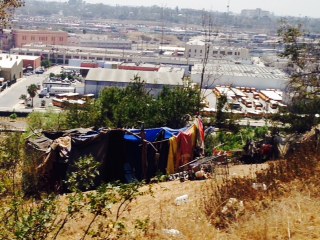
The City of Los Angeles is experiencing continued growth in its homeless population. Rising rents and not enough housing for residents of any means has stacked up against the continual inflow of new residents seeking opportunity, those re-entering after serving time in the military or prison, and younger families gathering their economic footing. A desert with little rain, we have created our imperfect social storm.
Although I have been fortunate to have positions that allow me to sit at the table of decision making- I have found it hard to raise my soft voice against the cacophony of opinions and interest, so decided to do what I do best – write, and bring my ideas to paper.
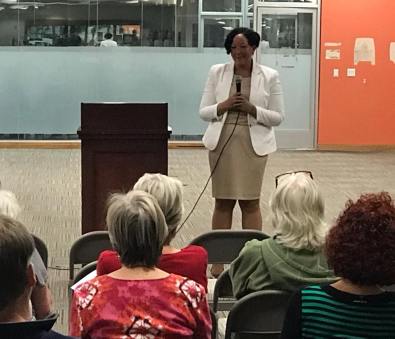
So I offer these concepts- in no particular order except what comes to mind most pressingly in this moment:
- Accountability – Establish an inter-regional governing board that owns, oversees, funds, and supports homelessness with people experiencing homelessness- not systems – in mind. This Board would form the Commission that oversees the Los Angeles Homeless Services Authority so that this agency can continue to receive public funding, implement programs, and monitor contracts and performance of homeless service providers. This Board would be responsible for conducting an annual progress report on the state of homelessness within the region, and a unit gap analysis every five years to help with continued planning for those living in extreme poverty.
- Funding – I am not afraid to say what many are – Measure H and
 Prop HHH are not enough. Los Angeles is a city of growing inequity and has been for some time. Some reports say we never rebounded from the economic downturn of the 1990’s (when my own parents – fearing the worst – retired early and migrated to Tennessee) and that real wages have not kept up with the population needs since 1979. As such, poverty runs deep and through our Western values- we are a city without many safety nets. Yet we are a city with extraordinary wealth. One hand bag on Rodeo Drive could house a family for six months and one home in Bel Air could house at least 10 older adults. Our investments are selfish and misguided. It will take a re-commitment from all sectors- philanthropy, government, business, and you and me – to truthfully end this crisis.
- Prioritization – Continue to prioritize vulnerable populations. I would like to see an expansion of the chronic homeless focus to include all families with minor children, older adults aged 65+, and youth between the vulnerable ages of 18 to 25. Like in so many other cities – we should challenge ourselves to find shelter for anyone within these populations that presents at a central access station.
- Specialize – Last year I was gifted to befriend Ms. Habrey, an 85 years young African American woman experiencing homelessness with a long history of feeling like she had been cursed by a group of witches for whom sent the devil to kill everyone she has ever loved. Shelter was not an option for her. She found safety in a hotel room but one day left. I saw her one more time and have not seen her since. She taught me that while persons experiencing mental illness or spiritual curses may experience episodes of homelessness, their needs are so much more and require special care. Mental illness is a brain disease that must be addressed with compassion, shifts mindsets of the broader community, reduced law enforcement engagement, and ability to manage the ups and downs of mental diseases without punishment and criminalization. We must create safe places where residents like Ms. Habrey can find respite as they work with a supporting staff to negotiate safer places to dwell with them feeling a sense of power and control. I continue to dream of a Grandmother’s Village for women like Ms. Habrey.
- Innovate – Not everyone is thinking about permanent housing. For some, the home was the most dangerous place where trauma occurred. Freedom and safety is more precious to them than four walls and a roof. Innovate dwelling arrangements that create incremental steps of safety, stabilization, and community. Have an open mind-set and invest private research and development funding into tiny homes, Kibbutz villages, after-hour drop in centers, Re-Fresh Spots (personal hygiene centers), safe parking, mobile home parks, public help desks. Like brick pavers leading to the front door of a home, create a true pathway into housing that is trauma and culturally informed. Suspend judgment of those who choose this path for we do not understand the breath of their experience.

- Participatory Planning – No program or housing model should be designed without the voice of those with lived experience. Most folks experiencing homelessness are not service resistant – they were never asked what they wanted and were judged for not wanting what was offered. It is arrogance, not rationality, to design programs and systems for people without having the experience to understand the problem or barrier as to what is truly being solved.
- Vision over Data – When data drives solutions for a human problem, we have dehumanized and negated the wisdom of lived experience of the people whom we say we are trying to serve. The problem addressed is centered on the needs of those witnessing the phenomenon of homelessness, and not the needs of those living in this chaos or the truthful reflection of failed systems and political choices made by greater society. A collective and shared vision of whom we want to become should champion over data- with data supporting, validating, or challenging our assumptions and measuring our progress.
- Racial Equity – Most painful to me – On day one of m
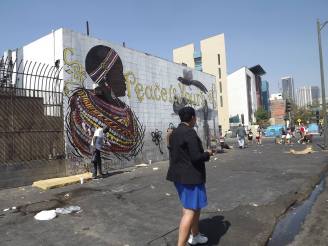 y current position, I brought up the topic of race as it relates to homelessness and in a whispered tone was told, “true, but we don’t talk about race.” With over forty-seven percent of people experiencing homelessness identifying as African Americans while African Americans only make up eight percent of Angelinos, and close to eighty-percent of residents in Skid Row, – I was motivated to talk about it, and in fact talk louder about it. Thankfully, two years later, a new Ad Hoc Committee on Homelessness and the Black Community has been formed with a strong presence of members seeking answers and solutions. The veins of homelessness run deep and one cannot escape the sacred history of the African American experience and the performance of this history through homelessness as a daily reminder of our unresolved American wounds.
As Angela Davis inspires to imagine a society without prison- not as a liberal strategy to release persons without consequences- but to challenge the confines of our society and seek new paths of inclusivity and equity toward the vision of Dr. King’s Beloved Community – I too imagine a city that changes its imagined community and no longer discards the “undesirables” into sidewalk tents or dried river beds where they are at threat of the perfect storm. Instead, I imagine a thriving, diverse city with many micro-communities feeding the city center with life, nourishment, and sustainable growth. I imagine a city of angels.


 Alisa's thoughts on Beloved Communities