
I believe that places are sacred geographical points for encounters of culture that retain memory, history, grief, and joy – that mirror back the psychological health and well-being of its inhabitants.
Places are vessels of history that teach us aspects of the past to help guide us in the present and awaken our consciousness about our responsibility to the future.
Places protect the people who live there and must be cared for with a healing touch that invokes unconditional love, reverence in the mundane, and sense of community. Everyone should have an opportunity to contribute and belong, as the identity of place constantly evolves to reflect changing demographics.

As a community development practitioner with over twenty-years of experience in the field of homelessness policy, community building, art based collective healing practices, and conflict mitigation; I seek to expand my understanding of place as sacred geography and shrine to the Mother Goddess of Creation. In re-awakening a goddess consciousness, we develop new perspective in our relationship to the world and see earth as an evolving womb that we must take care of for the life of future generations.

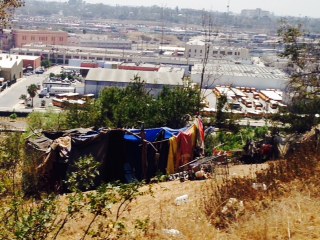
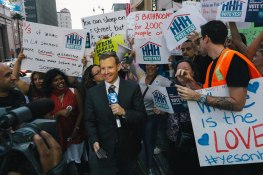 Prop HHH are not enough. Los Angeles is a city of growing inequity and has been for some time. Some reports say we never rebounded from the economic downturn of the 1990’s (when my own parents – fearing the worst – retired early and migrated to Tennessee) and that real wages have not kept up with the population needs since 1979. As such, poverty runs deep and through our Western values- we are a city without many safety nets. Yet we are a city with extraordinary wealth. One hand bag on Rodeo Drive could house a family for six months and one home in Bel Air could house at least 10 older adults. Our investments are selfish and misguided. It will take a re-commitment from all sectors- philanthropy, government, business, and you and me – to truthfully end this crisis.
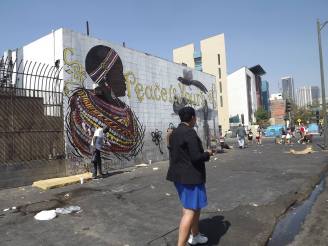 y current position, I brought up the topic of race as it relates to homelessness and in a whispered tone was told, “true, but we don’t talk about race.” With over forty-seven percent of people experiencing homelessness identifying as African Americans while African Americans only make up eight percent of Angelinos, and close to eighty-percent of residents in Skid Row, – I was motivated to talk about it, and in fact talk louder about it. Thankfully, two years later, a new Ad Hoc Committee on Homelessness and the Black Community has been formed with a strong presence of members seeking answers and solutions. The veins of homelessness run deep and one cannot escape the sacred history of the African American experience and the performance of this history through homelessness as a daily reminder of our unresolved American wounds.
 Alisa's thoughts on Beloved Communities